The Bored Cynic: Lermontov's "A Hero of Our Time"
In one breath
A Hero of Our Time, often called the first great Russian psychological novel, centers on Pechorin, a brilliant, bored army officer in the Caucasus who manipulates and harms those around him. Lermontov presents him, ironically, as a hero of his disillusioned age: the superfluous man.
On this page
Mikhail Lermontov’s A Hero of Our Time is a landmark of Russian literature, often called the first great Russian psychological novel, and its influence on the Russian writers who followed, Tolstoy, Dostoevsky, Turgenev, was profound. At its centre is Pechorin, a young, brilliant, handsome army officer stationed in the Caucasus, who is also one of the most fascinating and disturbing characters in fiction: intelligent, charming, and utterly bored, cynical, manipulative, incapable of love or genuine feeling, destructive to everyone around him and to himself. Lermontov presents him, with deliberate irony, as a “hero of our time,” a representative of his disillusioned, cynical age. The novel, told through a clever sequence of interlocking narratives, is a brilliant and unsettling psychological portrait of a particular kind of modern emptiness.
Here is what A Hero of Our Time taught me about the “superfluous man,” about cynicism and boredom, and about the psychology of a wasted self.
Key takeaways
- Pechorin is the “superfluous man,” gifted but aimless, alienated, and destructive.
- Boredom and cynicism hollow him out, leaving him unable to feel or love.
- He manipulates and harms others out of restlessness and emptiness.
- The novel is a pioneering psychological portrait, probing a complex inner life.
- Pechorin is a “hero” only ironically, a mirror of his disillusioned age.
The superfluous man
Pechorin is the archetype of what Russian literature would call the “superfluous man”: a gifted, intelligent, often charming young man who is nonetheless aimless, alienated, and unable to find any meaningful purpose or place in the world. Pechorin has every advantage, intelligence, charm, courage, social position, and yet he is profoundly disillusioned, cynical, and bored, drifting through life without purpose or genuine commitment. His abilities, which could have made him great, find no worthy outlet, and so they curdle into restlessness, manipulation, and destruction. He is “superfluous” in the sense of having no real function, no place where his gifts can be used; he is a man out of joint with his time and his world. This figure would recur throughout Russian literature, but Lermontov’s Pechorin is its brilliant prototype, and the type speaks to something perennial: the talented person who, finding no meaning or purpose, turns their unused energies toward cynicism and harm.
Cynicism and boredom
What makes Pechorin so disturbing, and so modern, is the deep boredom and cynicism that hollow him out from within. He has seen through everything, believes in nothing, expects nothing; he analyses his own feelings and others’ with cold, brilliant precision, but feels little himself, having killed his own capacity for genuine emotion through relentless self-examination and disillusionment. This emptiness drives him to manipulate and toy with others, to pursue conquests and intrigues, not out of passion but out of a restless need to fill the void of his boredom, to feel something, anything. He seduces women he does not love, provokes a fatal duel almost out of curiosity, and brings ruin to nearly everyone he touches, and to himself, all while observing his own behaviour with detached, ironic clarity. There is something prophetic in this portrait of a man destroyed by his own intelligence and disillusionment, anticipating the existential ennui and the “underground” psychology that Dostoevsky and others would explore. Pechorin is, in a sense, too clever and too disenchanted to live.
The psychology of a wasted self
What makes the novel a landmark is Lermontov’s pioneering psychological depth, his unflinching exploration of Pechorin’s complex, contradictory inner life. Through a clever, fragmented structure, several stories told from different points of view, culminating in Pechorin’s own journal, Lermontov builds up a multi-faceted portrait, letting us see Pechorin from the outside and then plunging us into his own searching, self-lacerating self-analysis. We come to understand him without excusing him, to grasp the psychology of a self gone to waste: the gifts unused, the feelings deadened, the energies turned destructive. And the title’s irony cuts deep. By calling this cold, empty, destructive man “a hero of our time,” Lermontov holds up Pechorin as a mirror to his whole generation and age, a disillusioned, post-Romantic era that had lost its ideals and its purpose. Pechorin is a “hero” not to be admired but to be recognised, a representative and a warning, the embodiment of a particular modern sickness of the soul.
What I’m taking with me
A Hero of Our Time is a brilliant, unsettling, and remarkably modern novel, and it is fascinating to read as the fountainhead of the great Russian tradition that followed. What I am taking from Lermontov is the unforgettable figure of the “superfluous man,” the gifted but aimless soul whose unused powers turn destructive; his penetrating study of how boredom and cynicism can hollow out a person, deadening feeling and breeding harm; and the pioneering psychological depth with which he probes a wasted self. Pechorin lingers as both a brilliant portrait and a warning, against the cynicism and disillusionment that can, if we let them, drain life of meaning and turn even great gifts toward emptiness and harm.
Frequently asked questions
What is A Hero of Our Time about?
It is Mikhail Lermontov’s pioneering Russian psychological novel about Pechorin, a brilliant but bored, cynical, and destructive young army officer in the Caucasus, presented ironically as a representative “hero” of his disillusioned age.
What is a “superfluous man”?
A recurring figure in Russian literature, of which Pechorin is the prototype: a gifted, intelligent man who is nonetheless aimless, alienated, and unable to find purpose, so that his unused talents turn to cynicism and destruction.
Why is the title ironic?
Because Pechorin is not heroic in any admirable sense; he is cold, manipulative, and destructive. Lermontov calls him “a hero of our time” to hold him up as a mirror and warning of the disillusionment of his entire era.
References & further reading
- Lermontov, Mikhail. A Hero of Our Time. (1840; translated by Vladimir Nabokov, 1958, or Paul Foote, Penguin, 1966.)
- Nabokov, Vladimir. Lectures on Russian Literature. Harcourt Brace Jovanovich, 1981.
- Mirsky, D. S. A History of Russian Literature. Knopf, 1926.
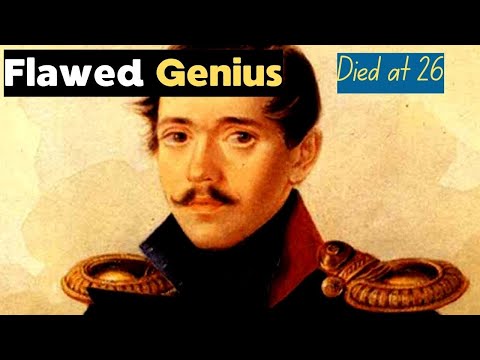
Watch: others on this book

Read along with me
Book notes, philosophy and the ideas that shape how we build. New essays every month, no spam.
Related reading notes
The Man Who Would Not Rise: Goncharov's "Oblomov"
Goncharov's Oblomov: the kindly man who cannot get off his couch, what Oblomovism means and why this comedy of inertia is a gentle tragedy.
The Devil Comes to Moscow: Bulgakov's "The Master and Margarita"
Bulgakov's The Master and Margarita: the Devil in Soviet Moscow, satire under Stalin, "manuscripts don't burn" and redemption through love.

The Trouble With a Truly Good Man: Dostoevsky's "The Idiot"
Dostoevsky's The Idiot: Prince Myshkin, a truly good man in a corrupt society, and why the world mistakes pure goodness for foolishness.
Comments
No comments yet. Start the conversation.