The Man Who Would Not Rise: Goncharov's "Oblomov"
In one breath
Goncharov's Oblomov makes an unforgettable hero of a decent, intelligent Russian gentleman who can barely rise from his couch. His dreamy paralysis, named Oblomovism, contrasts with his energetic friend Stolz, and the novel turns comedy into a gentle tragedy about the comfort of avoiding life.
On this page
Ivan Goncharov’s Oblomov is one of the great Russian novels, and it accomplishes something remarkable: it makes one of the most memorable and beloved characters in all of literature out of a man who, quite literally, cannot get out of bed. Its hero, Ilya Ilyich Oblomov, is a kindly, intelligent, decent Russian gentleman who is also so profoundly lazy, passive, and incapable of action that the famous opening section of the novel is devoted almost entirely to his prolonged, monumental failure to rise from his couch. From this seemingly absurd premise Goncharov builds a rich, funny, and deeply moving portrait of inertia, of a soul paralysed by dreaminess and the dread of action, that gave the Russian language a word, “Oblomovism,” for the disease it diagnoses. It is a strange and unforgettable book about the tragedy of a wasted life, and about the seductive comfort of doing nothing.
Here is what Oblomov taught me about the paralysis of inertia, about “Oblomovism” as a condition of the soul, and about the gentle tragedy of a good man who would not rise.
Key takeaways
- Oblomov is paralysed by inertia, unable to translate good intentions into action.
- “Oblomovism” names a condition of dreamy, passive paralysis of the will.
- His decency makes the tragedy gentler and more poignant.
- The contrast with the active Stolz sharpens the diagnosis.
- A warning about the seductive comfort of avoiding life.
The paralysis of inertia
Oblomov’s defining trait is an almost superhuman incapacity for action. He is not stupid, nor cruel, nor without feeling or good intentions; on the contrary, he is intelligent, kind, and full of fine sentiments and vague plans to improve his estate and his life. But he simply cannot act. The smallest tasks, answering a letter, dealing with a problem on his estate, getting dressed, become insurmountable, postponed endlessly, lost in a fog of procrastination, daydreaming, and the overwhelming preference for the comfort of his couch and dressing gown. Goncharov renders this paralysis with both comedy and terrible accuracy: the gap between Oblomov’s good intentions and his utter inability to realise them, the way every prompting toward action dissolves into reverie and delay. It is a portrait of the paralysed will, of a man trapped not by external obstacles but by something within himself, an inertia so total it becomes a kind of fate. And it is uncomfortably recognisable, for who has not known something of that gap between what we mean to do and what we actually do, that pull toward the comfortable and the deferred?
Oblomovism
Goncharov’s achievement was to make of this one man’s inertia a diagnosis of a whole condition of the soul, and even of a culture, so penetrating that “Oblomovism” entered the Russian language as a word for dreamy, passive paralysis of the will. Oblomovism is more than mere laziness; it is a deep, almost spiritual condition: a retreat from life into reverie and comfort, a dread of effort and change, a preference for the warm, static world of the imagination and of childhood over the demanding, risky world of action and reality. Goncharov traces its roots in the famous dream sequence to Oblomov’s childhood on a sleepy, idyllic country estate, a world of indolent ease where nothing was ever urgent and effort was unknown, suggesting how a whole way of life can breed this paralysis. Critics read it, too, as a portrait of a stagnant social order, the dreamy passivity of a landowning class unfit for the modern world. But beyond any particular society, Oblomovism names something perennial in the human soul: the temptation to retreat from the difficulty of living into comfort, fantasy, and inaction.
The gentle tragedy of a good man
What makes Oblomov so moving rather than merely satirical is the genuine sweetness and decency of its hero, which turns his story into a gentle tragedy. Oblomov is not a villain or a fool to be despised; he is gentle, honest, loving, and pure-hearted, in some ways more decent than the busy, successful people around him. The novel sets him against his energetic, capable friend Stolz, the man of action and progress, and against the love of the vital Olga, who briefly rouses him and might have saved him. For a moment, under Olga’s influence, Oblomov nearly rises to life and love. But his inertia proves stronger; he cannot sustain the effort that love and life demand, and he retreats, finally, into a comfortable, diminished existence and an early death, his fine qualities and his very life quietly wasted. The tragedy is the more poignant for his goodness: here is a man with a beautiful soul who simply could not bring himself to live, who chose, again and again, the comfort of the couch over the risk and effort of existence, until life passed him by. Goncharov makes us love him and mourn him at once.
What I’m taking with me
Oblomov is a strange, funny, and deeply affecting novel, and its gentle hero has lodged himself permanently in my imagination as both a comic figure and a quiet warning. What I am taking from Goncharov is his unforgettable portrait of the paralysed will, the gap between good intention and the incapacity to act; the rich diagnosis of “Oblomovism,” the dreamy retreat from life into comfort and fantasy; and the gentle tragedy of a genuinely good man whose fine soul and whole life are wasted by inertia. Oblomov leaves me with an uncomfortable question to bring to my own days: where, in my own life, am I choosing the comfort of the couch over the risk and effort of truly living, and letting good intentions dissolve, as his did, into endless, comfortable delay?
Frequently asked questions
What is Oblomov about?
It is Ivan Goncharov’s Russian novel about Ilya Oblomov, a kind, intelligent gentleman so paralysed by laziness and passivity that he can barely leave his couch, a rich and moving portrait of inertia and a wasted life.
What is “Oblomovism”?
A term that entered Russian from the novel, naming a condition of dreamy, passive paralysis of the will: a retreat from the effort and risk of life into comfort, reverie, and inaction. It is more than laziness; it is a condition of the soul.
Why is Oblomov considered a tragedy and not just a comedy?
Because its hero is genuinely good, gentle, and likeable, so his inability to live, love, and act, and the quiet waste of his fine soul and his whole life, becomes deeply poignant rather than merely funny.
References & further reading
- Goncharov, Ivan. Oblomov. (1859; translated by C. J. Hogarth, 1915, or David Magarshack, Penguin, 1954.)
- Goncharov, Ivan. The Same Old Story. 1847.
- Mirsky, D. S. A History of Russian Literature. Knopf, 1926.
Watch: others on this book


Read along with me
Book notes, philosophy and the ideas that shape how we build. New essays every month, no spam.
Related reading notes
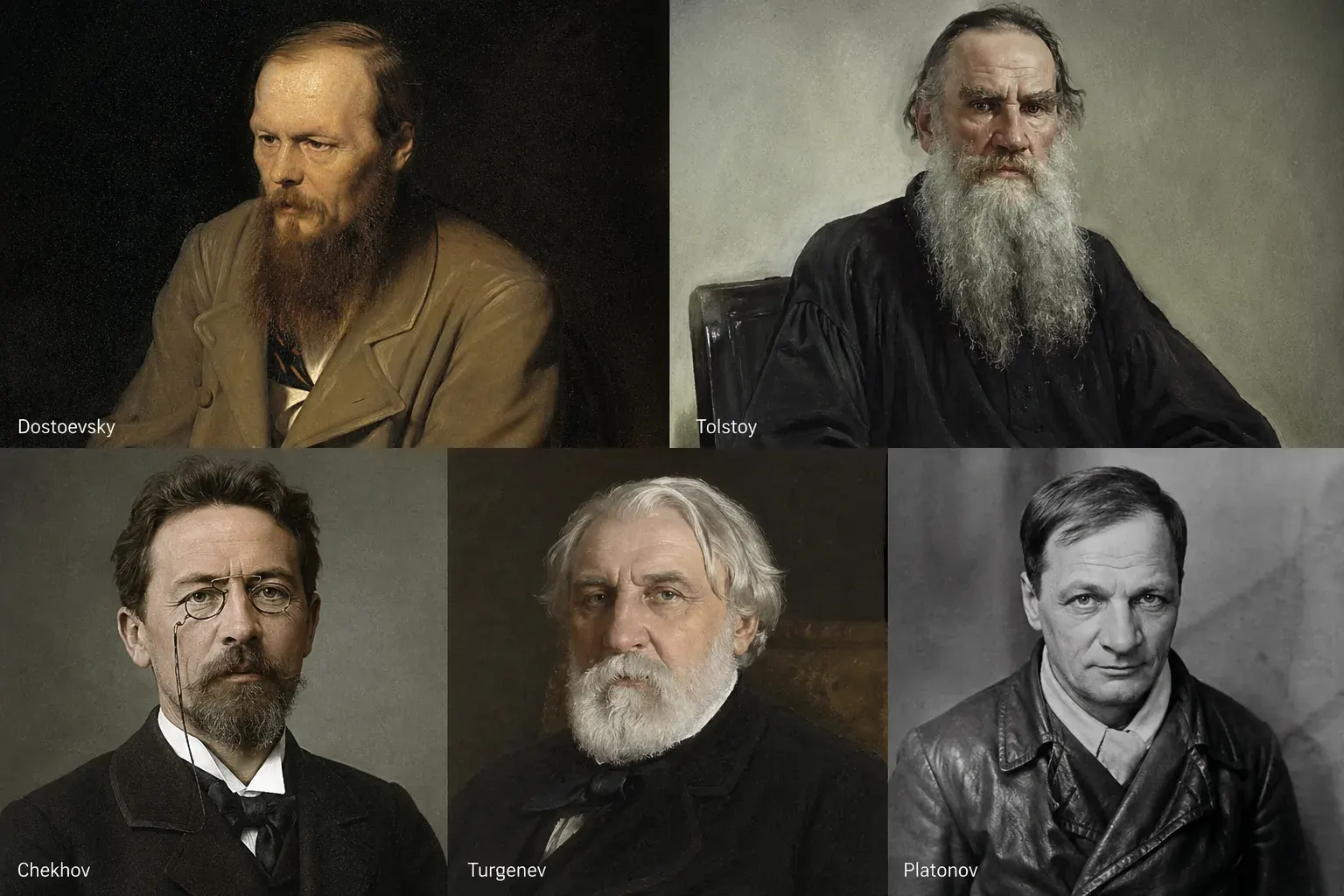
Dostoevsky, Tolstoy, Chekhov, Turgenev and Platonov
Where to start with Russian literature: essential works by Dostoevsky, Tolstoy, Chekhov, Gogol, Turgenev and Platonov, and why each is worth reading.
The Devil Comes to Moscow: Bulgakov's "The Master and Margarita"
Bulgakov's The Master and Margarita: the Devil in Soviet Moscow, satire under Stalin, "manuscripts don't burn" and redemption through love.
A Man Can Be Destroyed But Not Defeated: Hemingway's "The Old Man and the Sea"
Ernest Hemingway's The Old Man and the Sea is short enough to read in a single sitting, and large enough to carry for a lifetime.
Comments
No comments yet. Start the conversation.