Smart Factory Fundamentals
"Smart factory" gets used as if it were a product on a shelf. It is not. Here is what actually makes a factory smart - and why the unglamorous foundations matter far more than the buzzwords.
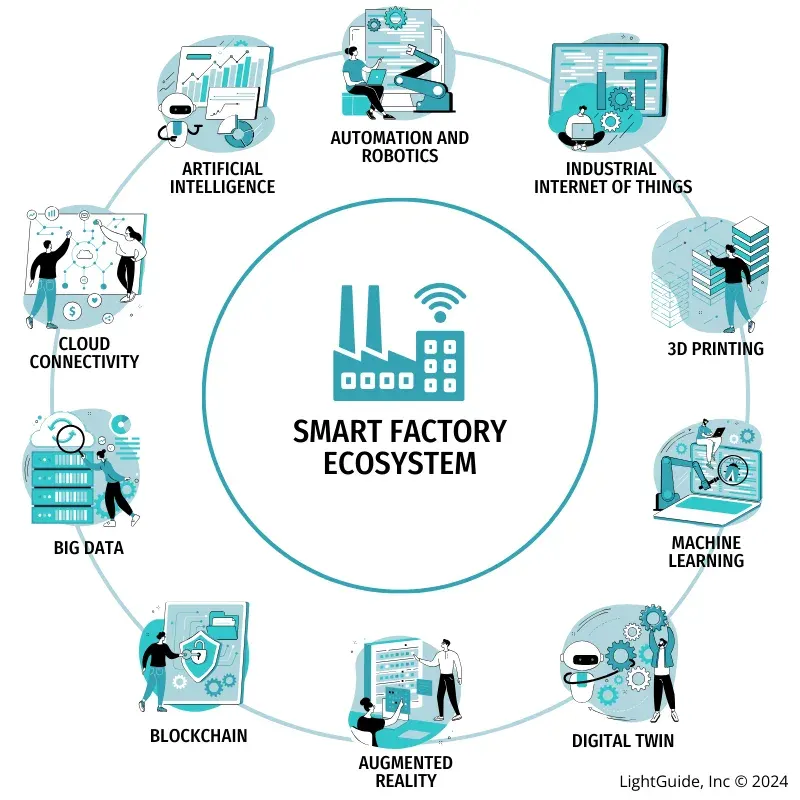
TL;DR
A smart factory isn't a product you buy but a digital nervous system on top of existing machines. Four capabilities work together: connectivity, data, automation and feedback. Value shows up in early fault detection, contained quality problems and clear loss priorities. Start where it hurts most.
On this page
Walk into two factories making the same product, and you might not see a difference. Same machines, same people, same shift pattern. Yet one quietly catches a failing motor before it stops a line, contains a quality problem to a 90-minute window instead of a week’s production, and tells its plant manager exactly which loss to attack tomorrow. The other waits for the breakdown, the recall, and the monthly report. The difference is not the machines. It is the digital nervous system layered on top.
That nervous system is what “smart” really means, and it comes down to four capabilities working together: connectivity, data, automation, and feedback. Connectivity links machines so they can share information instead of sitting as isolated islands. Data captures the right signals continuously, each one tagged with the context - which asset, which product, which order, which moment - that makes it meaningful. Automation turns that data into action, from a guard interlock to an automatic work-order release. Feedback closes the loop, sending information back to people and machines so the operation corrects and improves itself. Pull any one of the four and the other three lose most of their value.
Notice what is not on that list: any specific vendor, platform, or shiny dashboard. “Smart” is a spectrum, not a switch you flip with a purchase order. Almost every plant already has some connected equipment and some manual paperwork sitting side by side. The honest question is never “are we a smart factory yet?” It is “which of these four capabilities is weakest, and where would strengthening it actually pay?”
The map everyone should share
To make that question concrete, you need a shared map of how factory systems fit together. The industry already has one: the automation pyramid, formalized in the ANSI/ISA-95 standard for connecting business systems to manufacturing operations. From the floor up, it runs in levels. Sensors and actuators at the bottom sense and act in milliseconds. PLCs read those signals and run control logic. SCADA aggregates many controllers, shows operator screens, and manages alarms. An MES manages the actual operations - dispatching work orders, enforcing routings, recording what was made and how well. At the top, ERP plans the business: orders, materials, finance.
Two patterns are worth tattooing on your mental model. As you climb the pyramid, time gets coarser - milliseconds at the bottom, days at the top. And data gets aggregated - one sensor reading becomes a machine state, which becomes a line’s effectiveness figure, which becomes a number on a manager’s report. The strict, level-by-level pyramid is increasingly complemented by an edge layer that ships data straight to dashboards and analytics. But the pyramid still answers the most important question in any integration project: who is responsible for what.
Where the value actually lives
Here is the part that buzzword coverage skips. The value of a smart factory does not live in any single system. It lives in the flows between them. Telemetry rises - counts, cycle times, defects. Commands descend - plans, recipes, setpoints. Events move both ways - alarms and downtime reasons. Get three things right and those flows become trustworthy. Keep context attached to every measurement, because a number without identity cannot be aggregated. Match the cadence to the decision, because control needs milliseconds and planning needs a steady daily picture. And define a single source of truth, because when “units produced” lives in four systems with four different values, people stop trusting all of them.
Build on that foundation and the headline capabilities follow naturally. Real-time monitoring makes the present visible, usually through OEE - Availability times Performance times Quality - which folds downtime, speed loss, and defects into one number a whole plant can act on. Predictive maintenance uses condition signals like vibration and temperature to service an asset just before it fails and only when it needs it. Traceability records each unit’s full history, so a quality problem becomes a surgical, contained fix instead of a plant-wide recall. These three are not independent purchases; they all draw on the same well-structured data, which is exactly why getting connectivity and data right pays off several times over.
Start where it hurts
If there is one trap to avoid, it is buying the top of the ladder before securing the bottom. Treat the transformation as a staged journey: connect, then monitor, then analyze, then predict, then optimize. Each stage delivers value on its own and earns the budget for the next. The fastest-failing programs are the ones that reach for advanced analytics while their data is still untrustworthy.
So pick one line - the one that hurts most. Get its assets reporting honest, contextualized signals. Surface a single KPI someone will actually watch. Tie every alert to a defined action and an owner. That is not a downgrade from a grand digital vision; it is the only way the grand vision ever arrives. A smart factory is not a thing you install. It is an operation that learns to sense, understand, and improve itself - one well-chosen line at a time.
Key takeaways 5
- A smart factory is a capability, not a product.
- It rests on connectivity, data, automation and feedback.
- Value comes from catching failures and quality problems early.
- Solid data foundations matter more than flashy technology.
- Start with the most painful problem and expand.
Watch & learn

Frequently asked questions
What is a smart factory?
A smart factory uses connected machines, data and automation to monitor and optimize production in near real time, detecting problems early and continuously improving.
What technologies make a factory smart?
Industrial IoT sensors, connectivity, data platforms, MES, analytics, automation and feedback loops that turn data into decisions on the floor.
How do I start building a smart factory?
Pick a costly problem such as downtime or scrap, connect the relevant machines, collect and visualize data, act on it and scale what works.
Go deeper with the free masterclass
Workshop, PDF handbook and curated resources for “Smart Factory Fundamentals”.
Related articles
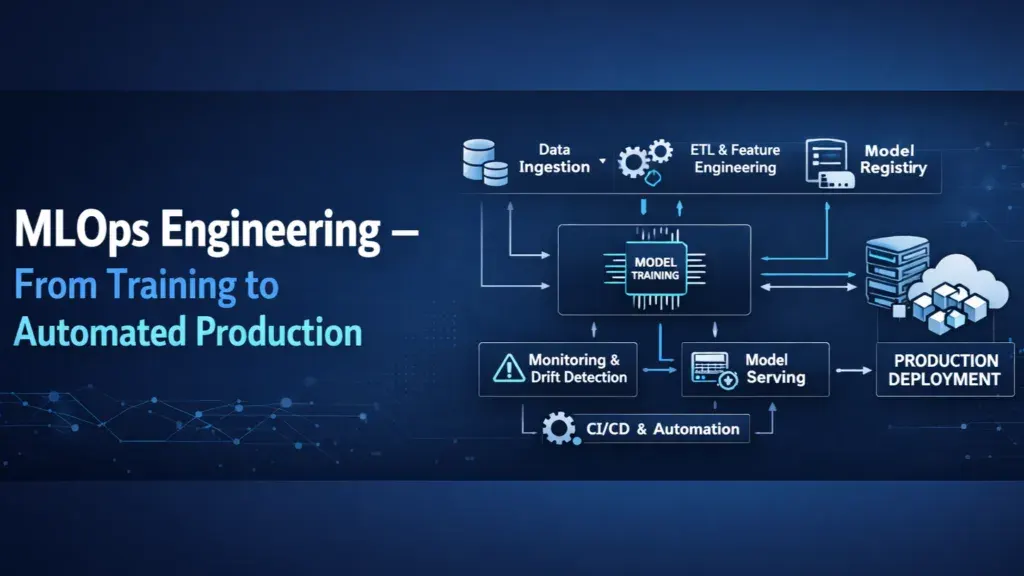
AI & MLOps for Industrial Engineers
Most industrial machine-learning models work beautifully in a notebook and die on the laptop they were born on. Here is why that happens, and what MLOps actually fixes.
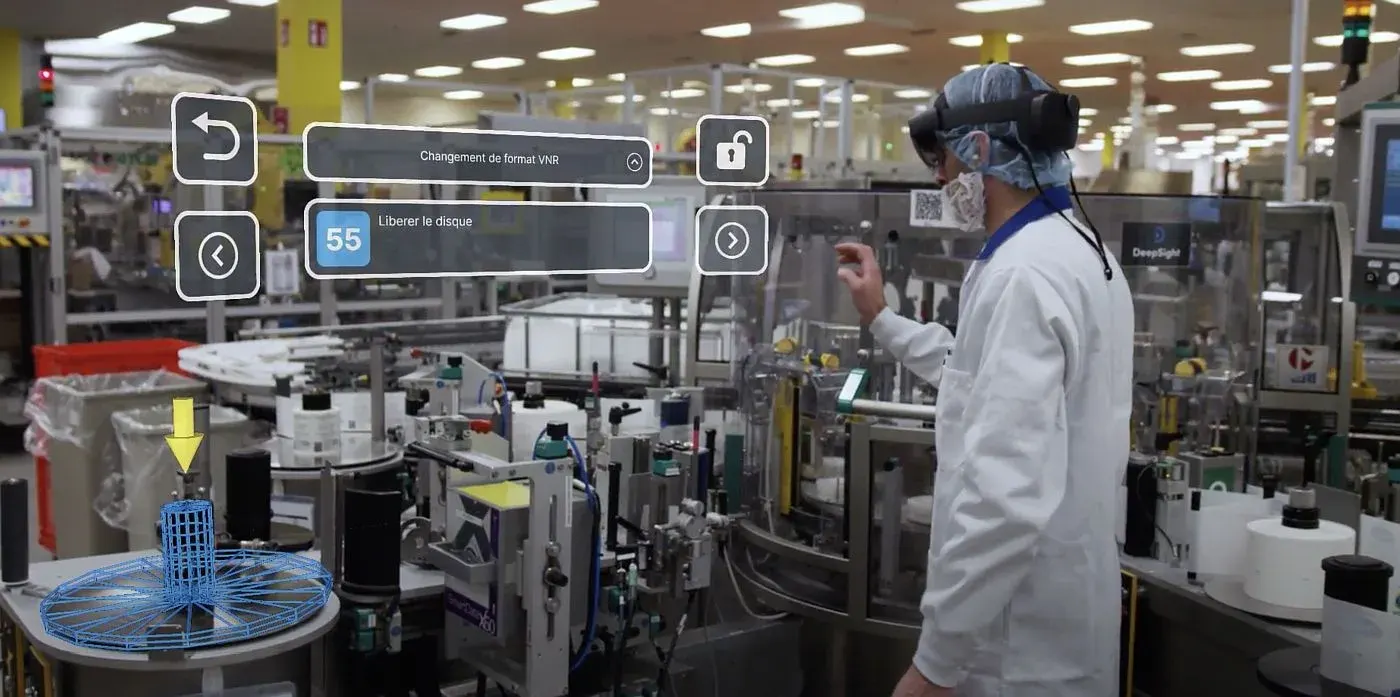
Augmented Reality on the Factory Floor
Industrial augmented reality is not about flashy holograms - it is the last meter of the connected factory, delivering the right information to the worker's hands.
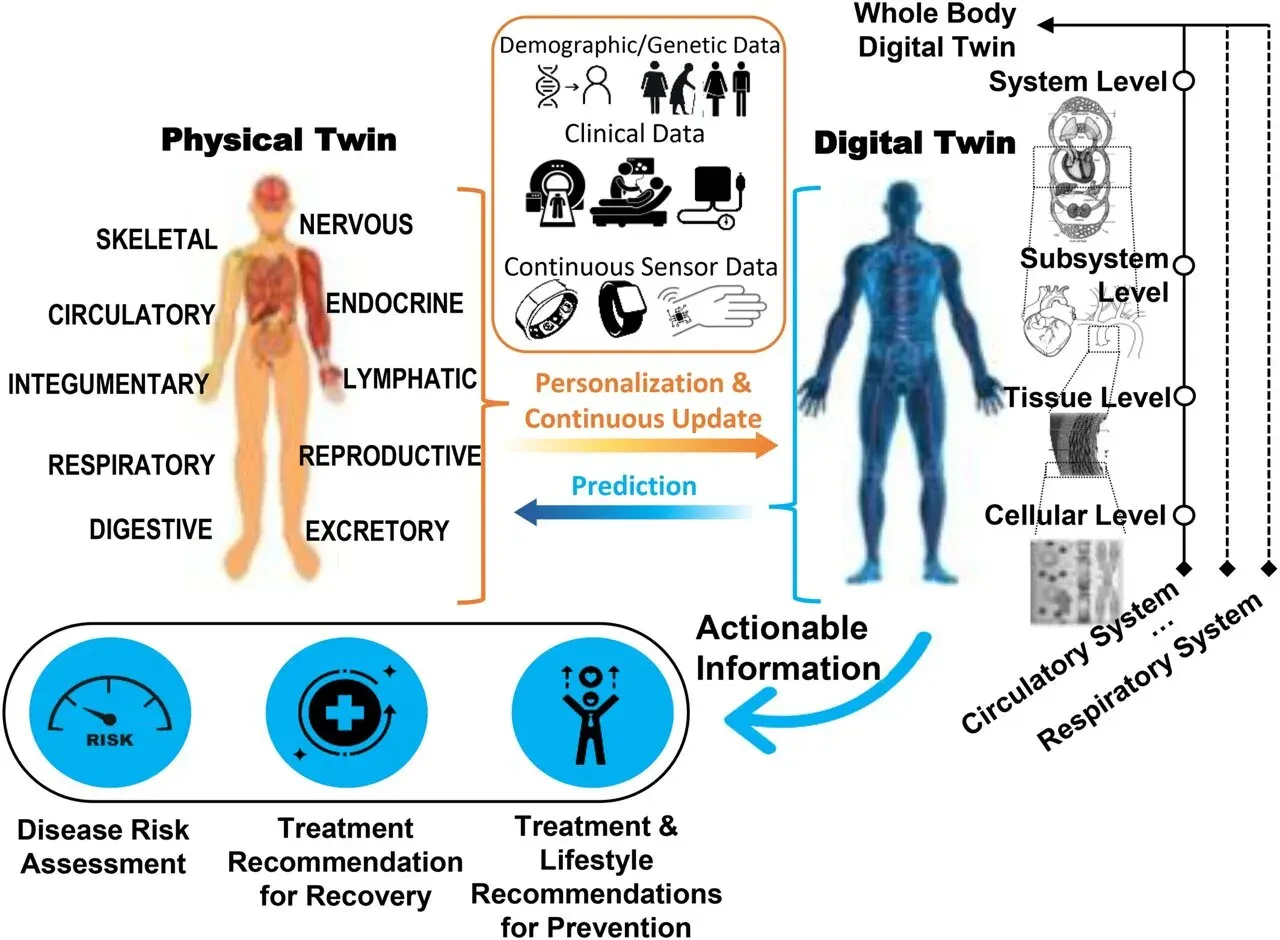
Digital Twin in Practice
Digital twins are real and useful, but most of what gets sold under that name is a dashboard wearing a costume.
Comments
No comments yet. Start the conversation.