Augmented Reality on the Factory Floor
Industrial augmented reality is not about flashy holograms - it is the last meter of the connected factory, delivering the right information to the worker's hands.
TL;DR
Industrial augmented reality pays off not through flashy holograms but by putting the right information, in context, at the moment of work: torque values, assembly steps, remote expert guidance. The headset is the cheap part; content, data integration and workflow fit decide whether pilots scale.
On this page
The unglamorous truth about factory AR
Walk into any manufacturing trade show and augmented reality is sold on spectacle: a technician in sleek glasses, holograms blooming over a machine, data swirling in mid-air. It photographs beautifully. It also obscures what actually makes AR pay off on a real factory floor - and that gap is why so many promising pilots never reach production.
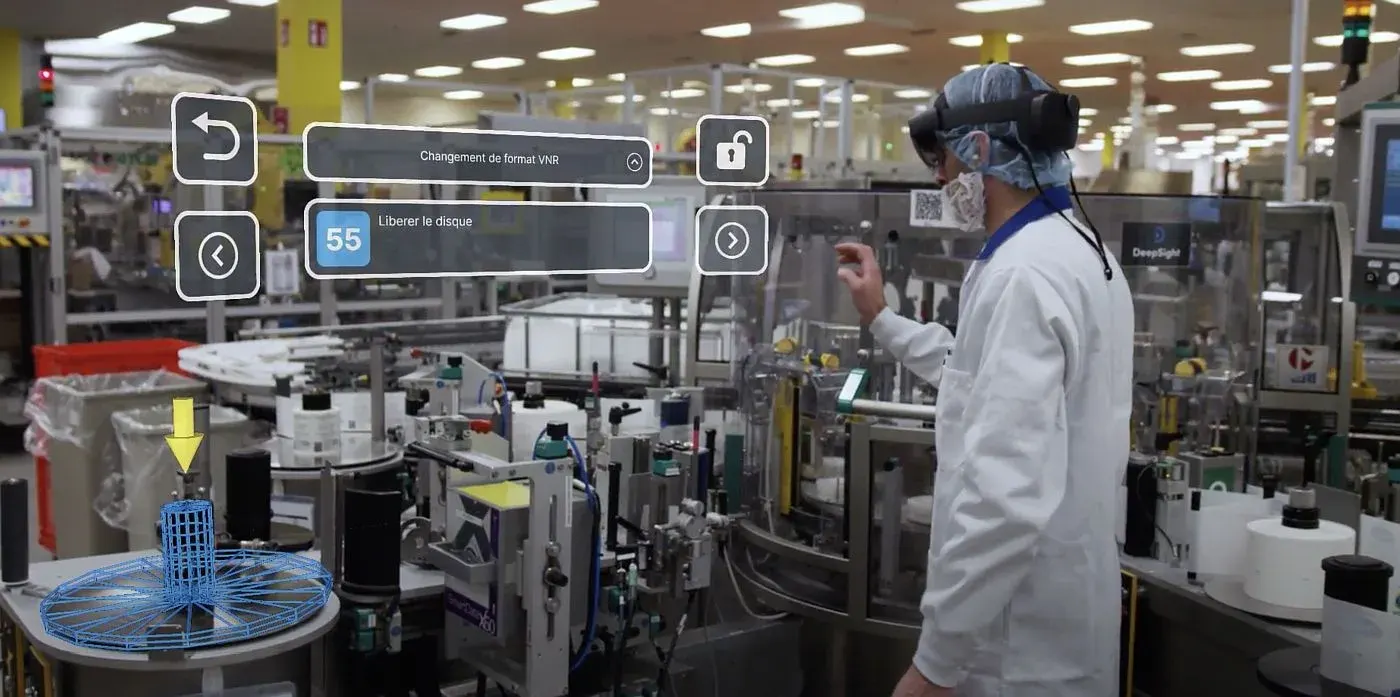
The truth is mundane and powerful. Industrial AR earns its keep by doing one thing: putting the right information, in context, at the moment of work. A torque value beside the bolt it applies to. The next assembly step shown on the product itself. A remote expert’s arrow drawn on the exact valve that is leaking. Strip away the marketing and what remains is the elimination of context-switching - the small, constant tax a worker pays every time they stop, walk to a terminal or binder, find the right page, and walk back.
Why context-switching is the real cost
That tax is larger than it looks. Every interruption costs time, and worse, it invites error: a missed step, the wrong revision of a procedure, a value transcribed incorrectly. On simple, repetitive work the cost is tolerable. But modern manufacturing is rarely simple. Product variety has exploded; the same line builds dozens of configurations; procedures change faster than anyone can memorize. Meanwhile the experts who hold the knowledge are retiring or stretched thin across many sites and shifts.
AR attacks exactly this profile of work - complex, variable, error-prone, and knowledge-scarce. When Boeing trialed AR-guided wiring-harness assembly against laptop PDFs, the headline was not the technology; it was the measurable gain in build time and first-pass quality. The lesson generalizes: the value lands where the cost of looking away, getting it wrong, or not knowing is highest.
The use cases that actually scale
A few patterns have a track record. Remote expert - “see what I see” - scaled fastest because the value is obvious and the hardware bar is low; a rugged voice-driven monocular is enough for a frontline worker to share their view and let a distant specialist annotate it live. Guided assembly and work instructions deliver the deepest gains where product variety defeats memory and paper. Maintenance and inspection turn rare, unforgiving procedures into guided, auditable ones. Training compresses onboarding by letting new hires learn on real equipment with guidance that fades as they improve. Pick-by-vision replaces list-and-scan with look-and-grab.
What unites the winners is not the device. It is that each was chosen because a specific, measurable pain existed - not because someone bought glasses and went hunting for a use case afterward. The best first project is narrow, painful, and measurable: one station or one procedure where today’s cost of delay or error is plainly visible, so the pilot’s value is undeniable.
The headset is the cheap part
Here is the line that separates programs that scale from demos that stall: the headset is the cheap part. The real spend - and the real engineering - lives in content and integration.
Content, because work instructions must be authored by the people who own the process, broken into atomic steps, versioned against the product revision, and kept current as the line changes. Three-dimensional models must be pulled from PLM, decimated to run on a mobile device, and re-derived whenever the design moves. The single most underestimated cost in industrial AR is not the hardware; it is preparing and maintaining 3D content.
Integration, because an AR app that pulls and pushes nothing is just an expensive PDF. The overlay should know which unit is in front of it - from a marker or a model match - pull that unit’s work order and live sensor readings, and record the result against that serial number. Done right, AR stops being a viewer and becomes part of the operation.
AR as the last meter of the connected factory
This is the framing that matters. The sensors and IIoT pipelines move data up. The digital twin reasons over it. AR delivers the conclusion to the point of work and carries the worker’s observations back down. Seen this way, AR is not a standalone gadget but the human-facing layer of the same connected factory you are already building - the last meter between digital systems and physical hands.
That reframing also explains the failure mode. Programs fail not in the lab but in the crossing from pilot to scale, and almost always for human and organizational reasons: no owner for content upkeep, no integration to systems of record, a floor that was never consulted, a device mismatched to shift length or safety. None of these are technology problems.
So treat factory AR accordingly. Start from a measured pain. Pick the simplest tracking that works. Design the data hooks before the graphics. Give the content a permanent home and an owner. The holograms will take care of themselves - and the value, unglamorous as it is, will show up in the numbers.
Key takeaways 5
- Factory AR succeeds by delivering the right information at the moment of work.
- The real cost it removes is context-switching between the task and manuals or screens.
- Use cases that scale: guided assembly, maintenance, inspection and remote expert support.
- Content creation and system integration cost more than the headsets.
- AR is the last meter of the connected factory, linking data to the worker's hands.
Watch & learn
Frequently asked questions
How is augmented reality used in manufacturing?
Common uses include step-by-step assembly instructions overlaid on the product, maintenance guidance on machines, quality inspection, training and remote experts annotating what a technician sees.
Why do AR pilots fail in factories?
Often because content is expensive to create and update, the AR system is not connected to real production data, or the use case does not save enough time to justify the change in workflow.
Do you need smart glasses for industrial AR?
Not always. Tablets and phones work for many use cases; head-mounted displays matter most when workers need both hands free.
Go deeper with the free masterclass
Workshop, PDF handbook and curated resources for “Augmented Reality on the Factory Floor”.
Related articles
Industry 4.0 Foundations: The Nine Pillars
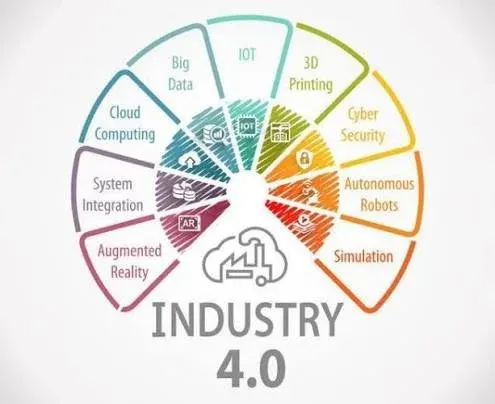
Industry 4.0 sounds like a buzzword, but underneath it is a simple, practical idea. Here is what the fourth industrial revolution actually means for people who make things, and how to take a sensible first step.
Smart Factory Fundamentals
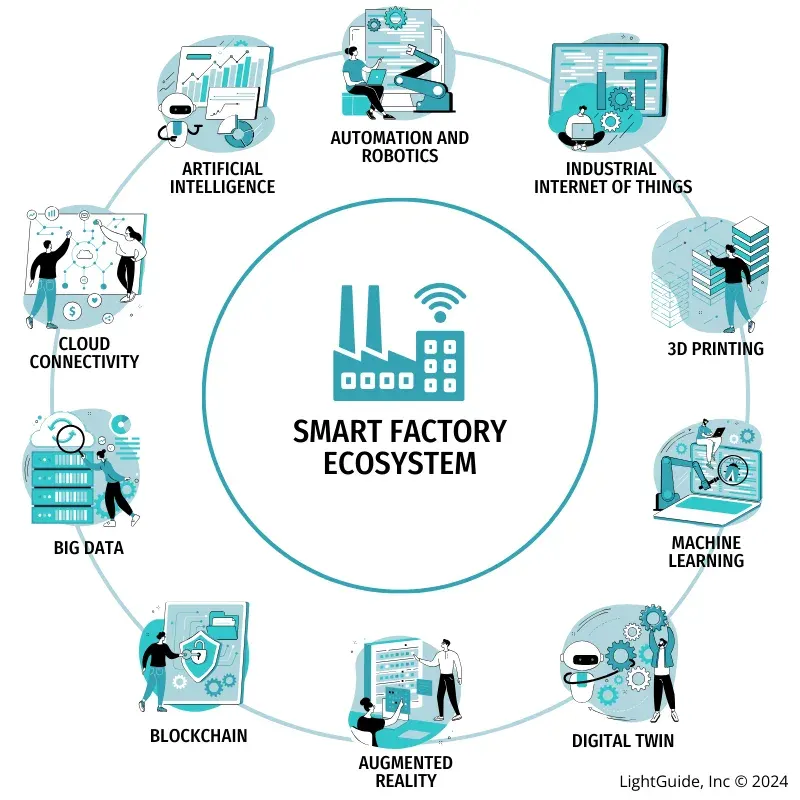
"Smart factory" gets used as if it were a product on a shelf. It is not. Here is what actually makes a factory smart - and why the unglamorous foundations matter far more than the buzzwords.
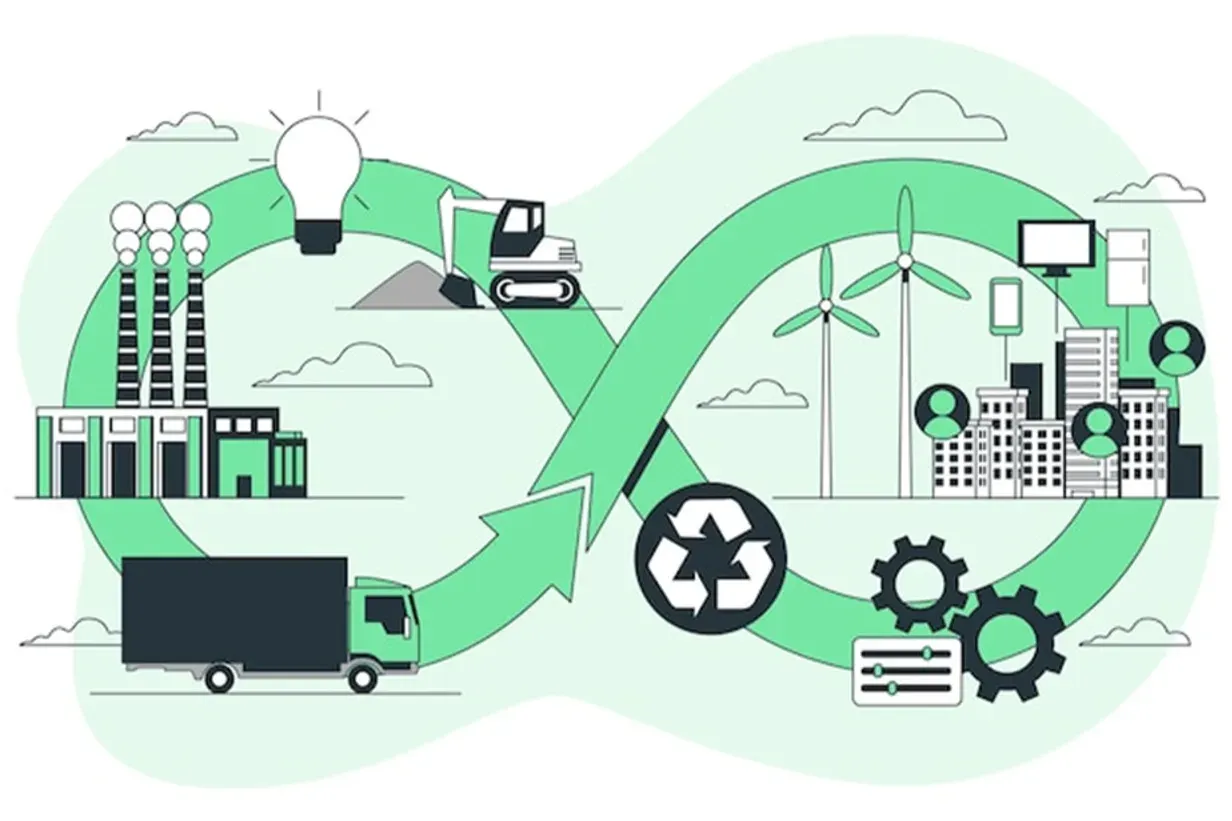
Sustainable & Green Manufacturing with Industry 4.0
Green manufacturing finally has a business case, and the surprise is that the same digital tools you bought for productivity are the ones that deliver it.
Comments
No comments yet. Start the conversation.