Digital Twin in Practice
Digital twins are real and useful, but most of what gets sold under that name is a dashboard wearing a costume.
TL;DR
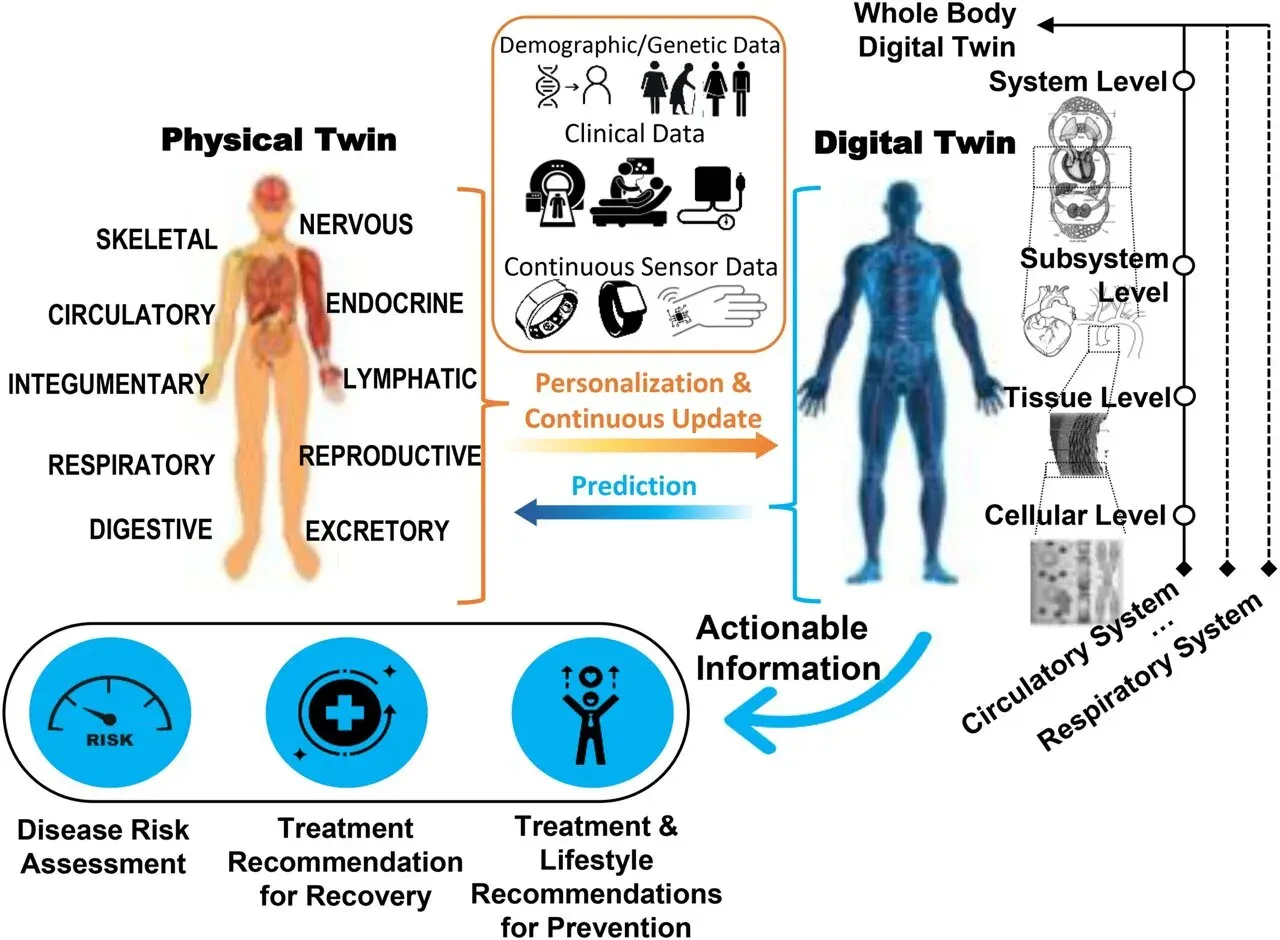
Digital twins are genuinely useful, but much of what is sold under the name is a dashboard in costume. A practical twin is a model connected to live data that answers a specific operational question. Start from that question, not from a photorealistic replica, and avoid building a twin for its own sake.
On this page
Few phrases in industrial technology have been stretched as far as “digital twin.” It has been pinned to 3D renderings, CAD files, BI dashboards, predictive-maintenance pilots, and entire virtual factories. When a term means everything, it risks meaning nothing, and that is exactly the danger facing teams who are about to spend real money on one.
So let me offer an opinion that I think holds up on the plant floor: the concept is genuinely valuable, the hype is mostly noise, and the gap between the two is where projects quietly die.
What the hype gets wrong
The marketing version of a digital twin is a glossy, photorealistic replica of your factory, spinning in a browser, predicting the future and optimizing itself. It is seductive in a boardroom and almost useless as a starting point, because it inverts the actual order of difficulty.
The hard part of a twin is not the visualization. It is the connection to reality. A twin is defined by automatic, two-way data flow between a physical asset and its virtual model. The clearest framing I know comes from the Kritzinger taxonomy: if data only flows from the asset to the model, you have a digital shadow; if there is no automatic flow at all, you have a digital model; only when data flows both ways and the model can influence the asset do you have a true twin.
By that definition, a large share of what is marketed as a “digital twin” is honestly a shadow, and a good chunk is just a digital model with a live skin. That is not an insult. Shadows are valuable. But calling a shadow a twin sets an expectation of closed-loop autonomy that the system cannot deliver, and when it cannot, the whole program loses credibility with the people who approved it.
What the practical reality looks like
Here is what a twin actually is when you strip the gloss: a model fed by clean telemetry, producing a residual, that helps a human or a controller make a better decision. That is it. The unglamorous version is the one that works.
In the field, the difficulty distribution is lopsided. The model is maybe a fifth of the effort. The rest is data plumbing: getting telemetry off the asset, aligning timestamps, cleaning missing and noisy readings, governing tags and units, and keeping all of it flowing reliably. Teams that fall for the hype budget for the model and get ambushed by the plumbing. Teams that respect the reality budget for the plumbing and treat the model as the easy part.
There is a second reality the hype ignores: a twin is never finished. Real machines wear, get repaired, and get reconfigured. The model has to be recalibrated or it drifts into being wrong. And a twin that is confidently wrong is worse than no twin, because people still trust it. An unmaintained twin is a liability with a maintenance schedule of its own.
The “twin for its own sake” trap
The most expensive mistake I see is building a twin because twins are fashionable, with no decision it is meant to improve. The result is a beautiful three-dimensional dashboard that nobody acts on, because it was never wired to an action in the first place.
The cure is a single blunt question asked before any modeling begins: what decision will this twin improve, and what is that decision worth? If you cannot name the decision, you are not ready to build. When to service this pump. How fast to run this line. Whether to trust this reading. Those are decisions. “Visualize the factory” is not.
How to be on the right side of the gap
If you want a twin that survives its first budget review, behave like the practical camp, not the hype camp.
Start from a decision with a real cost of error, usually predictive maintenance or virtual commissioning, because the payoff is concrete and the required maturity is modest. Begin as a shadow, prove it on one critical, well-instrumented asset, and only then climb toward closed-loop control. Match the fidelity of the model to the decision rather than maximizing it; a threshold model that catches failures beats a perfect physics replica nobody can run live. Spend your budget where the work is, which is data quality and synchronization. And name an owner who will keep the thing calibrated after go-live, because that is when drift starts.
None of this is as exciting as a self-optimizing virtual factory. But it ships, it earns trust, and it leaves you with a system you can actually grow. The hype sells the destination. The practice is about taking the first honest step and refusing to call a shadow a twin until it has earned the name.
Key takeaways 5
- The term "digital twin" has been stretched until it almost means nothing.
- A real twin links a model to live data to answer a specific question.
- Photorealistic 3D replicas are rarely where the value is.
- Building a twin for its own sake is the most common trap.
- Start small with one asset and one decision, then grow.
Watch & learn

Frequently asked questions
What is a digital twin?
A digital twin is a virtual model of a physical asset, process or system that is kept in sync with real-world data and used to monitor, analyze, simulate or optimize it.
How is a digital twin different from a dashboard?
A dashboard displays data. A digital twin also contains a model of how the system behaves, so it can simulate scenarios, predict outcomes or test changes before applying them.
Where do digital twins deliver value in manufacturing?
Common uses include predictive maintenance, process optimization, virtual commissioning of production lines and testing changes without stopping production.
Go deeper with the free masterclass
Workshop, PDF handbook and curated resources for “Digital Twin in Practice”.
Related articles
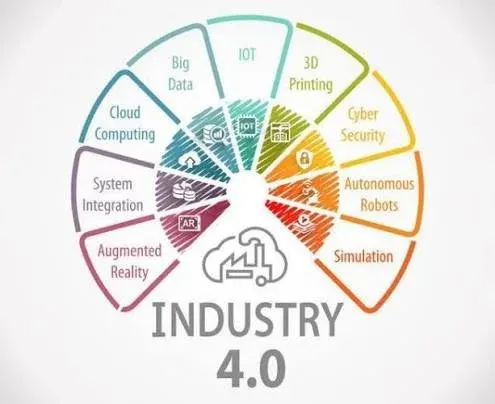
Industry 4.0 Foundations: The Nine Pillars
Industry 4.0 sounds like a buzzword, but underneath it is a simple, practical idea. Here is what the fourth industrial revolution actually means for people who make things, and how to take a sensible first step.
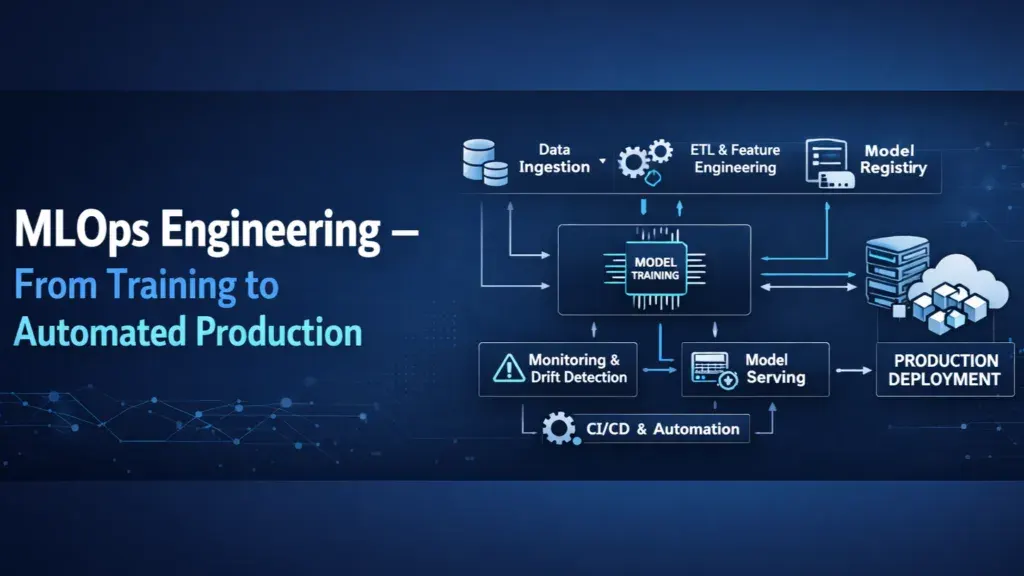
AI & MLOps for Industrial Engineers
Most industrial machine-learning models work beautifully in a notebook and die on the laptop they were born on. Here is why that happens, and what MLOps actually fixes.
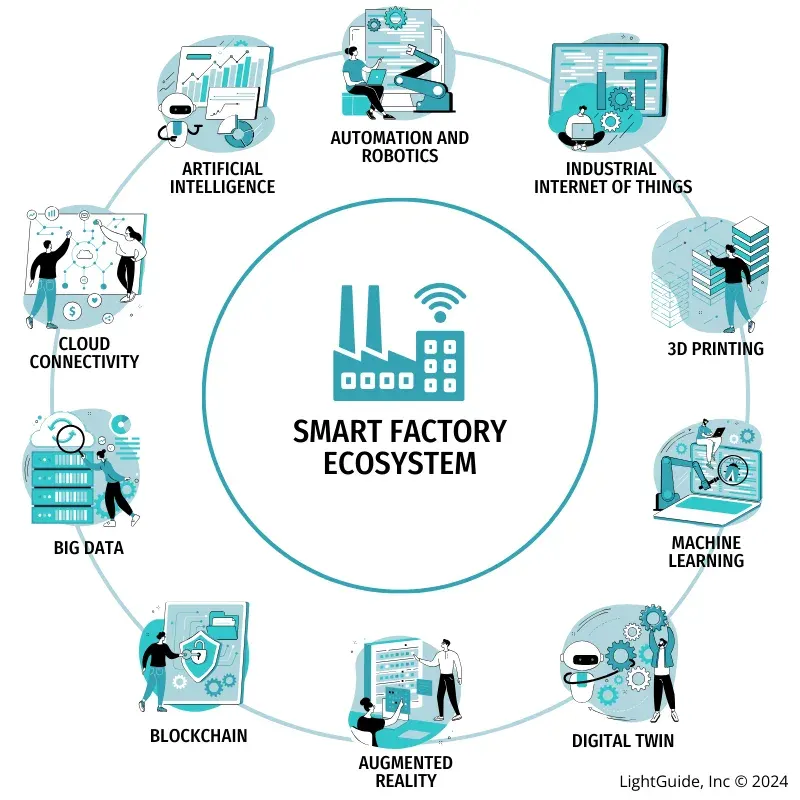
Smart Factory Fundamentals
"Smart factory" gets used as if it were a product on a shelf. It is not. Here is what actually makes a factory smart - and why the unglamorous foundations matter far more than the buzzwords.
Comments
No comments yet. Start the conversation.