AI & MLOps for Industrial Engineers
Most industrial machine-learning models work beautifully in a notebook and die on the laptop they were born on. Here is why that happens, and what MLOps actually fixes.
TL;DR
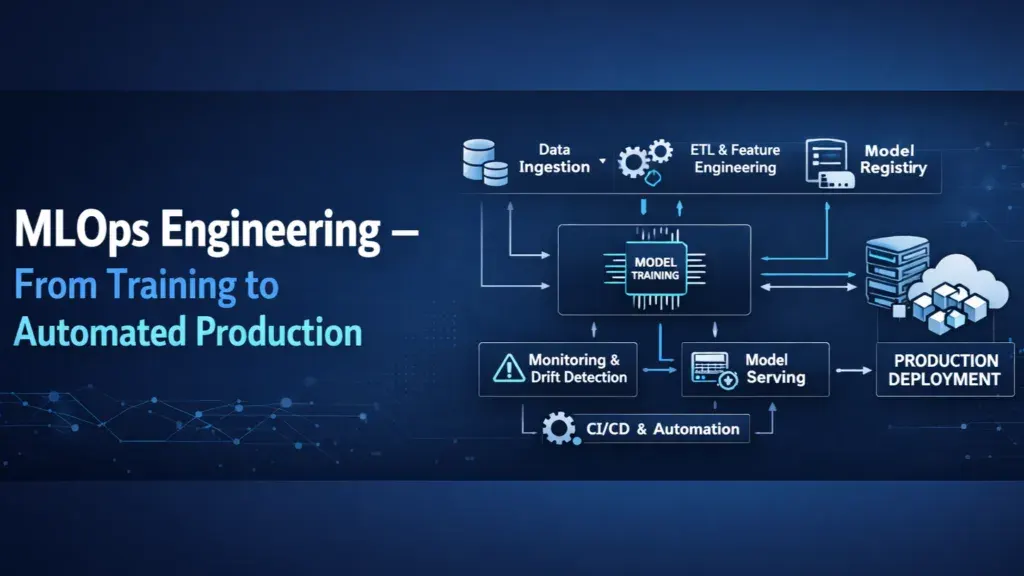
Most industrial machine-learning models work in a notebook and never reach a real machine. The model is rarely the problem; what fails is everything around it. MLOps fixes that with versioned data and models, automated pipelines, monitoring for drift and reliable deployment to the plant floor.
On this page
There is a quiet graveyard in almost every manufacturing company. It is not on the plant floor; it is on engineers’ hard drives. It is full of machine-learning models that once predicted bearing failures, flagged quality defects, or forecast energy use with impressive accuracy in a Jupyter notebook, and then never ran on a single real machine. The demo wowed a manager. A pilot was promised. And then the model simply stopped, stranded between “it works” and “it ships.”
If you have lived this, you already know the strangest part: the model was not the problem. The accuracy was fine. What failed was everything around the model, and that everything has a name.
The gap nobody warns you about
A notebook is a wonderful place to explore an idea and a terrible place to operate one. It rewards habits that production punishes. Cells run out of order, so the result depends on hidden state you cannot see. Data is loaded from a personal path that exists on exactly one computer. Libraries are whatever happened to be installed that week. A random seed is left to chance. None of this matters when you are exploring. All of it matters when someone else, on another machine, needs to rebuild your model and trust it to make maintenance decisions.
This is the heart of it. A notebook captures a result. Production needs a repeatable process. The distance between those two things is not a coding detail; it is the actual work, and it is where most industrial ML quietly dies.
The classic reference here is a 2015 paper from Google researchers with a title that says everything: “Hidden Technical Debt in Machine Learning Systems.” Its central observation has aged perfectly. In a real ML system, the model is only a small fraction of the whole. The rest is data handling, configuration, serving infrastructure, monitoring, and the glue that holds it together. Teams obsess over the small part and are then ambushed by the large part.
What MLOps actually fixes
MLOps is often sold as a stack of tools, which makes it sound like something you buy. It is better understood as a discipline you adopt: treating the entire life of a model as a continuous loop rather than a one-time project that ends when the accuracy looks good.
That loop has five honest stages. You scope the decision the model supports, measured in plant terms like downtime avoided rather than abstract scores. You handle data: collecting, validating, and versioning the messy sensor history and maintenance logs that real factories produce. You model, comparing against a trivial baseline before celebrating. You deploy, usually not to the cloud but to the edge, on a gateway near the equipment where decisions must be fast and must survive a network outage. And you monitor, watching the model age and feeding its degradation back into retraining.
MLOps fixes the specific failures that kill notebook models. It makes work reproducible, so a model survives the loss of the laptop that made it. It packages models into portable, versioned artifacts, often using the ONNX format so a model trained in Python can run on a plant device with no Python at all. It tracks every experiment and registers every shipped model, so after an incident you can answer the question that always comes: which exact model was running, and how was it built? And it watches for drift, the slow rot that sets in when a sensor is recalibrated or a part is redesigned and yesterday’s model no longer matches today’s reality.
Why this matters more in a factory
Industrial settings raise the stakes. A consumer recommendation that is slightly wrong costs a click. A maintenance prediction that is wrong, or that silently stopped working three months ago, costs unplanned downtime or a missed failure. Plants also run under constraints that office ML ignores: segmented networks that go offline by design, data that must not leave the site, and control loops that cannot wait on a round trip to a data center. These are exactly the constraints that push models to the edge and make reproducibility and monitoring non-negotiable rather than nice-to-have.
The encouraging part
None of this requires throwing away your notebook or becoming a software engineer overnight. The path from laptop to plant floor is a sequence of deliberate, learnable steps: pin your dependencies, version your data, log your runs, package the model into a portable artifact, deploy it where the decision happens, and watch it for drift. Climb that ladder one rung at a time. Each rung turns a fragile result into something a little more like real plant equipment: predictable, controllable, and trustworthy when the network is down.
The models in that hard-drive graveyard did not fail because the math was wrong. They failed because no one closed the gap between a result and a process. MLOps is simply the name for closing it on purpose.
Key takeaways 5
- Industrial ML projects usually fail between "it works" and "it ships".
- The model is rarely the problem; data, deployment and monitoring are.
- MLOps brings versioning, automation and reproducibility to ML.
- Factories need extra care: edge deployment, drift, safety and OT networks.
- Start small: one model, one pipeline, monitored in production.
Watch & learn

Frequently asked questions
What is MLOps?
MLOps applies DevOps practices to machine learning: versioning data and models, automating training and deployment pipelines, and monitoring models in production so they stay accurate and reproducible.
Why do machine learning models fail in manufacturing?
Common reasons are messy or changing sensor data, no reliable path to deploy on plant systems, models that drift as processes change and no monitoring once they are live.
What is model drift?
Model drift is the drop in accuracy that happens when real-world data changes, for example new materials, worn equipment or a different product mix, so the model no longer matches what it was trained on.
Go deeper with the free masterclass
Workshop, PDF handbook and curated resources for “AI & MLOps for Industrial Engineers”.
Related articles
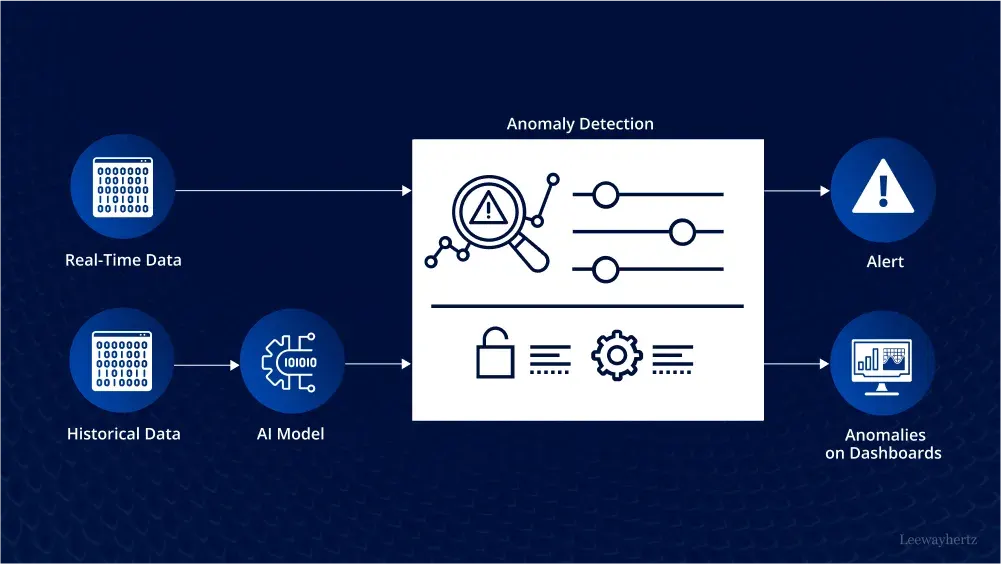
AI-Driven Anomaly Detection on the Line
Why catching abnormal behavior in real time is less about the algorithm and more about trust, data discipline, and the cost of being wrong.
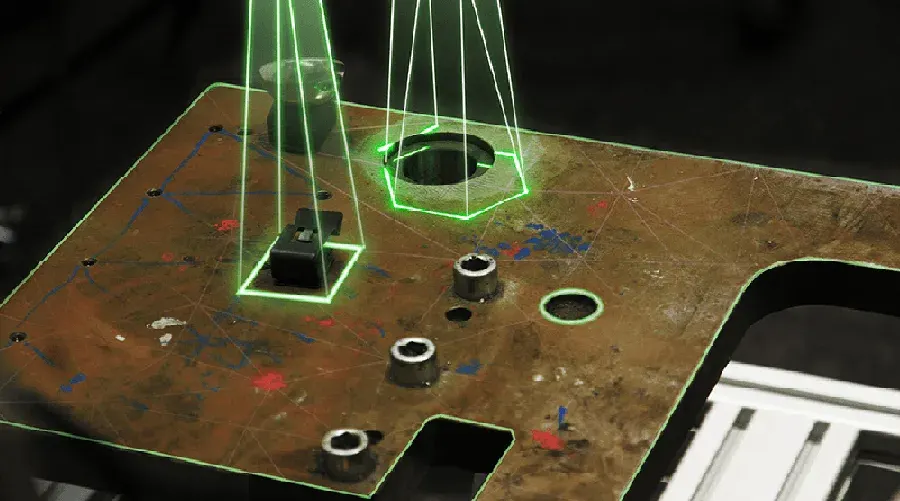
Machine Vision for Quality Inspection
Why the camera is the easy part, the lighting is the hard part, and the algorithm is almost never where your inspection project actually fails.

Machine Learning for Analysts
You do not need a PhD to build a useful model. You need to frame the problem, respect the test set, and know when to stop.
Comments
No comments yet. Start the conversation.