Scrum Master Essentials
Everyone wants the Scrum Master title and nobody wants the actual job. Here is the uncomfortable truth: if your team still needs you in the room, you have not finished the work.
TL;DR
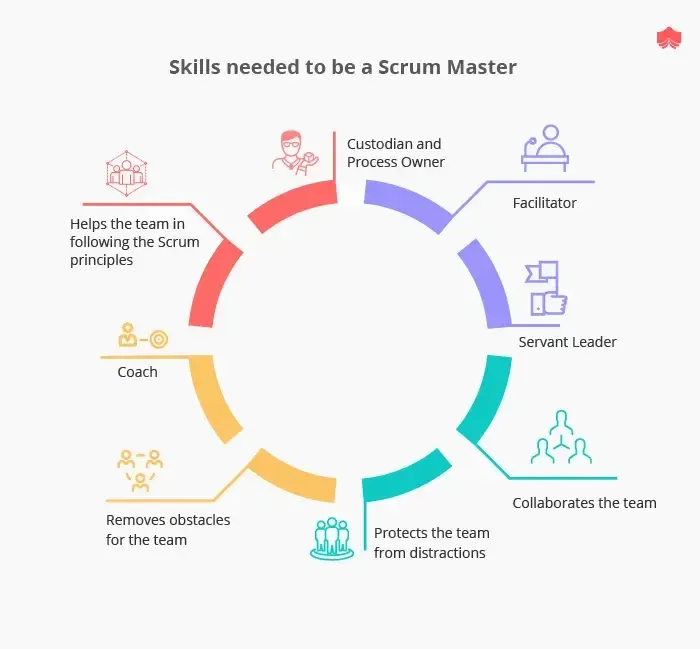
The true test of a Scrum Master is what happens when they're absent. Servant-leadership isn't soft: run the events well, then step back; coach with questions instead of answers; use metrics carefully; remove impediments; and build a self-managing team that no longer depends on you.
On this page
There is a quiet measure of a Scrum Master that almost nobody talks about during interviews. It is not how clean your board is, or how punctual your standups are, or whether you can recite the 2020 Scrum Guide from memory. It is this: what happens to your team on the day you do not show up?
If the Daily Scrum collapses into confusion, if impediments sit untouched, if the Retrospective never happens because “you weren’t there to run it,” then you have not built a self-managing team. You have built a team that depends on you. And dependence, however flattering, is the opposite of the job.
The role nobody quite believes
The Scrum Master is the most misunderstood accountability in Scrum, and the misunderstanding usually runs in one of two directions.
The first is the secretary version. You schedule the meetings, update the tickets, chase people for status, and take the notes. You are busy and helpful and completely interchangeable with a good calendar app. None of that is leadership, and the 2020 Scrum Guide is blunt about what you actually are: a true leader who serves the team and the organization.
The second is the boss version. You inherited the title from a project-manager role, so you assign tasks, set the priorities, decide what gets shipped, and run the standup like a status meeting you chair. This one is worse, because it looks like authority while quietly destroying the thing Scrum depends on, which is a team that manages itself.
The real role sits in the uncomfortable middle. You lead, but without command. You are responsible for the team’s effectiveness, but you cannot make anyone do anything. Your only tools are facilitation, coaching, the credibility you earn, and your willingness to make problems visible instead of solving them in secret.
Servant-leadership is not soft
“Servant-leader” sounds gentle, almost passive, and that is the wrong read. Serving a team is harder than bossing one. Bossing is easy: you decide, you tell, you check. Serving means you have to figure out what the team genuinely needs to be effective and then provide it, often by doing less rather than more.
The hardest version of this is the hero problem. An impediment appears. You know exactly who to call. You fix it in an hour and the team is grateful. Do that every Sprint and you have trained the team to wait for you the next time something breaks. The Guide chose its words carefully here: you are accountable for causing the removal of impediments, not for personally removing all of them. Sometimes you clear the path yourself. More often you coach the team to clear it, or you escalate to the part of the organization that can. The goal is a team that needs you less each Sprint, not more.
Run the events, then get out of the way
Most of your week lives inside the four events, and your instinct will be to run them like a chairperson. Resist it. Facilitation means creating the conditions for the team to inspect and adapt well, not presiding over the meeting.
Sprint Planning should produce one Sprint Goal the team can rally around, not a pile of tickets dressed up as a plan. The Daily Scrum belongs to the Developers; if they are facing you and reciting their tasks, you have accidentally turned a coordination event into a status report, and the fix is often as simple as standing outside the circle. The Sprint Review is a working session where the Increment is the star, not a slideshow. And the Retrospective, your home turf, is worthless if it never closes the loop on last time’s improvements before generating new ones.
Here is the test to apply to every event you facilitate: if you stopped attending, would it still be valuable? When the honest answer becomes yes, you have done that part of your job.
Coach with questions, not answers
The single habit that separates a great Scrum Master from a competent one is the willingness to ask instead of tell. New Scrum Masters, especially those promoted from a lead role, spot the answer and hand it over. It feels efficient. It is also how you keep a team dependent.
Compare “you should split that story, it’s too big” with “what would it take to finish this in a couple of days?” The first ends the thinking. The second starts it, and the answer the team reaches itself is the one they will remember and own. Save direct answers for genuine emergencies and for teaching mechanics. For everything about how the team works, ask first.
The same applies to the Product Owner, who is often under-supported and over-pressured. You help them keep the backlog clear and ordered, connect the work to a Product Goal, and protect their authority to decide priority. If they are a powerless proxy who cannot actually make decisions, name it kindly and work with leadership, because every Sprint inherits that indecision.
Mind the metrics
You will be handed velocity, burndown, and burnup charts, and someone above you will eventually try to turn them into a scoreboard. This is where you earn your courage. These are inspection tools for the team, mirrors to look into, not dashboards for managers to grade by. The moment velocity becomes a target imposed from outside, estimates inflate, the number stops meaning anything, and you get the famous trap: when a measure becomes a target, it stops being a good measure. Protect that distinction even when it is unpopular, because the alternative is a team that games the chart instead of delivering value.
The job is to become unnecessary
Pull it all together and the role has a strange shape. You spend your energy building a team that needs you less. You facilitate events until the team could run them without you. You coach until people find their own answers. You clear organizational impediments until the organization stops creating them.
So the best compliment you will ever receive is not “we couldn’t do this without you.” It is the quiet, almost invisible one: the day you are out and nobody really notices, because the team simply kept going. Aim for that. It is the whole job.
Key takeaways 5
- A good Scrum Master builds a team that doesn't depend on them.
- Servant-leadership means serving the team's effectiveness, not being passive.
- Facilitate Scrum events, then let the team own them.
- Coach with questions rather than giving answers.
- Use metrics to start conversations, not to judge people.
Watch & learn

Frequently asked questions
What does a Scrum Master do?
A Scrum Master helps the team and organization use Scrum effectively: facilitating events, coaching on practices, removing impediments and fostering a self-managing team.
Is a Scrum Master a project manager?
No. A Scrum Master doesn't assign tasks or own the plan. They serve the team and the Product Owner by improving how work gets done.
How do you measure a good Scrum Master?
By the team's growing self-management, predictability, quality and continuous improvement, and by how well things run when the Scrum Master is not present.
Go deeper with the free masterclass
Workshop, PDF handbook and curated resources for “Scrum Master Essentials”.
Related articles
Agile Project Management for Technical Teams
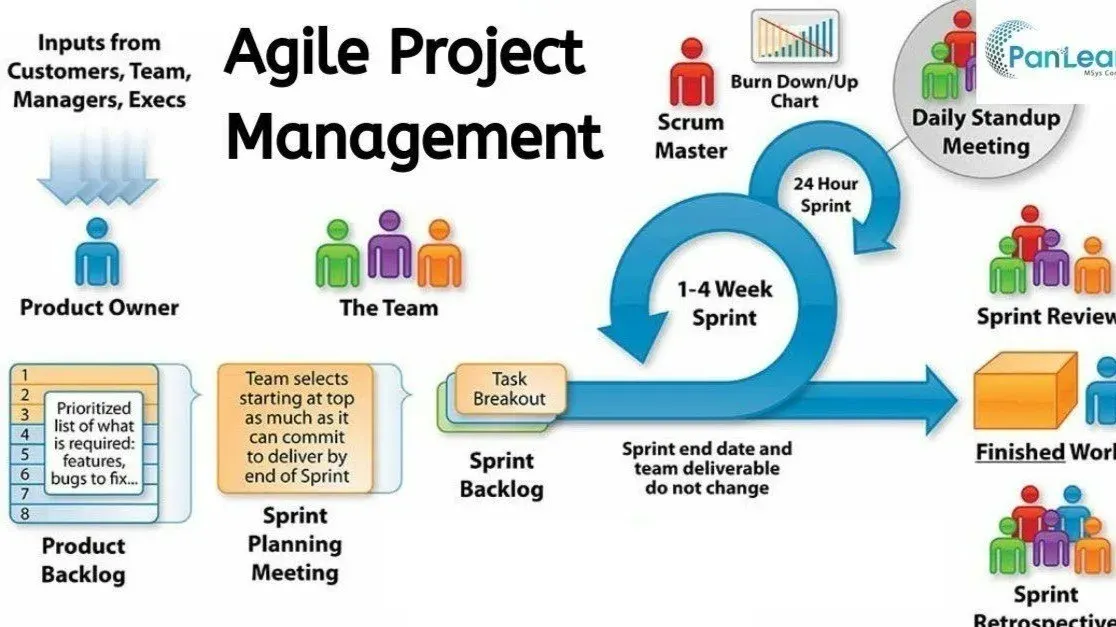
Your team has daily standups, two-week sprints, and a burndown chart. So why does shipping anything still feel like wading through wet cement? You might be doing fake Agile.
Hybrid Agile + Waterfall Delivery
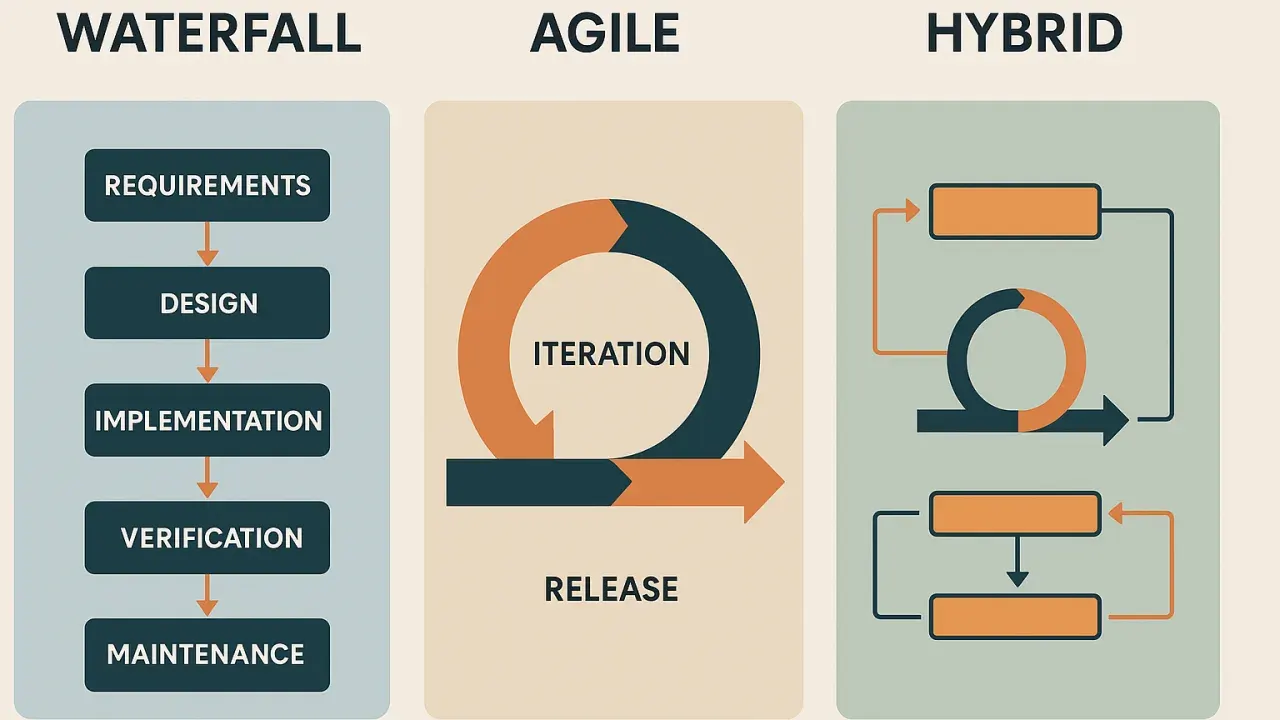
Most organizations are neither agile nor waterfall. Stop apologizing for it and start designing for it.

Leading Remote & Distributed Teams
The hardest part of leading people you never see is unlearning everything the office quietly did for you.
Comments
No comments yet. Start the conversation.