Hybrid Agile + Waterfall Delivery
Most organizations are neither agile nor waterfall. Stop apologizing for it and start designing for it.
TL;DR
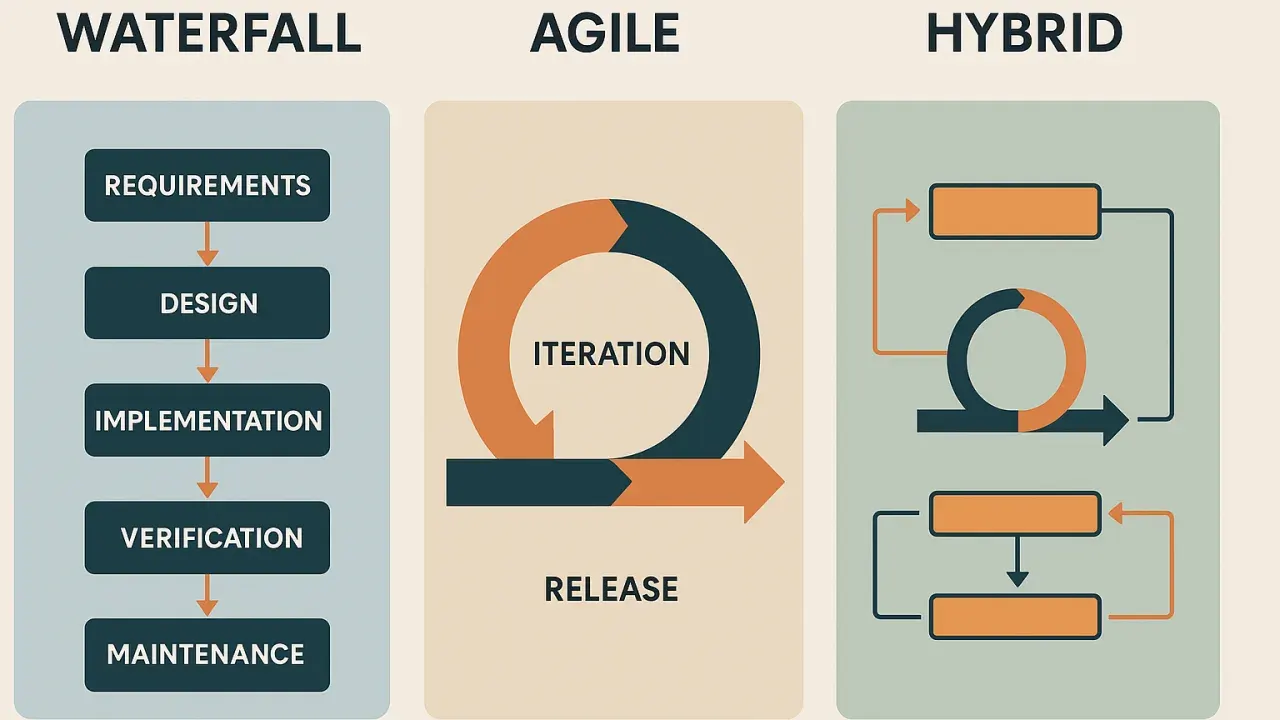
Most organizations are neither purely agile nor purely waterfall, because programs contain different kinds of work. Hybrid delivery uses plan-driven methods where requirements are fixed and dependencies are hard, iterative methods where learning matters, and clear interfaces where the two meet.
On this page
There is a particular kind of meeting I have sat through more times than I can count. A program is in trouble, and the post-mortem splits along a familiar fault line. One camp says the team “wasn’t agile enough” - too much process, not enough shipping. The other says the team “wasn’t disciplined enough” - no baseline, no plan, no control. Both camps are sincere. Both are partly right. And both are missing the actual problem, which is that the program was forced into a single operating model when it contained two fundamentally different kinds of work.
This is the everyday reality of delivery, and hybrid is the honest response to it.
The myth of the pure method
Conference talks and certification courses present agile and waterfall as rival philosophies, and you are invited to pick a side. But programs do not come pre-sorted into pure types. A typical enterprise initiative bundles a regulated data migration (known, dangerous to change, fixed deadline) with a new customer experience (unknown, cheap to change, learn-as-you-go). The migration genuinely needs a plan, a baseline, and a gate. The experience genuinely needs a backlog, short iterations, and permission to change its mind.
Apply pure waterfall to the experience and you freeze a spec full of guesses, then spend the budget building the wrong thing precisely. Apply pure agile to the migration and the regulator - who would quite like to know the cutover date - loses confidence in you entirely. Neither failure is a failure of the method. It is a failure of matching the method to the work.
The encouraging news is that the profession has stopped pretending otherwise. When PMI rewrote the PMBOK Guide for its seventh edition in 2021, it abandoned the single prescribed process model and reorganized around principles and tailoring - explicitly endorsing predictive, adaptive, and hybrid approaches as equals. The joint PMI and Agile Alliance Agile Practice Guide had already, in 2017, devoted real attention to hybrid life cycles. Hybrid is not a hack. It is recognized, mainstream practice.
What hybrid actually is
Hybrid is not “agile with extra meetings” or “waterfall with stand-ups.” It is a design activity. You take a program, break it into workstreams, and decide for each one where it belongs on the spectrum from predictive to adaptive. Then - and this is the part that takes real skill - you make the pieces coexist.
The decision is less mystical than it sounds. Two questions carry most of the weight. First: how well do we understand the requirements? Second: if we get a decision wrong, does it cost a week or a quarter to fix? Well-understood, quarter-class work wants a plan up front. Uncertain, week-class work wants to emerge through iteration. Score each workstream that way and the shape of your hybrid reveals itself.
There are a handful of named patterns worth knowing. Water-Scrum-Fall puts agile delivery between an up-front planning phase and a controlled release phase - sensible if you keep the bookends light, dangerous if they squeeze the middle. Phase-gate with agile inside keeps an executive governance spine of funding gates while teams iterate between them. Fixed-milestone agile nails down the date and the budget and lets scope be the variable. Hybrid by workstream simply runs each stream in its native mode and manages the seams. Most real programs combine these.
Where it goes wrong
The failures are not technical. They are organizational, and they repeat.
The first is theater. Teams adopt the vocabulary of agile - sprints, retros, stand-ups - without the substance, and end up running mini-waterfalls: a requirements sprint, then a design sprint, then a build sprint. That is waterfall sliced into two-week pieces, carrying all of agile’s ceremony and none of its feedback. The cure is a single rule: every sprint must end in a thin, working, demonstrable slice. If you cannot show it to a user, it was not a sprint.
The second is cultural. Plan-driven people prize predictability; adaptive people prize responsiveness. Put them in one program and they quietly judge each other into dysfunction. The fix is to name the difference out loud, agree where each value system rules, and have leadership visibly respect both.
The third is commercial. A fixed-price, fixed-scope contract wrapped around discovery work is a guaranteed fight, because the contract forbids the very flexibility the work requires. The contract has to encode which corner of the iron triangle is allowed to move.
Making the two worlds coexist
The mechanics are where hybrid is won. A few principles carry most of the load.
Keep the roles honest. The project manager owns the outside of the iteration - milestones, money, risk, stakeholders - and stays out of the inside, which the team owns. The single most common role failure is a PM reaching into the sprint to assign tasks. Hold that boundary and most other frictions ease.
Run two clocks but connect them. The team runs on sprints; governance runs on gates and steering committees. Rather than make the team produce separate status decks, let the sprint demo be the source of truth, and have the PM translate it into milestone and risk language. One set of facts, two audiences.
Tell the truth in numbers. Predictive work estimates in absolute terms for budgeting; adaptive work estimates in relative terms for forecasting. Reconcile them at the milestone level and report ranges, not invented certainties. “Portal MVP between sprint seven and nine at current velocity” is more honest, and more useful, than a fake exact date that everyone privately disbelieves.
And separate your change channels. Inside the agile envelope, the product owner reprioritizes freely - that is the method working, not “change.” Crossing a committed baseline goes through formal change control. Draw that line explicitly and you avoid both the bureaucracy that suffocates teams and the silent scope erosion that ambushes sponsors.
The point
Hybrid is not a halfway house for people who cannot commit to a method. It is the most accurate model for the partly-known, partly-discovered work that fills most real portfolios. The discipline it asks for is not allegiance to a framework. It is the willingness to look at each piece of your program, decide honestly what kind of work it is, and design accordingly - then keep the pieces talking to each other. Do that, and the post-mortem meeting I described at the start simply stops happening.
Key takeaways 5
- Pure methods rarely match real programs.
- Different kinds of work need different operating models.
- Use plan-driven delivery for fixed constraints and hard dependencies.
- Use iterative delivery where requirements need discovery.
- Design the interfaces between the two worlds explicitly.
Watch & learn

Frequently asked questions
What is hybrid project management?
Hybrid project management combines elements of predictive (waterfall) and agile approaches, applying each where it fits best within the same program.
When should you use waterfall instead of agile?
Waterfall suits work with stable requirements, regulatory gates, long-lead procurement or hardware dependencies; agile suits work where requirements evolve and fast feedback is possible.
What goes wrong with hybrid delivery?
Common failures include mixing methods by accident instead of design, agile teams blocked by waterfall gates and unclear handoffs between plan-driven and iterative parts.
Go deeper with the free masterclass
Workshop, PDF handbook and curated resources for “Hybrid Agile + Waterfall Delivery”.
Related articles
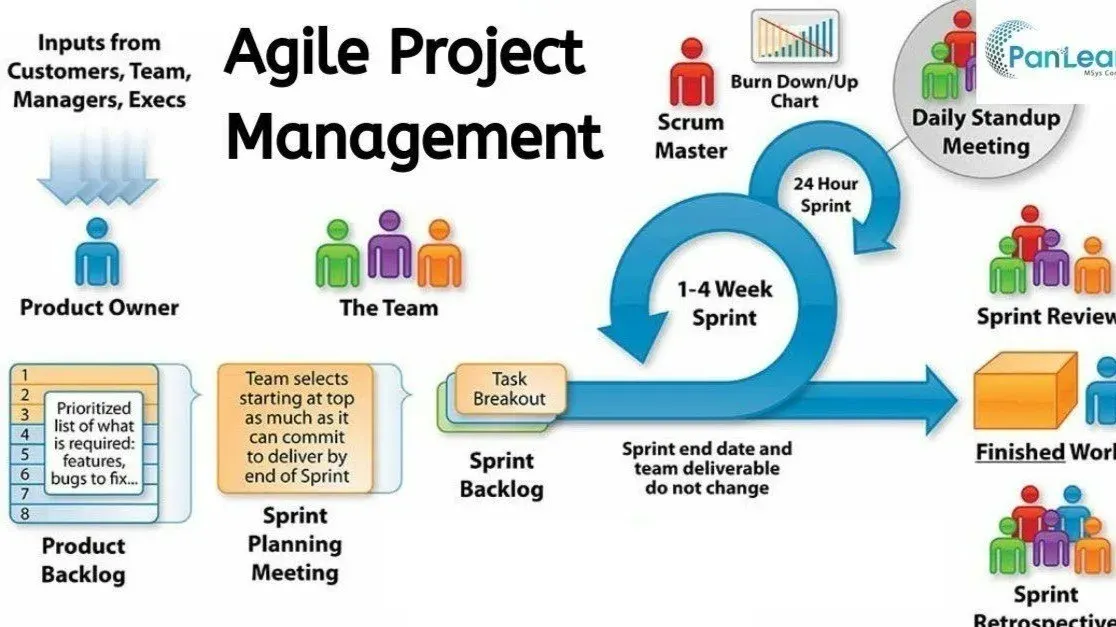
Agile Project Management for Technical Teams
Your team has daily standups, two-week sprints, and a burndown chart. So why does shipping anything still feel like wading through wet cement? You might be doing fake Agile.
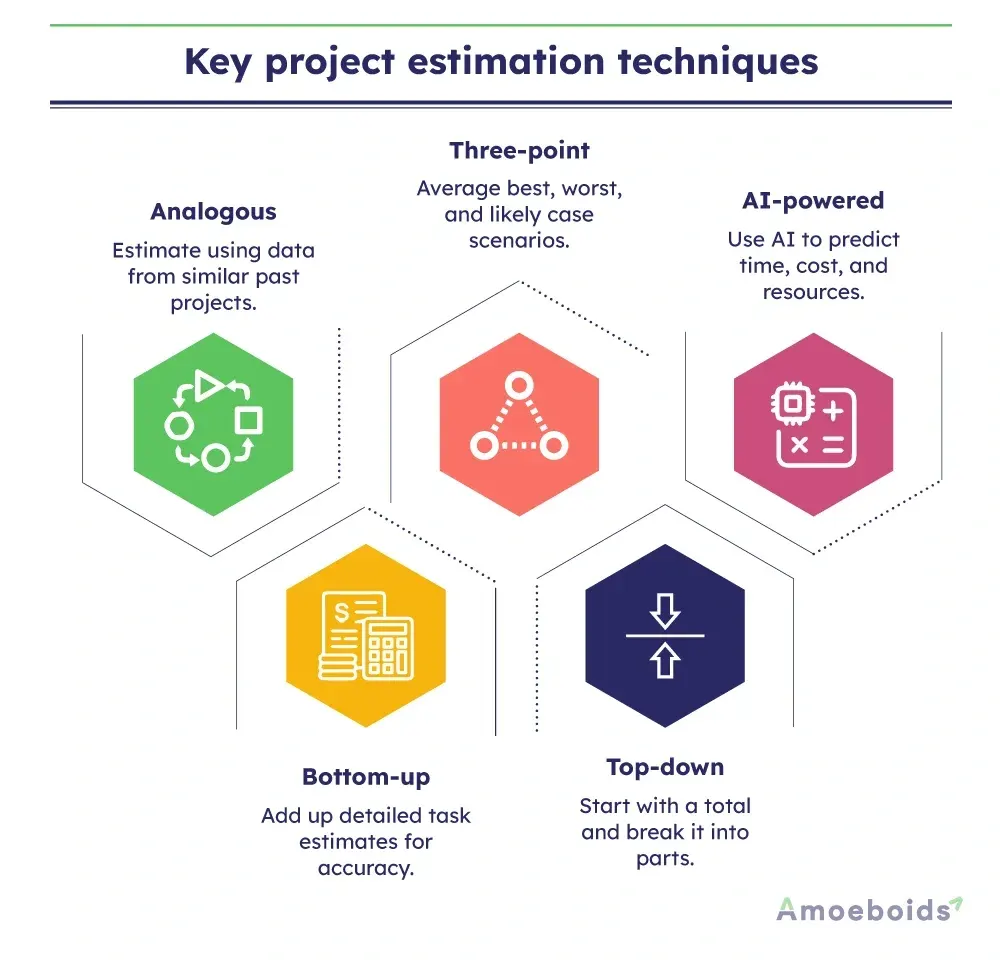
Estimation & Planning Techniques
Estimates fail for predictable reasons. Here is how to forecast work as a range, plan with honest buffers, and update as you learn.
Project Management Fundamentals
You did not ask to become a project manager - the project just landed on your desk. Here is the small set of ideas that will carry you through your first one.
Comments
No comments yet. Start the conversation.