Leading Remote & Distributed Teams
The hardest part of leading people you never see is unlearning everything the office quietly did for you.

TL;DR
Leading people you never see means unlearning what the office quietly did for you: visibility, casual updates, trust by proximity. Shift from watching to designing how work flows, make writing the backbone of communication, build trust deliberately and pay attention to connection and well-being that no roadmap captures.
On this page
The first time I led a team I could not see, I did the obvious thing: I tried to rebuild the office inside my screen. I watched the little green dots. I expected a reply within minutes. I felt a flicker of suspicion when someone was “away” at two in the afternoon. None of it was malicious. It was just the habit of a manager who had only ever led people in a room, reaching for the signals that room used to hand him for free.
It took me an embarrassingly long time to understand that those signals were gone, and that chasing them was the problem, not the solution.
The office was doing your job for you
When everyone shares a space, leadership leans on a thousand things you never had to think about. You see who looks confused in a meeting. You notice who stayed late. You catch the side conversation by the coffee machine and feel the mood shift when a deadline slips. The room is a giant, free sensor network, and it feeds you context all day long without your asking.
Take the room away and that network goes dark. What is left is the work itself, the words people write, and whether they believe you have their back. New remote managers experience this as a loss, so they try to recreate the sensors artificially: status pings, mandatory cameras, activity dashboards. But surveillance is a poor substitute for presence, and worse, it broadcasts the exact opposite of what you intend. Every “are you online?” tells a capable adult that you do not trust them to do their job. Trust does not survive many of those.
From watching to designing
The shift that finally made me a better remote leader was realizing my job had changed shape. In the office I was a director, steering minute to minute, present in the room. Remotely I had to become a designer: the person who builds the system the team operates inside, then largely gets out of the way.
That system is not glamorous. It is the goals written down clearly enough that someone in another time zone can make an aligned decision at three in the morning without asking me. It is the single place where durable knowledge lives, so the answer to “why did we choose this?” is written once and reused forever. It is the norm that decisions made on a call get documented, because a decision nobody wrote down is a decision half the team never learns about. When the system is well designed, the team runs without me in the loop, which is exactly what you need when half of them are asleep while you work.
Writing is the skill that holds it together
If I could give a new distributed-team leader one instruction, it would be this: default to writing. Not because writing is virtuous, but because it is the only form of communication that survives distance and time. A spoken decision evaporates. A written one onboards your next hire, settles your next debate, and saves your next meeting. Every clear message is a small, permanent asset.
This is also where async stops feeling slow. People hear “asynchronous” and imagine a team crawling along, waiting days for answers. In practice the opposite happens. Nobody sits idle waiting for a meeting. Nobody loses two hours of focus to a fifteen-minute interruption. The work advances in steps, around the clock, and the best answer turns out to be the considered one rather than the fastest one. You reserve real-time conversation for what genuinely needs it: feedback, conflict, bad news, the high-bandwidth brainstorm. The higher the emotional stakes, the more you should pick up the phone. Everything else can be written.
Trust is the load-bearing wall
None of this works without trust, and remote trust runs in a specific direction: you grant it up front and adjust by results. You assume people are working. You measure what they produce, not how long they sat at a desk. You intervene on outcomes, not on activity. If you genuinely cannot trust someone to work without being watched, you have a hiring or a clarity problem, and no dashboard will fix it.
The same discipline applies to fairness. Distance amplifies every inequality. The people in headquarters, in the dominant time zone, in the room with the boss, quietly accumulate context and influence until your team splits into a center and a periphery. Countering that is deliberate work: rotate the meeting times so the same region is not always punished, write decisions down so context does not depend on being in the hallway, and watch who gets the stretch assignments so visibility never becomes a proxy for geography.
The part nobody puts on a roadmap
The most valuable things I do as a remote leader rarely show up anywhere. A “just checking in” message to someone who has gone quiet. A five-minute call with no agenda. Noticing that a normally engaged person has stopped turning their camera on. Remote work can be lonely, and burnout is sneaky precisely because nobody sees the person working until midnight or never taking real time off. What you tolerate becomes the culture. What you model becomes the norm.
So I have stopped mourning the room. Led on purpose, distance is not a limitation. It forces a clarity, a fairness, and a respect for people’s focus that the office let me skip for years. The green dots were never the point. The work, and the people doing it, always were.
Key takeaways 5
- The office provided signals that remote teams lose.
- Chasing online status and instant replies is the wrong fix.
- Design communication, decisions and handoffs explicitly.
- Clear writing is the core remote leadership skill.
- Trust and connection must be built on purpose.
Watch & learn

Frequently asked questions
How do you manage a remote team effectively?
Set clear goals and outcomes, document decisions in writing, use asynchronous communication by default, hold regular one-to-ones and judge results rather than online activity.
Why is writing important in remote work?
Written communication creates a shared record, works across time zones, reduces repeated meetings and gives everyone the same information.
How do remote leaders build trust?
By being consistent and transparent, keeping commitments, giving autonomy, recognizing good work and creating regular moments for personal connection.
Go deeper with the free masterclass
Workshop, PDF handbook and curated resources for “Leading Remote & Distributed Teams”.
Related articles
No Hello - Don't Just Say "Hello" in Chat
It's as if you called someone on the phone and said "Hi!" and then put them on hold!
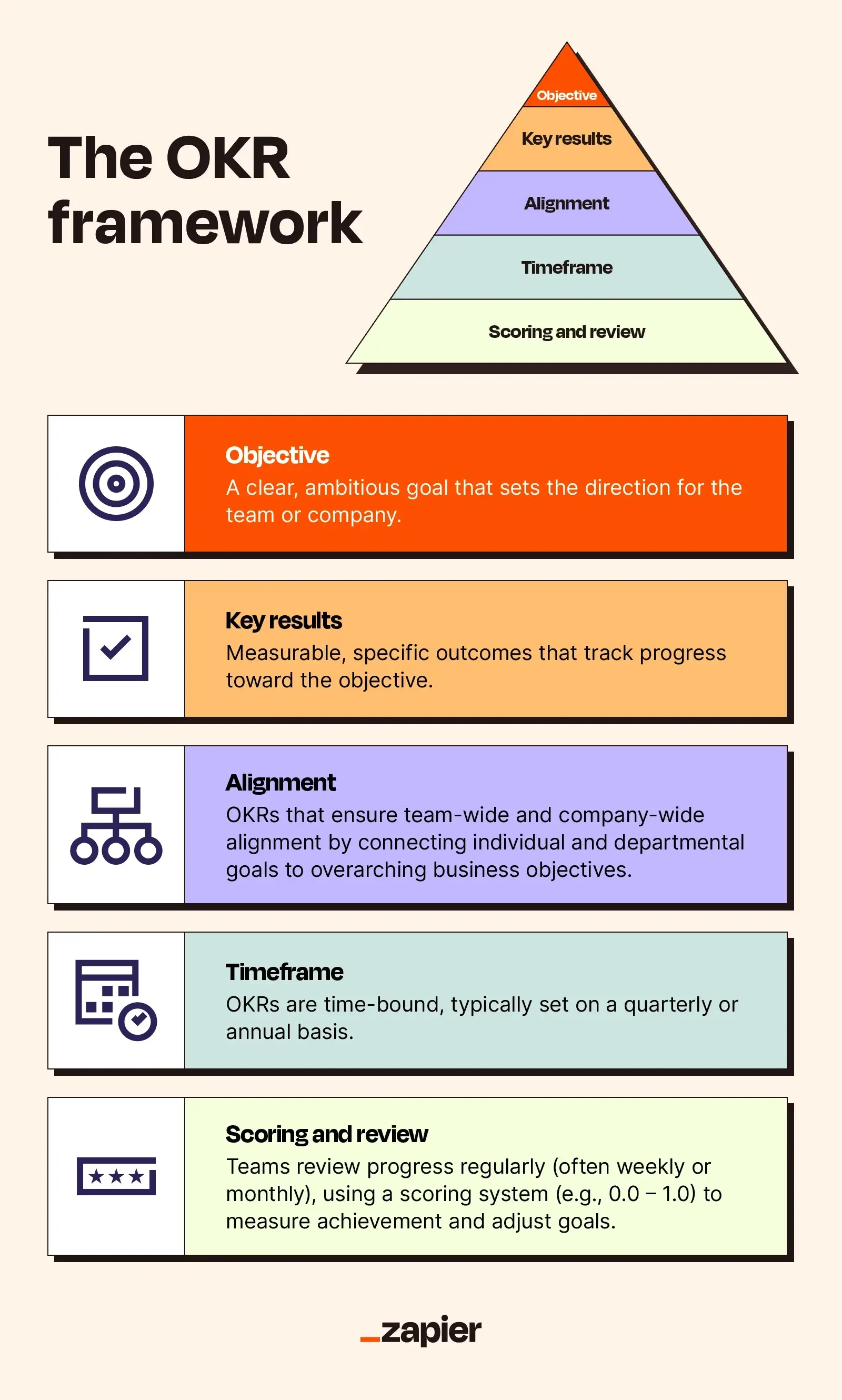
OKRs & Goal-Setting for Teams
Most teams don't lack ambition - they lack a finish line. Here's what changed when mine started writing goals we could actually score.

Supporting Hybrid & Remote Workforces
The office help desk assumed it could walk over and fix things. When the users scattered, the service desk had to be rebuilt around a single uncomfortable truth - you can never touch the device.
Comments
No comments yet. Start the conversation.