SCADA Systems Essentials
SCADA is the quiet supervisory layer that lets a handful of operators watch and steer processes spread across an entire region. Here is what every control engineer should understand about how it works.
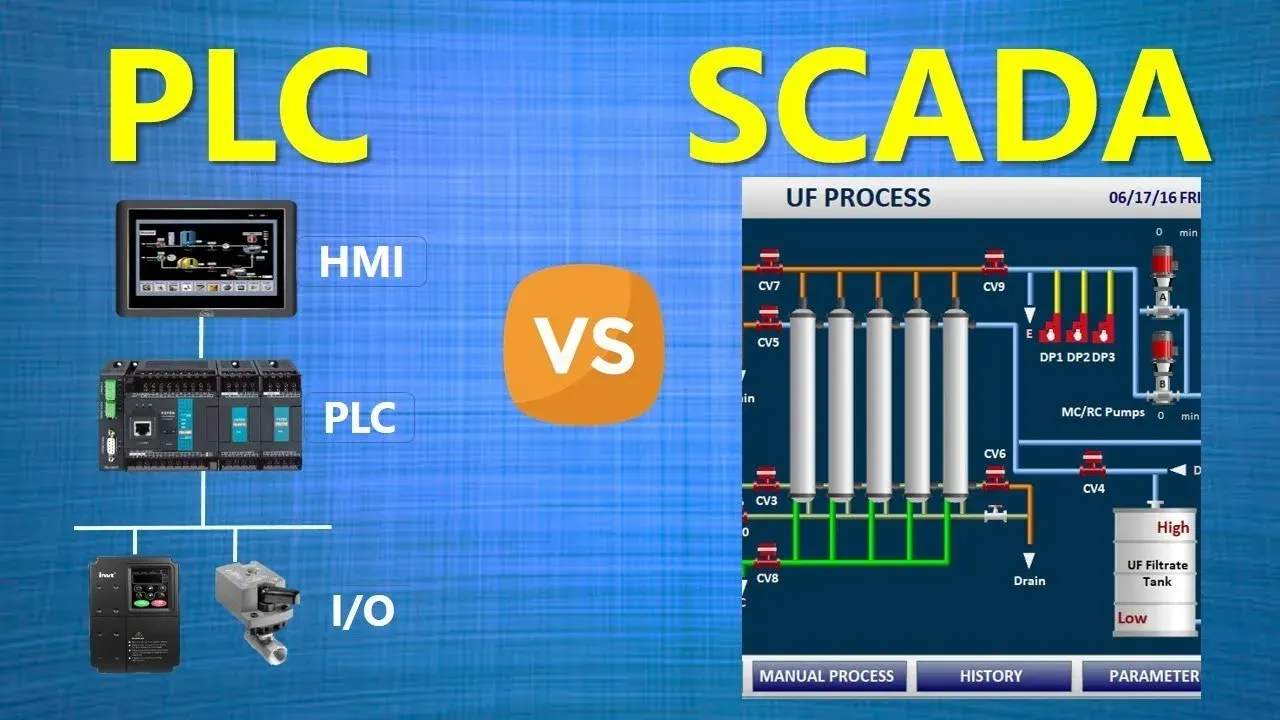
TL;DR
SCADA (Supervisory Control and Data Acquisition) lets small teams monitor and steer assets spread across whole regions, such as water, power and pipelines. It is a supervisory layer: RTUs and PLCs control locally, communications carry data to servers and HMIs, and historians and alarms help operators decide.
Walk into a water utility control room, an electrical dispatch center, or a pipeline operations office and you will find a small team watching screens that represent assets scattered across hundreds of kilometers. The system that makes this possible is SCADA, short for Supervisory Control and Data Acquisition. It rarely gets the attention that flashy automation projects do, yet it is the backbone of how distributed infrastructure is monitored and run. Understanding it is part of the core literacy of a control or automation engineer.
The first thing to get straight is what SCADA does and, just as importantly, what it does not do. SCADA is a supervisory layer. It collects measurements, displays them, stores history, raises alarms, and sends operators’ commands down to local equipment. It is not the system closing fast control loops on valves and motors. That job belongs to the PLCs and RTUs in the field. People often confuse SCADA with a DCS, a Distributed Control System. The honest distinction is one of intent and scope: a DCS is engineered as one tightly integrated platform for a single continuous process such as a refinery unit, while SCADA shines when assets are spread out and reliable long-distance communication matters more than microsecond control. In practice the two borrow features from each other, but the mental model holds: SCADA supervises, controllers control.
Picture the system as a chain. At the bottom are field devices, the sensors that measure pressure, level, and flow, and the actuators that open valves or start pumps. Above them sit field controllers, the RTUs built for remote harsh sites and the PLCs built for local logic. They acquire the raw signals and answer the master when polled. A communication network, which might be radio, cellular, fiber, or a leased line, carries those exchanges. At the top is the SCADA server, holding a real-time database of every value and evaluating alarms, and beside it the HMI that operators look at and the historian that remembers everything for months or years. Data flows up the chain; commands flow back down.
The conversation between server and field happens over a protocol, and the choice matters. Modbus, dating from 1979, is the simple, ubiquitous option: a master polls slaves arranged into coils and registers. It is easy to implement but has no native security and no time stamps. DNP3, born in the utility world of the early 1990s, is smarter for distributed systems because it buffers time-stamped events and sends them when polled, so a communications dropout does not lose data. OPC, and especially its modern form OPC UA, solves a different problem: connecting SCADA software to many kinds of devices and applications without writing a custom driver for each, with built-in security baked in. A useful rule of thumb is Modbus for simple local devices, DNP3 for wide-area utility systems, and OPC UA for software integration.
Whatever the protocol carries, it arrives as tags. A tag is a named data point, the bridge between a raw number in a register and something an operator understands, like Tank 1 level in percent. Tags are where good SCADA engineering quietly lives. Consistent names, correct scaling, sensible deadbands, and well-chosen alarm thresholds are the difference between a system operators trust and one they fight. Alarms deserve special care. The discipline of alarm management exists because it is easy to drown operators in noise. The guiding principle is simple: every alarm should demand a specific response, and if there is nothing to do, it is a notification, not an alarm. Prioritize honestly, use deadbands to stop chattering, and group related alarms so a single upset does not trigger a flood that buries the one alarm that mattered.
The operators experience all of this through the HMI, and modern practice has moved decisively toward restraint. The high-performance HMI approach uses muted gray backgrounds so that color carries meaning rather than decoration. Equipment running normally looks calm; bright color is reserved for trouble. Screens are arranged as a hierarchy, from a plant overview down to individual device faceplates, with navigation and the alarm banner always in the same place. Numbers wear their units, and analog indicators reveal trends at a glance. The aim is an operator who is in command of the process, not one squinting at clutter during an upset.
One theme runs underneath all of this and deserves a closing word: security. Because SCADA bridges the world of operational technology and, increasingly, corporate IT, the supervisory layer is critical infrastructure. The defensive basics are unglamorous but effective. Segment the SCADA network from the office network. Do not expose protocols that lack authentication, such as plain Modbus, to untrusted links. Restrict who can issue commands and change setpoints, and log every action, because an unexpected setpoint change can signal either a fault or an intrusion. None of this is exotic; it is ordinary engineering hygiene applied to systems whose failure has physical consequences.
SCADA will keep fading into the background, which is exactly the point. When it is done well, operators barely think about the plumbing and simply see their process clearly and act on it confidently. Getting it to that state, from architecture to tags to screens, is the work this field rewards.
Key takeaways 5
- SCADA supervises distributed assets; local controllers do the real-time control.
- RTUs and PLCs connect field devices to the system.
- Communication networks link remote sites to the control center.
- HMIs, alarms and historians support operator decisions.
- Security is critical because SCADA runs vital infrastructure.
Watch & learn

Frequently asked questions
What is SCADA?
SCADA is a system that collects data from remote equipment and lets operators monitor and control processes spread over large areas, such as utilities, pipelines and transport networks.
What is the difference between SCADA and a PLC?
A PLC controls a machine or process locally in real time. SCADA sits above PLCs and RTUs, gathering their data and providing supervisory control, visualization and alarms across many sites.
What is an RTU?
A Remote Terminal Unit is a field device that collects sensor data and executes commands at remote sites, communicating with the central SCADA system, often over long distances.
Go deeper with the free masterclass
Workshop, PDF handbook and curated resources for “SCADA Systems Essentials”.
Related articles
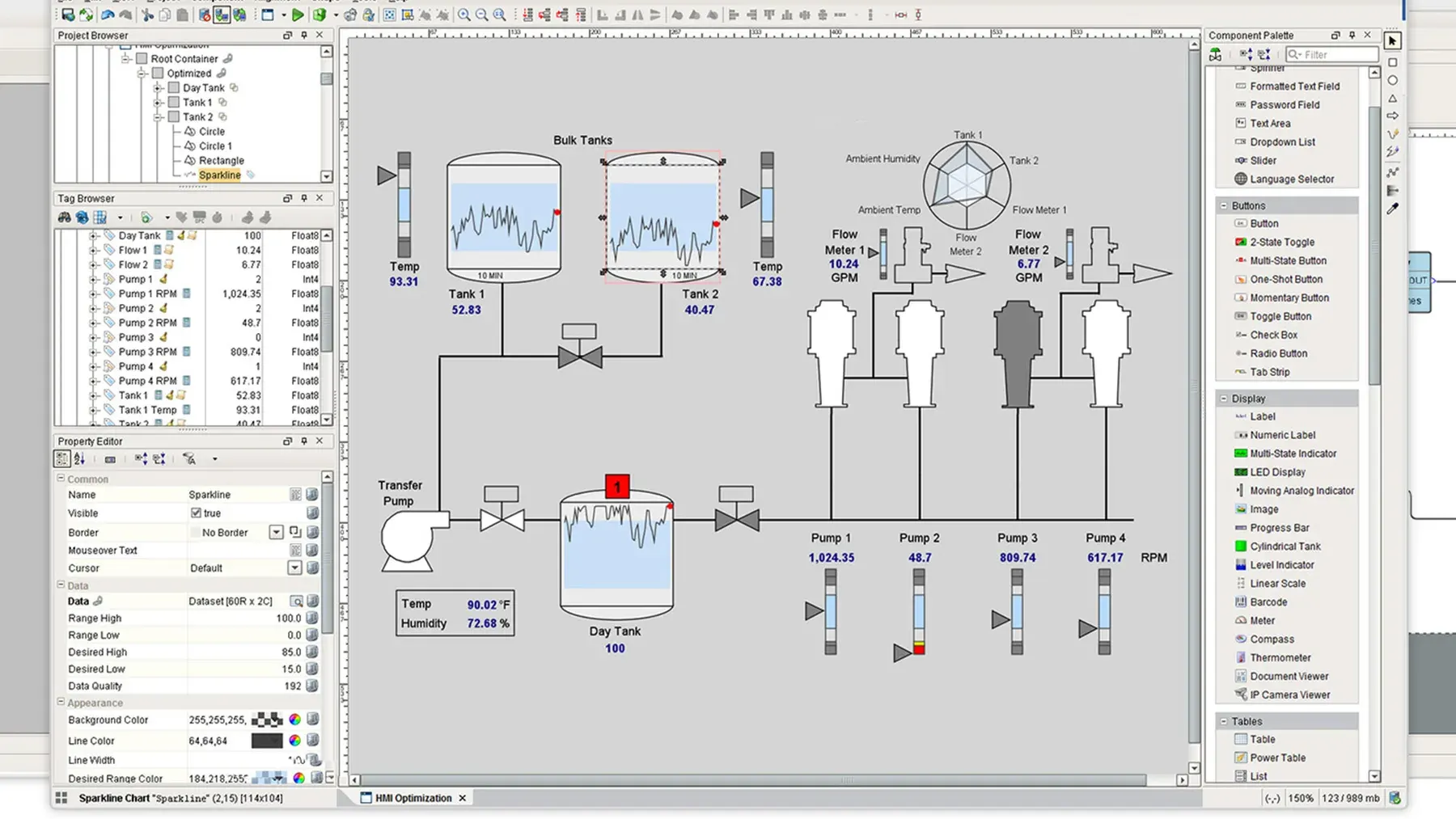
HMI Design Best Practices
The most useful control-room screen is often the most boring-looking one. Here is why high-performance HMI design trades color and gloss for calm, and how that calm keeps operators in command.
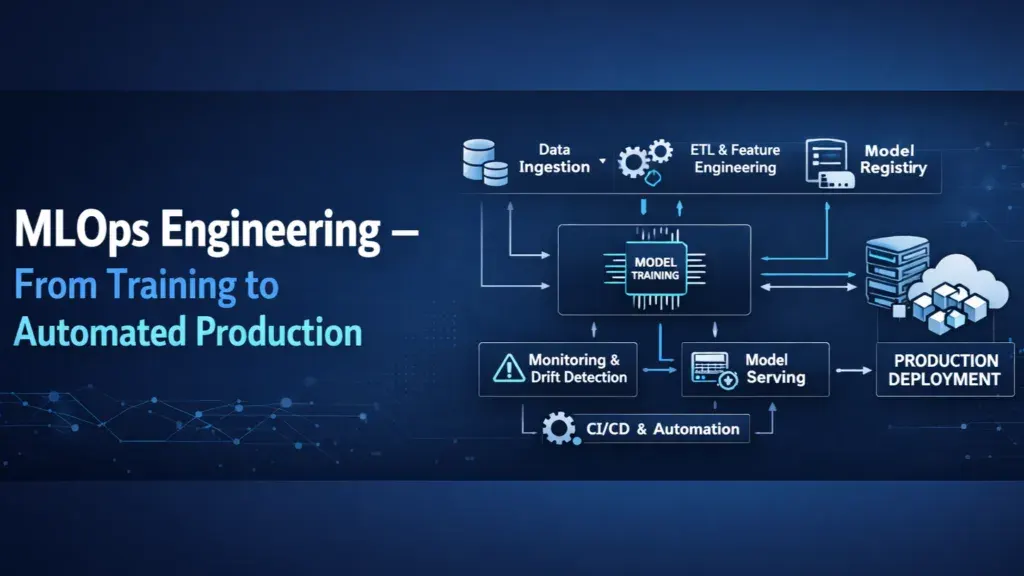
AI & MLOps for Industrial Engineers
Most industrial machine-learning models work beautifully in a notebook and die on the laptop they were born on. Here is why that happens, and what MLOps actually fixes.
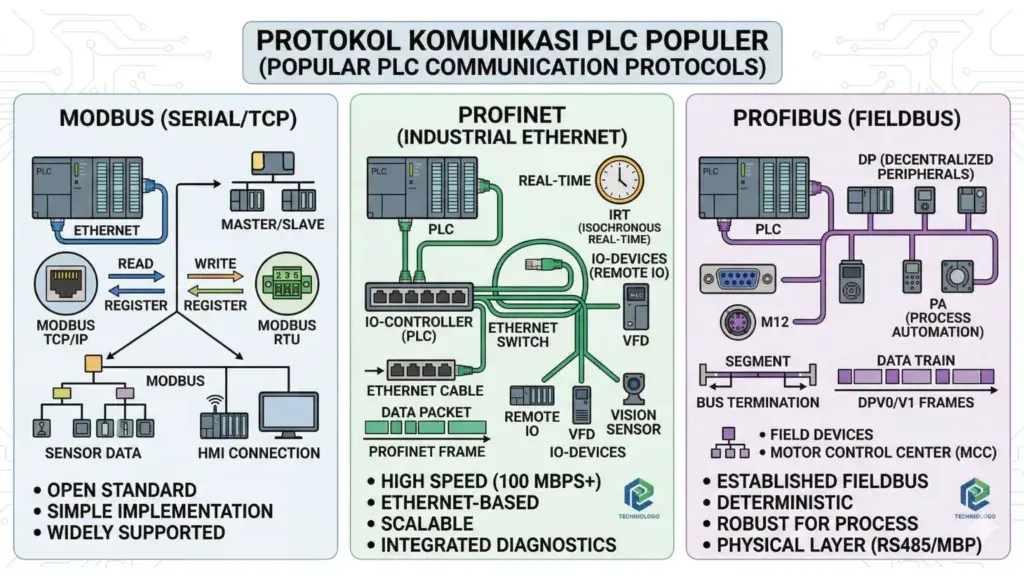
Industrial Communication Protocols (Modbus & Profinet)
Modbus and PROFINET sit at opposite ends of the industrial network spectrum - one ancient and universal, one fast and deterministic. Here is how each thinks, and why most plants run both.
Comments
No comments yet. Start the conversation.