Phishing & Social Engineering Defense
The most dangerous hack of all does not target your computer. It targets you, and the defense is simpler than you think.
TL;DR
Organizations spend fortunes on technical defenses, yet attackers often just trick a person into opening the door. Social engineering, through phishing, phone calls and fake requests, exploits urgency, authority and trust. Learn to feel the trick, verify through another channel, report quickly without shame and build a human firewall.
On this page
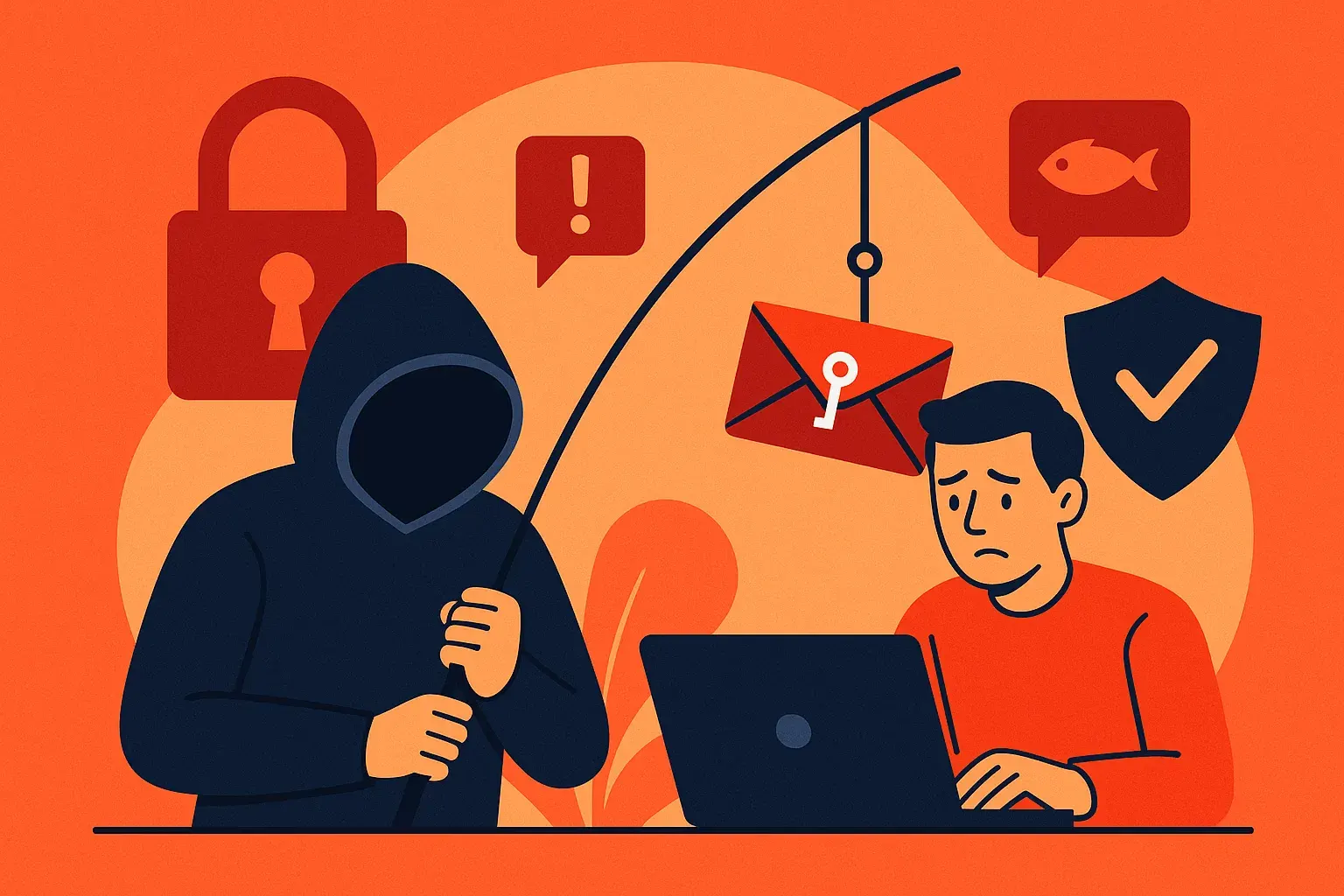
There is a strange paradox at the heart of modern security. We spend fortunes on firewalls, encryption, and threat-detection systems so sophisticated they can spot a single malicious packet among billions. And then someone gets an email that says “your password expires today, click here,” and they click. The expensive wall stands untouched while the attacker simply walks through the front door, because a person opened it for them.
This is the world of social engineering, and once you understand it, the news stops being mysterious. Behind almost every major breach you read about, there is rarely a lone genius cracking codes in the dark. There is usually a tired employee, a convincing message, and a moment of trust that arrived at exactly the wrong time.
Why the con artist beats the codebreaker
Attackers are not lazy, but they are efficient. Breaking encryption is genuinely hard. Convincing a human being to hand over a password is not. People are helpful by nature, they respond to authority, they hate missing deadlines, and they want to avoid getting into trouble. These are not flaws; they are the very traits that let us cooperate and get through a busy day. Social engineering simply turns those good instincts into a weapon.
The con works by borrowing things you already trust. A logo. A familiar name. The tone of an official notice. Layer on a deadline and a hint of consequence, and the message stops feeling like a request and starts feeling like an emergency. Emergencies make us act first and think later, which is precisely the state the attacker needs. If you remember nothing else, remember this: the goal of the manipulation is to rush you out of careful thinking. The feeling of being hurried is itself the clue.
The many costumes of one trick
Phishing is the most common form this manipulation takes, and it wears different costumes depending on how it reaches you. The classic is the mass email, sent to thousands at once, pretending to be a bank or a delivery service and hoping a few people bite. More dangerous is spear phishing, which is tailored to you specifically, using your real name, your real projects, even your real colleagues, all scraped from public corners of the internet to make the lie feel personal.
Then it leaves the inbox. Smishing arrives as a text message, usually a fake parcel notice or a payment alert, and it thrives because phones are small, fast, and trusted. Vishing comes as a phone call, where a calm voice claiming to be from fraud prevention or tech support can pressure you in real time and talk you past your own doubts. And at the costly end sits Business Email Compromise, where an attacker poses as your boss or a supplier and asks, urgently, for a wire transfer or a quiet change to payment details. It carries no virus and often no link, which is exactly why it sails past technical filters. It relies on nothing but authority and hurry.
Different costumes, same actor underneath.
Learning to feel the trick
The reassuring part is that these attacks are remarkably repetitive, which makes them recognizable. You do not need to inspect message headers or understand networking. You need a short pause and a few questions.
Start with your own reaction. Does the message make you feel rushed, scared, or excited? Strong emotion paired with a request is the oldest tell there is. Then look at the details. Is the greeting generic? Does it ask for a password, a payment, or personal data that no legitimate organization would request by message? Does it nudge you to skip a normal process or keep something quiet? Finally, glance at the technical signs that take only a second: expand the full sender address and check for a lookalike domain, and before you tap a link, hover over it on a computer or press and hold on a phone to see where it actually leads. The words in a link can say anything; the real destination is what counts, and when the two disagree, you stop.
The honest response when you slip
Here is the truth no security poster likes to admit: sometimes you will be fooled anyway. The attacks are designed by professionals to catch careful people on busy days. What separates a minor scare from a genuine disaster is almost never the click itself. It is what happens next.
The most expensive mistake in security is silence. People who click a bad link and then hide it, hoping no one notices, turn a small problem into a large one. The right move is the opposite. Disconnect the device if you ran or downloaded anything. Tell your IT or security team immediately, even though it is embarrassing. Change the password that may have been exposed, from a device you trust, and switch on multi-factor authentication so a stolen password is no longer enough on its own. Reported within minutes, most incidents fizzle into nothing. There is no shame in being targeted, only in staying quiet.
A wall made of people
The phrase “human firewall” captures the whole idea. The strongest defense an organization can build is not a product but a culture, one where people are alert, know how to report, and feel completely safe doing so. That means thanking people for raising the alarm even when it turns out to be nothing, never punishing honest mistakes, and having leaders who follow the same rules and admit their own near-misses.
In the end, the trick that has fooled people for centuries works only when we are too rushed to notice it. The defense, then, is almost gentle: slow down for a few seconds, trust the small voice that says something feels off, and verify before you act. The cleverest attack in the world still depends on you not pausing. So pause.
Key takeaways 5
- Attackers target people because it's easier than breaking systems.
- Phishing, vishing and pretexting are costumes of one trick.
- Urgency, authority and fear are the warning signs.
- Verify unusual requests through a separate channel.
- Report mistakes quickly; a blame-free culture limits damage.
Watch & learn

Frequently asked questions
What is social engineering?
Social engineering is manipulating people into revealing information or taking actions, such as clicking links, sharing passwords or sending money, that benefit an attacker.
How can I recognize a phishing email?
Watch for urgency or threats, unexpected attachments or links, mismatched sender addresses, requests for credentials or payments and anything that bypasses normal procedures.
What should I do if I clicked a phishing link?
Report it to IT or security immediately, change any password you entered, enable MFA and follow their instructions. Fast reporting greatly reduces damage.
Go deeper with the free masterclass
Workshop, PDF handbook and curated resources for “Phishing & Social Engineering Defense”.
Related articles

Cybersecurity Fundamentals: CIA Triad & Threats
You do not need to be a hacker to stay safe online, you just need to understand three ideas and a handful of habits.
Security Awareness Training That Works
Why most security awareness programs fail to change anything - and how to build one that actually moves human behavior.
Ransomware Defense & Recovery
Ransomware is a business-continuity problem wearing a malware costume. Here is how blue teams actually beat it.
Comments
No comments yet. Start the conversation.