The Unity of Being: An Encounter with Ibn Arabi
In one breath
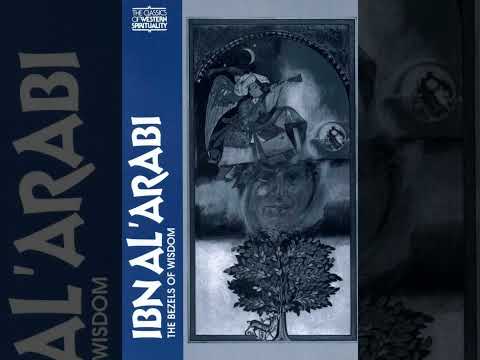
Ibn Arabi, the 12th-century Andalusian mystic called the Greatest Master, set out in The Bezels of Wisdom a vision of the Unity of Being: all existence is one divine reality, the world is a mirror in which the divine reveals itself and each prophet embodies a facet of wisdom. It is demanding, and it rewards humility.
On this page
Ibn Arabi, the twelfth-century Andalusian mystic known to his followers as the Greatest Master, is one of the most profound and difficult thinkers in the Islamic tradition, and his The Bezels of Wisdom is his spiritual masterpiece. I will be honest: this is not an easy book, and I do not claim to have grasped all of it. It is dense, symbolic, and demanding, organised around the prophets, each of whom embodies a particular “bezel,” a setting that holds a jewel of divine wisdom. But even a partial encounter with Ibn Arabi opened a vision of reality so vast and so unified that it changed how I think about the relationship between God, the world, and the self.
Here is what The Bezels of Wisdom taught me about the unity of being, about the world as a divine mirror, and about the demanding humility of approaching a great mystic.
Key takeaways
- The Unity of Being (wahdat al-wujud): all existence is ultimately one divine reality.
- The world is a mirror in which the divine knows and reveals itself.
- Each prophet embodies a facet of divine wisdom, a different “bezel” of the one jewel.
- The human being is a meeting point of the divine and the created.
- Some wisdom demands humility; not every truth yields on first reading.
The unity of being
The idea most associated with Ibn Arabi, and the one that runs through the Bezels, is what later thinkers called wahdat al-wujud, the Unity of Being. In its boldest form, it is the vision that there is, ultimately, only one Reality, the divine, and that everything else exists only as a manifestation or self-disclosure of it. The world is not a separate thing standing apart from God but a kind of unveiling of the divine names and qualities. This is a vertiginous thought, and it has been debated and contested for centuries within Islam itself. But even approached cautiously, it reorients everything. It suggests that the divine is not a distant being far above the world, but the very ground and reality of all that is.
The world as a mirror
One of Ibn Arabi’s recurring images helped me glimpse what he is reaching for. He describes the cosmos as a polished mirror in which the divine contemplates itself. The reason the world exists at all, in this vision, is so that the hidden divine reality might be known and reflected, its names and attributes made manifest. Each created thing, including each human being, reflects some facet of the infinite. There is something breathtaking in this picture of a universe whose entire purpose is the disclosure and self-knowledge of the divine, in which every existing thing, however small, is a mirror catching a ray of the one light. It transforms the world from a collection of objects into a vast, living act of revelation.
The humility of difficult wisdom
I want to be honest about my own limits here, because I think honesty is the only respectful way to write about a thinker like Ibn Arabi. Much of the Bezels moves through layers of Quranic interpretation, technical mystical vocabulary, and paradox that require years of study and, his tradition would insist, spiritual practice, to truly understand. I am a reader at the threshold, not an initiate within. And this itself became part of the lesson. Some wisdom does not surrender to a quick, confident reading; it asks for patience, humility, and the admission that I am standing before something larger than my present understanding. There is value simply in encountering a mind operating at that altitude, even when one cannot follow it all the way up.
What I’m taking with me
My encounter with The Bezels of Wisdom was partial, but it left a lasting impression. What I am taking from Ibn Arabi is a glimpse of his unified vision, the possibility that all of existence is a single divine reality unveiling itself, with the world as its mirror and the human being as its most complete reflection. And I am taking a lesson in humility: that the deepest books are not consumed but entered, slowly, over a lifetime, and that admitting how much remains beyond me is not a failure but the proper beginning of wisdom before so great a master.
Frequently asked questions
What is The Bezels of Wisdom about?
It is the mystical masterpiece of Ibn Arabi, organized around the prophets, each embodying a facet of divine wisdom. It expounds his vision of reality, including the unity of all being as a manifestation of the divine.
What is the “Unity of Being” (wahdat al-wujud)?
The idea associated with Ibn Arabi that all existence is ultimately one divine reality, and that the world exists as a self-disclosure or manifestation of God rather than as a wholly separate thing.
Is Ibn Arabi difficult to read?
Yes. His work is dense, symbolic, and steeped in mystical vocabulary and Quranic interpretation, and it has been debated for centuries. It rewards patient, humble study rather than a quick reading.
References & further reading
- Ibn Arabi. The Bezels of Wisdom (Fusus al-Hikam). (Translated by R. W. J. Austin, Paulist Press, 1980.)
- Chittick, William C. The Sufi Path of Knowledge: Ibn al-Arabi’s Metaphysics of Imagination. State University of New York Press, 1989.
- Corbin, Henry. Creative Imagination in the Sufism of Ibn Arabi. Princeton University Press, 1969.
Watch: others on this book

Read along with me
Book notes, philosophy and the ideas that shape how we build. New essays every month, no spam.
Related reading notes
Unveiling the Wisdom of Ibn Khaldun's "The Muqaddimah"
In a world pulsating with the ceaseless rhythm of change, seeking wisdom from the annals of history often offers a beacon of enlightenment.
The Art of Being Content: Schopenhauer's "The Wisdom of Life"
Schopenhauer's The Wisdom of Life: why what you are matters more than what you have, wealth as seawater and a pessimist's guide to contentment.

Knowing the Self, Knowing the Divine: Al-Ghazali's "The Alchemy of Happiness"
Al-Ghazali is one of the towering figures of Islamic thought, a jurist and theologian so influential he was called the Proof of Islam.
Comments
No comments yet. Start the conversation.