Knowing the Self, Knowing the Divine: Al-Ghazali's "The Alchemy of Happiness"
In one breath
Al-Ghazali's The Alchemy of Happiness, written after his own spiritual crisis, is a guide to true happiness that begins with self-knowledge: he who knows himself knows his Lord. The heart is the true self, and the alchemy is transforming the soul from base desire toward nearness to God.
On this page
Al-Ghazali is one of the towering figures of Islamic thought, a jurist and theologian so influential he was called the Proof of Islam. But the book of his I want to reflect on here is not his famous critique of the philosophers; it is the warmer, more personal The Alchemy of Happiness, his own popular summary of his great work on reviving the religious sciences. Written after a profound spiritual crisis of his own, it is a guide to genuine happiness, and its opening move sets the tone for everything: he who knows himself, Al-Ghazali says, knows his Lord. Self-knowledge, for him, is the first step toward the divine.
Here is what The Alchemy of Happiness taught me about knowing the self, about the heart as the seat of the soul, and about treating the desires as servants rather than masters.
Key takeaways
- Know yourself to know God; self-knowledge is the doorway to the divine.
- The heart is the true self, a spiritual reality, not merely the physical body.
- The soul has faculties that can be its servants or its tyrants, depending on who rules.
- True happiness is the soul’s nearness to God, not the satisfaction of appetite.
- The “alchemy” is the transformation of the self from base desire toward the divine.
The door of self-knowledge
Al-Ghazali begins not with God but with the self, and this is deliberate. Real knowledge of God, he argues, starts with real knowledge of oneself, of what we actually are beneath the surface of body and appetite. Most people, he observes, know themselves only as a face in the mirror and a set of hungers; they have never inquired into the soul that does the seeing and the wanting. The whole spiritual journey, in his telling, depends on first turning inward and discovering that we are more than our bodies. I find this a striking starting point for a religious book. Before it asks me to look up, it asks me to look in.
The heart as the seat of the soul
When Al-Ghazali speaks of the heart, he does not mean the lump of flesh in the chest but the spiritual centre of the person, the true self that knows, loves, and yearns for God. The body, he says, is like a kingdom, and the soul is its ruler, with the various faculties, reason, anger, appetite, as its officers and armies. Happiness depends entirely on who is in charge. When reason and the love of God govern, the kingdom is at peace and the soul moves toward its true home. When appetite and anger seize control, the kingdom falls into disorder and the self is enslaved to its own cravings. The picture is close to the one I met in Plato, but Al-Ghazali gives it a devotional warmth, aiming the well-ordered soul not just at virtue but at the divine.
The alchemy of the soul
The title is not decoration. Medieval alchemists sought to transmute base metals into gold; Al-Ghazali offers an alchemy of the soul, a method for transforming a self ruled by base desire into one fit for nearness to God. Happiness, in this vision, is not the satisfaction of our appetites, which only multiplies them, but the soul’s progress toward its source. The desires are not to be destroyed but disciplined, made into servants of a higher purpose rather than masters who drag us downward. What moved me is how practical he is. This is not abstract theology but a program of inner work, a slow refinement of the self, demanding and lifelong.
What I’m taking with me
Reading Al-Ghazali, I was struck by how a great mind, after exhausting the resources of reason, turned toward the cultivation of the heart. What I am taking from The Alchemy of Happiness is its founding insight, that the road outward to the divine begins with the road inward to the self, and its sober vision of happiness as a matter of who rules the soul. The desires will always be with me. The question Al-Ghazali leaves me with is whether they serve me, or I serve them, and whether the kingdom of my self is at peace or at war.
Frequently asked questions
What is The Alchemy of Happiness by Al-Ghazali about?
It is Al-Ghazali’s accessible guide to true happiness, teaching that genuine joy comes from knowing oneself, disciplining the soul, and drawing near to God, rather than from satisfying worldly desires.
What does “he who knows himself knows his Lord” mean?
That self-knowledge is the gateway to knowledge of God. By understanding the soul within us, Al-Ghazali argues, we begin to understand its divine source.
What is the “alchemy” in the title?
A metaphor for the spiritual transformation of the self: turning a soul ruled by base desires into one purified and directed toward God, just as alchemists hoped to turn base metal into gold.
References & further reading
- Al-Ghazali. The Alchemy of Happiness. (Translated by Claud Field, 1909.)
- Watt, W. Montgomery. The Faith and Practice of Al-Ghazali. Allen & Unwin, 1953.
- Watt, W. Montgomery. Muslim Intellectual: A Study of al-Ghazali. Edinburgh University Press, 1963.
Watch: others on this book


Read along with me
Book notes, philosophy and the ideas that shape how we build. New essays every month, no spam.
Related reading notes
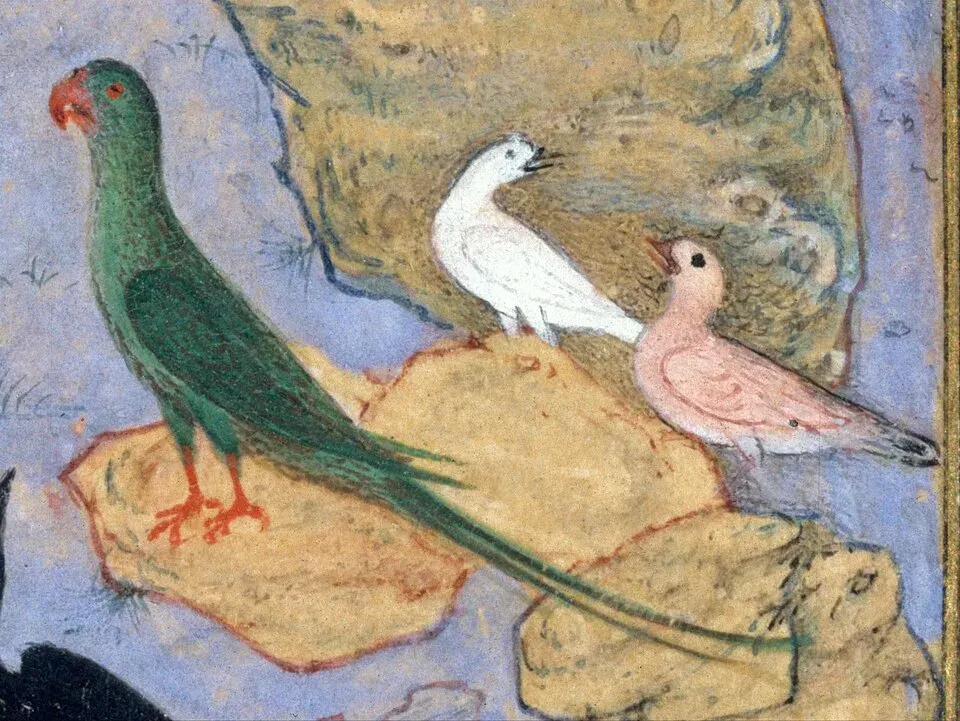
The Journey to the Self: Attar's "The Conference of the Birds"
Attar's The Conference of the Birds: the birds' excuses, the seven valleys of the spiritual path and the Simurgh pun that reveals the divine within.
Exploring the Depths of "The Incoherence of the Incoherence"
In the vast ocean of philosophical discourse, certain works emerge as guiding stars, illuminating the path to deeper understanding and critical inquiry.

Unveiling the Wisdom of "The Incoherence of the Philosophers"
In the realm of philosophical discourse, few works stand as towering monuments of intellectual inquiry like "The Incoherence of the Philosophers".
Comments
No comments yet. Start the conversation.