The Tyranny of the Majority: John Stuart Mill's "On Liberty"
In one breath
John Stuart Mill's On Liberty asks what limits society may place on the individual. His harm principle allows power over us only to prevent harm to others; even false speech deserves freedom because it tests the truth; and he warns that the tyranny of the majority can crush individuality without any law.
On this page
John Stuart Mill’s On Liberty is the great classic statement of individual freedom, and it has shaped liberal thought ever since. Written in 1859, it asks a question that is, if anything, more urgent now than then: what are the proper limits of the power society may exercise over the individual? Mill is worried not only about oppressive governments but about something subtler and harder to resist, the pressure of public opinion, the tyranny of the majority, the way a society can crush individuality and silence dissent without any law being passed at all. His answer is a ringing defence of freedom of thought, expression, and ways of living, grounded in a single, clear principle.
Here is what On Liberty taught me about the harm principle, about why free speech matters even when it is wrong, and about the tyranny of the majority.
Key takeaways
- The harm principle: power may be used over us only to prevent harm to others.
- Over our own body and mind, we are sovereign; the state may not protect us from ourselves.
- Free speech matters even for false views, which sharpen and test the truth.
- The “tyranny of the majority” can crush individuality through social pressure.
- Individuality and diversity are essential to human flourishing.
The harm principle
At the heart of On Liberty is one simple, powerful principle, which Mill states with admirable clarity: the only purpose for which power can be rightfully exercised over any member of a civilised community, against his will, is to prevent harm to others. My own good, physical or moral, is not a sufficient warrant. In other words, society may interfere with my freedom only to stop me harming other people; it may not coerce me “for my own good.” Over the part of my conduct that concerns only myself, my own body and mind, I am sovereign. This is the famous “harm principle,” and it draws a clear line between the self-regarding sphere, where I should be free, and the other-regarding sphere, where society may legitimately intervene. It remains the single most influential idea in debates about the proper limits of law and paternalism.
Why even false speech matters
Mill’s defence of freedom of thought and discussion is the most thrilling part of the book, and his argument is subtle. We should permit even false and offensive opinions, he argues, for several reasons. A silenced opinion might, for all we know, be true; to assume otherwise is to assume our own infallibility. Even if it is false, it may contain a portion of truth we need. And even if it is wholly false, allowing it to be challenged keeps the true opinion alive as a living conviction rather than a dead dogma believed out of mere habit. Truth that is never tested, Mill warns, decays into prejudice. This is why free speech matters not despite error but partly because of it: the clash of opinions, including wrong ones, is how truth is discovered, refined, and kept vital. I find this far deeper than the usual defences of free speech, and a needed corrective in an age quick to silence what it dislikes.
The tyranny of the majority
What gives On Liberty its lasting urgency is Mill’s recognition that the gravest threat to freedom is often not the state but society itself. A democracy can develop a “tyranny of the majority,” in which the dominant opinions and feelings of the mass exert enormous pressure on everyone to conform, enforcing a stifling uniformity not through law but through social disapproval, ostracism, and the sheer weight of collective opinion. This social tyranny, Mill argues, can be more pervasive and more inescapable than any government decree, penetrating into the details of daily life and leaving few means of escape. Against it he mounts a passionate defence of individuality, of the value of people thinking, living, and experimenting differently, as essential both to their own development and to the progress of society. A world that silences eccentricity and dissent, he warns, grows stagnant and small.
What I’m taking with me
On Liberty is the foundational text of individual freedom, and it has lost none of its force. What I am taking from Mill is the clarity of the harm principle, a sharp tool for thinking about when society may and may not interfere with us; his profound defence of free expression, which values even error as a means to truth; and his prophetic warning about the tyranny of the majority, the way social pressure can crush individuality without any law at all. In an age of conformity enforced by opinion as much as by power, Mill’s defence of the freedom to think and live differently feels essential, and worth defending.
Frequently asked questions
What is Mill’s On Liberty about?
It is a defense of individual freedom, arguing that society may limit a person’s liberty only to prevent harm to others, and championing freedom of thought, expression, and ways of living against social and political tyranny.
What is the “harm principle”?
Mill’s principle that power can rightfully be exercised over an individual against their will only to prevent harm to others, not for their own good. Over matters concerning only oneself, one should be sovereign.
What is the “tyranny of the majority”?
Mill’s term for the way a democratic society can crush individuality and dissent not through law but through the pressure of dominant public opinion, conformity, and social disapproval.
References & further reading
- Mill, John Stuart. On Liberty. 1859.
- Gray, John. Mill on Liberty: A Defence. Routledge, 1983.
- Ten, C. L. Mill on Liberty. Oxford University Press, 1980.
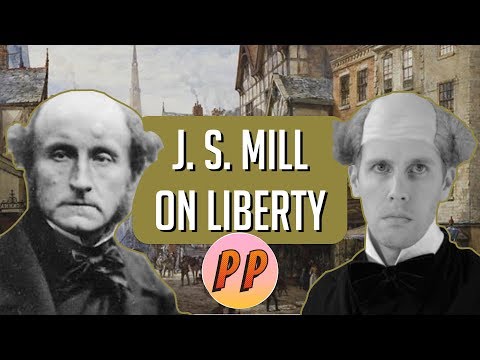
Watch: others on this book

Read along with me
Book notes, philosophy and the ideas that shape how we build. New essays every month, no spam.
Related reading notes
The Greatest Happiness Principle: Mill's "Utilitarianism"
John Stuart Mill's Utilitarianism is the classic defence of one of the most influential, and most intuitive, moral theories ever devised.
Justice as Fairness: John Rawls and the Veil of Ignorance
John Rawls' A Theory of Justice: the veil of ignorance, the two principles of justice and the difference principle, explained simply.

The Enemies of the Open Society: Karl Popper's Defense of Freedom
Karl Popper's The Open Society and Its Enemies: open vs closed societies, the danger of utopian planning and piecemeal social engineering.
Comments
No comments yet. Start the conversation.