Justice as Fairness: John Rawls and the Veil of Ignorance
In one breath
John Rawls' A Theory of Justice asks what rules we would choose for society if we didn't know our own place in it, behind a veil of ignorance. His answer, justice as fairness, guarantees equal basic liberties and allows inequalities only when they benefit the worst-off (the difference principle).
On this page
John Rawls’s A Theory of Justice is the most important work of political philosophy of the twentieth century, the book that single-handedly revived the discipline. Rawls asks a question as old as Plato, what is justice?, but answers it with a new and ingenious method. Imagine, he says, that we could design the basic rules of a society from scratch, but without knowing in advance what position we ourselves would occupy in it. What principles would rational people choose under those conditions? From this thought experiment, Rawls derives a powerful conception of justice as fairness, and a defence of a society that is both free and committed to the well-being of its least advantaged members.
Here is what A Theory of Justice taught me about the original position, the veil of ignorance, and the two principles of a just society.
Key takeaways
- “Justice as fairness”: just principles are those we would choose under fair conditions.
- The “veil of ignorance”: design society without knowing your own place in it.
- First principle: equal basic liberties for all.
- The “difference principle”: inequalities are just only if they benefit the worst-off.
- Fairness requires impartiality, stripping away the bias of self-interest.
The original position and the veil of ignorance
Rawls’s central device is one of the most elegant thought experiments in philosophy. Imagine a group of people tasked with choosing the basic principles that will govern their society, but place them behind what Rawls calls a “veil of ignorance”: they do not know who they will be in that society, their class, race, sex, talents, religion, or conception of the good. Not knowing whether they will end up rich or poor, powerful or marginalised, they must choose impartially. Self-interest, stripped of the knowledge needed to game the system, becomes a force for fairness. What principles, Rawls asks, would rational people choose under this veil, knowing the rules will apply to them whatever position they turn out to occupy? His answer is that they would choose principles that protect everyone, especially the worst-off, because any of them might end up there. The veil of ignorance is a machine for generating fairness out of self-interest.
The two principles of justice
From the original position, Rawls argues, rational choosers would agree on two principles. The first guarantees each person an equal right to the most extensive basic liberties compatible with the same liberties for all, freedom of speech, conscience, the vote, and so on, and this principle has priority; basic liberties may not be traded away for economic gain. The second principle governs social and economic inequalities, and it has two parts: positions must be open to all under fair equality of opportunity, and, most famously, inequalities are justified only if they work to the greatest benefit of the least advantaged members of society. This last is the “difference principle,” and it is genuinely radical. It says that we may permit inequality, but only when it actually improves the lot of those at the bottom. A society is not just simply because it is prosperous; it is just only if its arrangements are working for its worst-off members.
Why this matters
What I find compelling about Rawls is how he reconciles two values often seen as opposed: liberty and equality. He is a firm defender of individual freedom, the first principle protects basic liberties absolutely, yet he insists that a just society must also be deeply concerned with fairness and the fate of its most vulnerable. The difference principle in particular reframes how I think about inequality. The question is not whether inequality exists, some may be unavoidable or even beneficial, but whether it is structured so as to help, rather than abandon, those who have least. Rawls also challenges a deep assumption: that we deserve the rewards of our natural talents. Our talents, he points out, are largely a matter of luck, of genes and upbringing we did nothing to earn, so a just society should not let the lottery of birth determine everything. This is a demanding and humane vision, and it has shaped debates about justice ever since.
What I’m taking with me
A Theory of Justice gave me a new and powerful way to think about fairness. What I am taking from Rawls is the brilliant device of the veil of ignorance, a test I can apply to any social arrangement by asking whether I would accept it not knowing which position I would occupy; his defence of equal basic liberties as inviolable; and above all the difference principle, the demand that inequalities be judged by how they affect the worst-off. Rawls taught me to ask of any society, including my own, not just whether it is free or prosperous, but whether it is fair, and whether it is working for those who have the least.
Frequently asked questions
What is A Theory of Justice about?
It is John Rawls’ attempt to define a just society, arguing for “justice as fairness”: the principles of justice are those rational people would choose from behind a “veil of ignorance,” not knowing their own place in society.
What is the “veil of ignorance”?
A thought experiment in which we design society’s basic rules without knowing what position, class, talents, or identity we will have in it, forcing impartial and fair choices.
What is the “difference principle”?
Rawls’ principle that social and economic inequalities are just only if they work to the greatest benefit of the least advantaged members of society.
References & further reading
- Rawls, John. A Theory of Justice. Harvard University Press, 1971.
- Daniels, Norman (ed.). Reading Rawls. Basic Books, 1975.
- Kukathas, Chandran, and Philip Pettit. Rawls: A Theory of Justice and Its Critics. Stanford University Press, 1990.
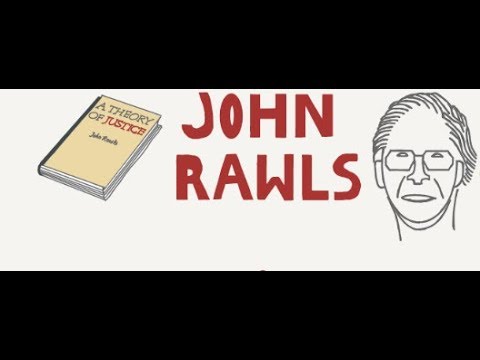
Watch: others on this book

Read along with me
Book notes, philosophy and the ideas that shape how we build. New essays every month, no spam.
Related reading notes
The Tyranny of the Majority: John Stuart Mill's "On Liberty"
John Stuart Mill's On Liberty is the great classic statement of individual freedom, and it has shaped liberal thought ever since.
The Enemies of the Open Society: Karl Popper's Defense of Freedom
Karl Popper's The Open Society and Its Enemies: open vs closed societies, the danger of utopian planning and piecemeal social engineering.
The Minimal State: Robert Nozick's Libertarian Challenge
Robert Nozick's Anarchy, State, and Utopia: rights as side constraints, the entitlement theory of justice, the Wilt Chamberlain argument and the minimal state.
Comments
No comments yet. Start the conversation.