The Secret of the Commodity: A Reading of Marx's "Capital"
In one breath
Karl Marx's Capital dissects capitalism starting from its basic cell, the commodity. Commodity fetishism makes relations between people appear as relations between things, profit comes from surplus value, the unpaid part of workers' labor, and the system tends toward concentration and crisis. Powerful analysis, read critically.
On this page
Karl Marx’s Capital is one of the most consequential books ever written, a vast, difficult, and brilliant attempt to lay bare the inner workings of the capitalist economy. Whatever one thinks of Marx’s politics, and the catastrophes carried out in his name demand that we read him critically, Capital is an extraordinary work of analysis, and many of its insights into how capitalism actually functions remain illuminating. Marx is not, in this book, primarily a revolutionary pamphleteer; he is an economist and a philosopher, dissecting the system with the patience of a scientist, trying to understand the hidden logic beneath the everyday surface of buying and selling. Reading even part of it changed how I see the economic world I live in.
Here is what Capital taught me about the secret of the commodity, about surplus value and exploitation, and about alienation, read with both appreciation and a critical eye.
Key takeaways
- The commodity is the basic cell of capitalism, hiding social relations beneath an exchange of things.
- “Commodity fetishism”: relations between people appear as relations between things.
- Surplus value: profit comes from the unpaid portion of workers’ labor.
- Capitalism tends toward concentration and crisis, in Marx’s analysis.
- Read critically: powerful analysis, but its predictions and political legacy are deeply contested.
The secret of the commodity
Capital famously begins not with grand politics but with the humble commodity, the individual item produced for sale, because Marx sees in it the basic cell of the whole capitalist system. Every commodity, he argues, has two kinds of value: a “use value” (its actual usefulness) and an “exchange value” (what it trades for in the market). And here Marx uncovers what he calls “commodity fetishism,” one of his most penetrating ideas. In a market society, the social relations between people, the labour, cooperation, and human effort that actually produce goods, become hidden, appearing instead as relations between things, as the mysterious “value” of commodities exchanging in the market. We come to see the economy as a world of objects with their own prices and powers, forgetting that behind every commodity lies human labour and human relationships. This insight, that capitalism systematically obscures the human reality beneath the world of things, seems to me genuinely deep, and it applies far beyond Marx’s own century.
Surplus value and exploitation
The analytical heart of Capital is Marx’s theory of surplus value, his explanation of where profit comes from. The worker, Marx argues, sells their labour-power to the capitalist for a wage. But in a working day, the worker produces more value than the wage costs; the value they create beyond what is needed to pay their wage is “surplus value,” and it is appropriated by the capitalist as profit. On this account, profit is not magic or mere reward for risk; it is the unpaid portion of the worker’s labour. This is the basis of Marx’s claim that capitalism, however free its exchanges appear on the surface, rests on exploitation, the systematic extraction of surplus value from those who actually do the work. The labour theory of value underlying this has been much criticised by later economists, and the technical details are contested. But the underlying intuition, that wealth is created by labour and that the distribution of its fruits is a matter of power, retains real force.
Alienation and a critical reading
Running through Marx’s work is the theme of alienation: under capitalism, the worker is estranged from the product of their labour, from the act of working, from their own human potential, and from other people, reduced to a mere instrument in a process they neither own nor control. There is real moral power in this, and it names something many people still feel in their working lives. But I read Marx critically, as I think one must. His confident predictions, the inevitable immiseration of the workers, the inexorable collapse of capitalism, its replacement by communism, have not unfolded as he expected; capitalism proved far more adaptable, and the societies built in his name produced not liberation but, too often, tyranny and mass suffering. The honest reading takes Marx seriously as a diagnostician of capitalism’s tensions, exploitation, inequality, crisis, alienation, while rejecting both his deterministic prophecies and the catastrophic political projects that claimed his authority.
What I’m taking with me
Capital is a monument of analysis that no one serious about understanding the modern economy can simply ignore. What I am taking from Marx, read critically, is the penetrating idea of commodity fetishism, the way market society hides human relations behind a world of things; the concept of surplus value and the insistence that the distribution of wealth is a question of power; and the theme of alienation, which still describes much modern work. What I leave behind are his deterministic predictions and, emphatically, the tyrannies built in his name. Marx sharpened my eye for the human realities, and the inequalities, hidden beneath the surface of buying and selling, even as I reject where his followers so often took him.
Frequently asked questions
What is Marx’s Capital about?
It is Marx’s detailed analysis of how the capitalist economy works, examining commodities, value, the source of profit (surplus value), and the tendencies and contradictions of capitalism.
What is “surplus value”?
Marx’s term for the value workers produce beyond what their wages cost, which is appropriated by the capitalist as profit. It is the basis of his claim that capitalism rests on exploitation.
What is “commodity fetishism”?
Marx’s idea that in a market society, the social relations and human labor behind goods become hidden, so that relations between people appear instead as relations between things, the values of commodities.
References & further reading
- Marx, Karl. Capital, Volume I. 1867.
- McLellan, David. Karl Marx: His Life and Thought. Macmillan, 1973.
- Berlin, Isaiah. Karl Marx: His Life and Environment. Oxford University Press, 1939.
Watch: others on this book


Read along with me
Book notes, philosophy and the ideas that shape how we build. New essays every month, no spam.
Related reading notes
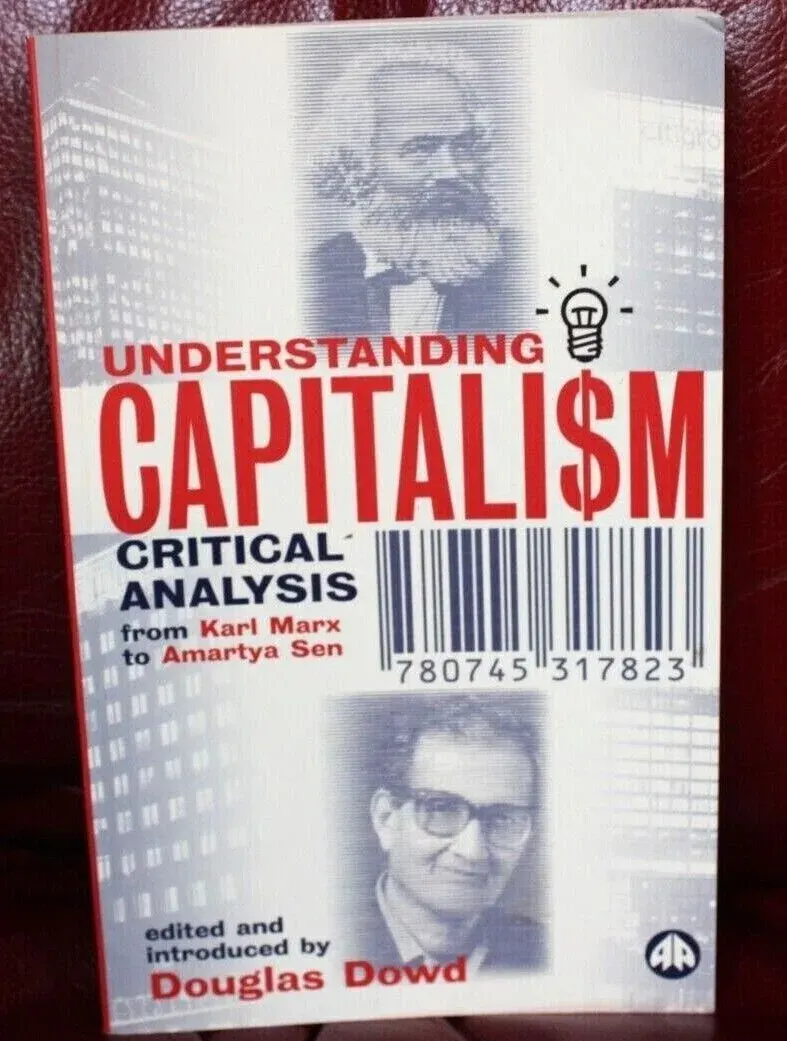
Unveiling the Layers of Capitalism: Insights from Marx to Sen
Capitalism through three lenses: Marx on exploitation and contradictions, Schumpeter on creative destruction and Amartya Sen on capabilities.
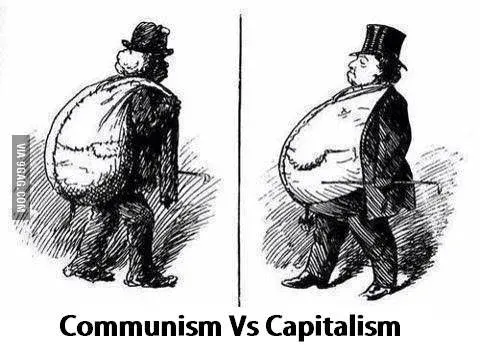
Capitalism vs. Communism: Debunking the Eternal Debate
Capitalism vs communism, written after an economics degree: free markets, social equality, their failures, and the Scandinavian middle ground.
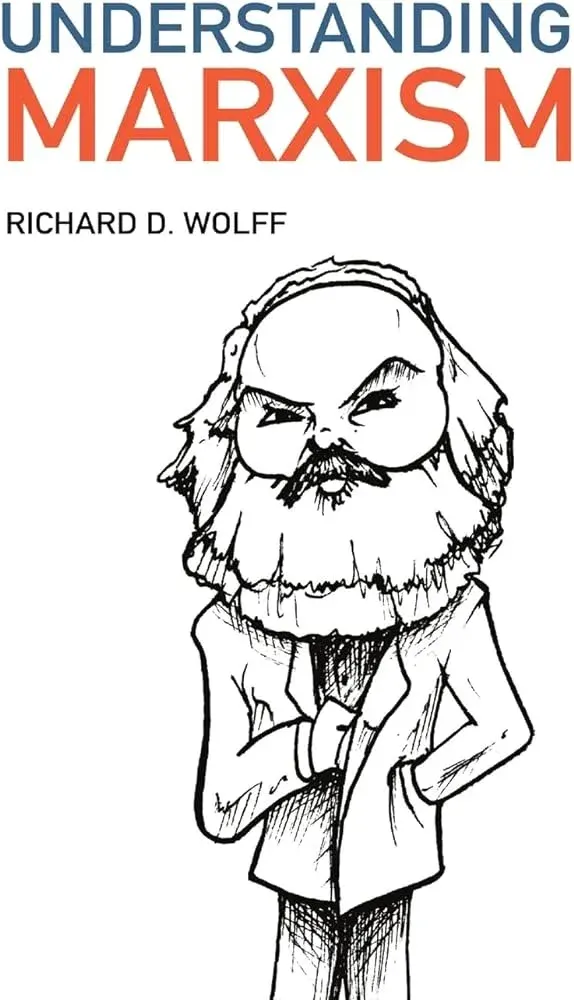
Exploring Marxism: Lessons from Richard D. Wolff's "Understanding Marxism
Lessons from Richard D. Wolff's Understanding Marxism: class struggle, capitalism's contradictions and worker ownership as economic democracy.
Comments
No comments yet. Start the conversation.