The Biology of Being Human: E.O. Wilson's "On Human Nature"
In one breath
In the Pulitzer-winning On Human Nature, E.O. Wilson, founder of sociobiology, asks whether morality, religion, aggression and altruism have evolutionary roots. Genes and culture interact, held together by a "leash". It is a bold bridge between biology and the humanities, best read with awareness of its limits.
On this page
E.O. Wilson’s On Human Nature is a Pulitzer Prize-winning book in which one of the world’s greatest biologists, the renowned student of ants and founder of sociobiology, turns his evolutionary lens on the deepest questions about human beings. Wilson asks whether human nature, our social behaviour, our morality, our religion, our aggression and altruism and sexuality, can be understood through the lens of biology and evolution, as having been shaped, like everything else about us, by natural selection. It is a bold and controversial project, an attempt to bridge the gap between the biological sciences and the humanities, and to understand even our highest capacities as products of our evolutionary past. I read it with great interest and appropriate caution, mindful both of its genuine insight and of the real dangers of pushing biological explanation too far.
Here is what On Human Nature taught me about the evolutionary roots of human behaviour, about the tension between biology and culture, and about reading sociobiology critically.
Key takeaways
- Human behaviour has evolutionary roots, shaped by natural selection.
- Even morality and religion may have biological foundations.
- Genes and culture interact; Wilson speaks of a “leash” between them.
- Altruism and aggression can be partly explained by evolutionary theory.
- Read critically: a powerful synthesis, but biological explanation has limits.
The evolutionary roots of behaviour
Wilson’s central project is to apply evolutionary biology to human nature, to argue that our social behaviour, like that of every other species, has been shaped by natural selection and bears the marks of our evolutionary history. He examines a range of human universals, aggression, sex and mating, altruism, cooperation, even religion, and argues that each can be illuminated by understanding the evolutionary pressures that shaped it. Altruism, for instance, long a puzzle for evolutionary theory (why help others at cost to oneself?), can be partly explained through kin selection (helping relatives who share our genes) and reciprocity, the same insights I encountered in Dawkins’s Selfish Gene. Wilson’s larger claim is that we cannot fully understand ourselves, our minds, our societies, our values, without understanding that we are biological creatures, products of evolution, carrying an evolved human nature. This is a genuinely important insight, a corrective to any view that treats human beings as somehow outside or above nature.
Biology and culture
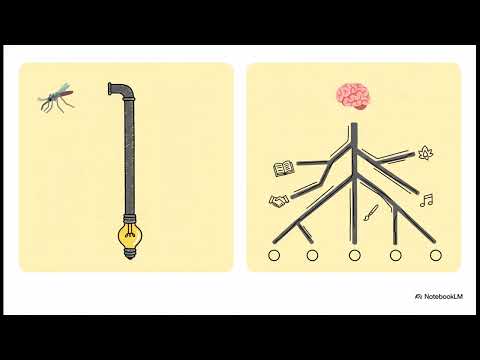
The deepest and most delicate question Wilson grapples with is the relationship between our biological nature and human culture, between genes and the vast, varied human cultures we create. Wilson does not claim that biology determines everything; he is too sophisticated for crude genetic determinism. His famous image is that genes hold culture “on a leash”: our biological nature sets certain predispositions, tendencies, and constraints, but culture has enormous freedom to develop in countless directions within them. There is a real and subtle interaction, biology shaping the broad channels within which culture flows, culture in turn shaping how our biological tendencies are expressed. This is a more nuanced position than his critics sometimes allowed, an attempt to give both nature and culture their due. Still, the exact balance, how long the “leash” is, how much is biology and how much culture, remains genuinely contested, and Wilson’s own emphasis on the biological side is part of what made the book controversial.
Reading sociobiology critically
Wilson’s sociobiology provoked fierce controversy, some of it political and overheated, but some of it raising genuine cautions that I think are worth heeding. The deepest concern is the risk of overreach: of explaining too much by biology, of constructing plausible but unprovable “just-so stories” about how this or that trait was selected for, of underplaying the immense power of culture, history, and individual choice, and, at the extreme, of sliding toward a determinism that could be misused to justify existing inequalities or excuse harmful behaviour as “natural.” These are real dangers, and the history of biological explanations of human behaviour includes genuine abuses. At the same time, the opposite error, the blank-slate denial that we have any evolved nature at all, is also a mistake, as Pinker argues. The honest path, I think, is to take seriously Wilson’s central insight, that we are evolved biological creatures and that this shapes us, while resisting the temptation to reduce the richness of human life, culture, morality, freedom, to biology alone. Wilson himself, at his best, sought exactly this balance, even if his enthusiasm for the biological sometimes pulled him further.
What I’m taking with me
On Human Nature is a bold and important attempt to understand ourselves as the biological creatures we are, and I take it as a powerful synthesis to be read critically. What I am taking from Wilson is the genuine and important insight that human behaviour has deep evolutionary roots, that we cannot fully understand ourselves while ignoring our biological nature; his nuanced image of genes holding culture “on a leash,” with biology and culture in subtle interaction; and a critical awareness of the real dangers of pushing biological explanation too far. The deepest lesson is one of balance: to honour the truth that we are evolved animals shaped by our past, while never forgetting the equally important truth that we are cultural, moral, and free beings whose lives can never be reduced to biology alone.
Frequently asked questions
What is On Human Nature about?
It is E.O. Wilson’s exploration of human nature through evolutionary biology, arguing that human social behaviour, morality, religion, aggression, and altruism have been shaped by natural selection, while culture interacts with our biological inheritance.
What is sociobiology?
The study, pioneered by Wilson, of the biological and evolutionary basis of social behaviour, including human behaviour. It argues that our social tendencies have been shaped by natural selection.
What does “genes on a leash” mean?
Wilson’s image for the relationship between biology and culture: our genes set predispositions and constraints, but culture has wide freedom to develop within them, so neither biology nor culture alone determines human behaviour.
References & further reading
- Wilson, Edward O. On Human Nature. Harvard University Press, 1978.
- Wilson, Edward O. Sociobiology: The New Synthesis. Harvard University Press, 1975.
- Dawkins, Richard. The Selfish Gene. Oxford University Press, 1976.
Watch: others on this book

Read along with me
Book notes, philosophy and the ideas that shape how we build. New essays every month, no spam.
Related reading notes
The Survival Machines: Richard Dawkins' "The Selfish Gene"
Richard Dawkins' The Selfish Gene: the gene's-eye view of evolution, what "selfish" really means, how altruism evolves and the idea of memes.
Descent With Modification: Reading Darwin's "On the Origin of Species"
Charles Darwin's On the Origin of Species is one of the few books that genuinely changed how humanity understands itself and the world.
The Stories That Built Us: Yuval Noah Harari's "Sapiens"
Yuval Noah Harari's Sapiens: shared fictions, the cognitive and agricultural revolutions and whether progress has made us happier.
Comments
No comments yet. Start the conversation.