The Survival Machines: Richard Dawkins' "The Selfish Gene"
In one breath
The Selfish Gene shifts evolution's focus from organisms to genes: organisms are survival machines built by genes to replicate. "Selfish" is a metaphor, since genes that build cooperative, altruistic organisms can thrive, and Dawkins extends replication to ideas with the concept of the meme.
On this page
Richard Dawkins’s The Selfish Gene is one of the most influential science books of the twentieth century, and it did something rare: it changed the very angle from which we view evolution. Darwin had explained evolution in terms of organisms competing to survive and reproduce. Dawkins, building on the work of biologists like William Hamilton and George Williams, shifts the focus down a level, to the gene. The fundamental unit of natural selection, he argues, is not the species, nor even the individual organism, but the gene, the replicator that persists across generations. Organisms, including us, are in a striking sense “survival machines” built by genes to carry them forward. It is a provocative, clarifying, and much-misunderstood idea, and the book repays careful reading.
Here is what The Selfish Gene taught me about the gene’s-eye view, about what “selfish” really means, and about the memes that escape biology altogether.
Key takeaways
- The gene, not the organism, is the fundamental unit of natural selection.
- Organisms are “survival machines” built by genes to replicate themselves.
- “Selfish” is a metaphor; genes that build cooperative, altruistic organisms can flourish.
- Gene-level selection explains altruism toward kin and reciprocal cooperation.
- The “meme”: ideas, too, can replicate and evolve, beyond biology.
The gene’s-eye view
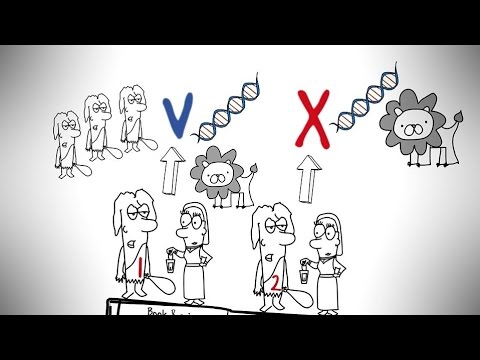
Dawkins’s central move is to shift the perspective of evolution to the level of the gene. Genes are replicators: they make copies of themselves, and those copies that are better at getting themselves copied become more common over time. From this gene’s-eye view, an organism, a body, a tree, a person, is essentially a vehicle, a “survival machine,” that genes build and program to help themselves replicate and pass into the next generation. This reframing is genuinely illuminating. It explains a great deal that the organism-level view struggles with, and it makes vivid the strange, humbling truth that the genes we carry are, in a sense, far older than us: they have been passed down, copied and recopied, for billions of years, and we are their temporary, mortal vehicles. We come and go; the genes, if successful, go on.
What “selfish” really means
The title has caused endless misunderstanding, so it is worth being precise. Dawkins is not saying that people are inevitably selfish, nor that we should be. “Selfish” is a metaphor describing genes, not a prescription for behaviour. A gene is “selfish” only in that it behaves as if it acts to maximise its own replication. And here is the crucial, counterintuitive point: genes that build organisms capable of cooperation, kindness, and even self-sacrifice can be highly successful. A gene that makes an animal care for its offspring, or help its relatives (who share its genes), or cooperate reciprocally with others, spreads precisely because such behaviour helps copies of that gene survive. So the “selfish gene” can build a genuinely altruistic, loving animal. Dawkins explicitly argues that, uniquely, humans can rebel against the tyranny of our genes, that understanding our biology frees us to choose values our genes never “intended.” The selfishness is at the level of the molecule, not the person.
The leap to memes
In the book’s final chapter, Dawkins makes a famous imaginative leap, coining a word that has entered the language: the “meme.” Just as genes are replicators in the biological world, he suggests, ideas, tunes, fashions, beliefs, technologies, are replicators in the world of culture. A meme is a unit of cultural transmission that copies itself from mind to mind, competing for attention and survival, mutating, spreading, or dying out. Successful memes are not necessarily true or good; they are simply good at getting themselves copied, just as successful genes are simply good at replicating. This was a strikingly original extension of evolutionary thinking beyond biology, and decades later, in the age of viral content, it feels almost prophetic. It suggests that the same logic of replication and selection that shaped life also shapes the spread of ideas, with all the unsettling implications that carries.
What I’m taking with me
The Selfish Gene changed the angle from which I see life itself. What I am taking from Dawkins is the clarifying gene’s-eye view of evolution, the strange perspective of organisms as survival machines for far older replicators; the crucial understanding that “selfish” genes can build cooperative, altruistic beings, and that we humans can consciously transcend our genetic programming; and the powerful idea of the meme, extending evolutionary logic to the spread of culture. Dawkins is a polarising figure, but this book is a model of clear, vivid science writing, and it left me seeing both biology and culture through a new and lasting lens.
Frequently asked questions
What is The Selfish Gene about?
It is Richard Dawkins’s account of evolution from the gene’s perspective, arguing that the gene, not the organism or species, is the fundamental unit of natural selection, and that organisms are “survival machines” built by genes.
Does “selfish gene” mean humans are selfish?
No. “Selfish” is a metaphor for how genes behave, not a claim about human nature. Genes that build cooperative and altruistic organisms can thrive, and Dawkins argues humans can consciously rebel against their genetic programming.
What is a “meme”?
A term Dawkins coined for a unit of cultural transmission, an idea, tune, or practice, that replicates from mind to mind and evolves through a process analogous to natural selection.
References & further reading
- Dawkins, Richard. The Selfish Gene. Oxford University Press, 1976.
- Dawkins, Richard. The Extended Phenotype. Oxford University Press, 1982.
- Williams, George C. Adaptation and Natural Selection. Princeton University Press, 1966.
Watch: others on this book
Read along with me
Book notes, philosophy and the ideas that shape how we build. New essays every month, no spam.
Related reading notes
Descent With Modification: Reading Darwin's "On the Origin of Species"
Charles Darwin's On the Origin of Species is one of the few books that genuinely changed how humanity understands itself and the world.
The Biology of Being Human: E.O. Wilson's "On Human Nature"
E.O. Wilson's On Human Nature: sociobiology, the evolutionary roots of behaviour, genes on a leash and the limits of biological explanation.
Faith on the Stand: Richard Dawkins' "The God Delusion"
Richard Dawkins' The God Delusion read critically: the case against God, religion and harm, and where the New Atheist polemic falls short.
Comments
No comments yet. Start the conversation.