The Stories That Built Us: Yuval Noah Harari's "Sapiens"
In one breath
Yuval Noah Harari's Sapiens tells the history of our species in a few hundred pages. Shared fictions like money, nations and religions let millions cooperate; the Cognitive, Agricultural and Scientific Revolutions transformed us; and more power has not clearly meant more happiness. A brilliant synthesis that sometimes oversimplifies.
On this page
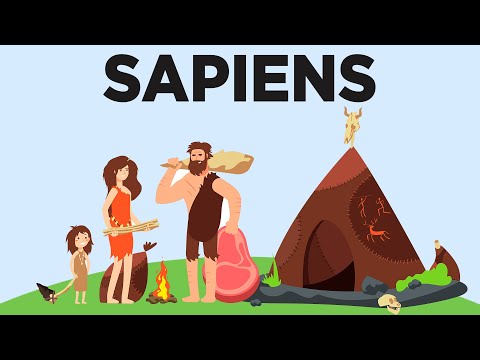
Yuval Noah Harari’s Sapiens attempts something hugely ambitious: to tell the entire history of our species, Homo sapiens, from the emergence of insignificant apes on the African savanna to the masters, for better and worse, of the whole planet. Sweeping across a hundred thousand years in a few hundred pages, Harari asks the big questions usually left to specialists: How did one human species among several come to dominate the earth? What drove the great revolutions, cognitive, agricultural, scientific, that transformed us? And, most provocatively, has all this “progress” actually made us happier? It is bold, lucid, and deliberately provocative, and I read it with both admiration and a critical eye, since its very sweep means it sometimes simplifies.
Here is what Sapiens taught me about the power of shared fictions, about the great revolutions of our history, and about the unsettling question of progress and happiness.
Key takeaways
- Shared “fictions” like money, nations, and religions let huge numbers cooperate.
- The Cognitive Revolution gave us language and imagination, our great advantage.
- The Agricultural Revolution may have been “history’s biggest fraud.”
- Progress is questioned: more power has not clearly meant more happiness.
- Read critically: a brilliant synthesis that sometimes oversimplifies.
The power of shared fictions
Harari’s central and most illuminating idea is that what sets Homo sapiens apart, and explains our extraordinary dominance, is our unique ability to cooperate flexibly in very large numbers, and that this ability rests on our capacity to create and believe in shared “fictions” or “imagined orders.” Money, nations, corporations, gods, human rights, none of these exists in physical nature; they exist because we collectively agree to believe in them. And it is precisely these shared stories that allow millions of strangers to cooperate toward common goals, something no other species can do. A chimpanzee troop cannot exceed a few dozen, but a billion people can cooperate within the shared fiction of a religion or a currency. This is a genuinely powerful lens. So much of what feels solid and natural about our world, money, the state, the law, turns out to rest on collective imagination, on stories we have agreed to believe.
The great revolutions
Harari organises human history around three great revolutions. The Cognitive Revolution, some seventy thousand years ago, gave Sapiens new powers of language, imagination, and storytelling, the foundation of those shared fictions, and let us spread across and dominate the globe. The Agricultural Revolution, some ten thousand years ago, is where Harari is most provocative: he calls it “history’s biggest fraud,” arguing that while farming allowed populations to explode, it made the lives of most individual humans harder, not easier, more labour, worse diet, disease, and new hierarchies, and that, in a sense, “we did not domesticate wheat; wheat domesticated us.” The Scientific Revolution, five hundred years ago, was driven, he argues, by a new willingness to admit ignorance, to say “we do not know,” which unleashed inquiry, technology, and the vast expansion of human power that continues today. Whether or not one accepts each claim, this framework makes the whole sweep of human history graspable.
Progress and happiness
The most thought-provoking thread in the book is Harari’s persistent, uncomfortable question: has all this “progress” actually made us happier? We have become vastly more powerful, more numerous, more knowledgeable. But are individual human beings any more content than our forager ancestors, who may have worked less, eaten more varied diets, and lived in close communities? Harari suspects not, and he refuses to assume that more power and more wealth equal more well-being. This is a valuable corrective to the easy narrative of progress, and it echoes a theme I have met in many of the books I have read this year. I take Harari’s grand synthesis with appropriate caution, its very ambition leads to sweeping generalisations and contested claims, but his central provocation lands: we have become extraordinarily powerful without becoming obviously wiser or happier, and that gap is worth sitting with.
What I’m taking with me
Sapiens is a flawed and brilliant book, best read as a stimulating synthesis rather than the final word. What I am taking from Harari is the powerful idea that our defining human ability is large-scale cooperation through shared fictions, money, nations, religions, that exist because we believe in them; his provocative reframing of the great revolutions, especially the dark side of agriculture; and his persistent, valuable question of whether our growing power has made us any happier. I hold his bolder claims at arm’s length, but he succeeded in making me see the long story of my own species, and the imagined orders I live within, with fresh and questioning eyes.
Frequently asked questions
What is Sapiens about?
It is Yuval Noah Harari’s sweeping history of humankind, from the emergence of Homo sapiens to the present, organized around the Cognitive, Agricultural, and Scientific Revolutions, and questioning whether progress has made us happier.
What does Harari mean by “shared fictions”?
Imagined realities like money, nations, religions, and human rights that do not exist in physical nature but that millions of people collectively believe in, allowing large-scale cooperation among strangers.
Why does Harari call agriculture “history’s biggest fraud”?
Because, while farming let populations grow enormously, he argues it made the lives of most individual humans harder, more toil, worse diet, disease, and new hierarchies, than the lives of their forager ancestors.
References & further reading
- Harari, Yuval Noah. Sapiens: A Brief History of Humankind. (Hebrew 2011; English, Harvill Secker, 2014.)
- Diamond, Jared. Guns, Germs, and Steel. W. W. Norton, 1997.
- Wrangham, Richard. Catching Fire: How Cooking Made Us Human. Basic Books, 2009.
Watch: others on this book

Read along with me
Book notes, philosophy and the ideas that shape how we build. New essays every month, no spam.
Related reading notes
The Biology of Being Human: E.O. Wilson's "On Human Nature"
E.O. Wilson's On Human Nature: sociobiology, the evolutionary roots of behaviour, genes on a leash and the limits of biological explanation.
Why History Unfolded Unequally: Jared Diamond's "Guns, Germs, and Steel"
Jared Diamond's Guns, Germs, and Steel: why geography, not race, shaped which societies conquered others, and how to read its big picture critically.
The Élan Vital: Henri Bergson's "Creative Evolution"
Henri Bergson's Creative Evolution: the élan vital, duration versus clock time, intuition as knowledge and why the future is truly open.
Comments
No comments yet. Start the conversation.