Robotics Integration on the Line
A robot is the easy part. The hard, valuable, and underestimated work is everything around it - the cell, the handshake, and the line it has to fit into.
TL;DR
The robot is the easy part of automation. The real work is the cell around it: how parts are presented, the handshake signals with PLCs and conveyors, cycle time that keeps up with the line and safety designed in from the start. That integration craft turns an arm into production capacity.
On this page
The robot is not the project
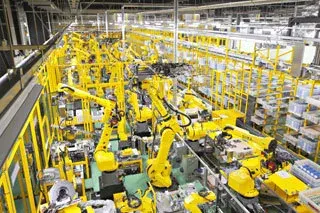
Walk a trade show floor and you will see robots everywhere, swinging through hypnotic loops behind glass. They are seductive, and they are the wrong thing to fall in love with. Buy the most capable arm on the market, set it on your line, and you have accomplished almost nothing. The robot, on its own, does not pick anything, does not know a good part from a bad one, does not coordinate with the conveyor, and cannot be left alone in a room with a human being.
What turns a robot into production capacity is the cell - the bounded volume of floor where the arm, its tooling, the fixtures that hold the work, the sensors that watch it, and the guarding that contains it all become a single machine. The robot is maybe a third of the cost and a tenth of the engineering. The other ninety percent of the thinking - the part nobody photographs - is integration. That is where projects are won and lost.
Presentation is destiny
A taught robot is, at heart, a very precise way of going to the same coordinates over and over. That is a strength and a trap. It works beautifully when the part is in exactly the same place every cycle, and it fails the instant the part is not.
This is why experienced integrators obsess over part presentation long before they obsess over the robot. A nest, a fixture, a conveyor stop, a bowl feeder - these humble devices decide whether the cell hits its uptime target. The most common reason a cell underperforms is not the robot at all; it is that the part arrives a few millimetres off, or skewed, or sometimes not at all, and the blind arm closes its gripper on nothing. You can paper over poor presentation with vision and force sensing, but you pay for it in cost and cycle time. Get the part to the same place every time and most of the cleverness becomes unnecessary.
The handshake is the contract
The moment a cell has to cooperate with anything else - and on a line, it always does - it needs to talk. In nearly every modern installation the conductor of that conversation is a PLC acting as the line master. The robot becomes one player in an orchestra, told when to run which routine and expected to report back when it is done.
The mechanism is humble and unglamorous: a handful of digital signals forming a request and acknowledge dialogue. The PLC raises a request; the robot acts, then raises a “done”; the PLC drops the request; the robot drops the done. Four edges, and it is bulletproof against dropped or stuck signals in a way that a naive momentary pulse never is. Layer a richer fieldbus on top for recipes, vision offsets, and fault codes, and you have a complete nervous system.
The single most useful artefact in the whole project is the document that pins this down: the I/O signal map. Every signal, its direction, its address on both the robot and the PLC, and its meaning, agreed between the robot programmer and the controls engineer before either writes a line of code. Skip it and integration becomes two people debugging each other’s assumptions on a live line at two in the morning. Write it and integration becomes a checklist. And put a watchdog on every handshake, because a line that hangs silently waiting for a signal that will never come is worse than one that faults loudly.
Fast enough, not just working
A cell that works in a demo and a cell that earns its keep are different animals. The bridge between them is the production engineer’s vocabulary: takt, cycle time, bottleneck, OEE.
Takt is the pace the customer’s demand sets - one finished unit every so many seconds. Cycle time is what the cell actually delivers. The cell is viable only when cycle time sits comfortably below takt, and wise integrators design to eighty percent of it, because the first hiccup eats the margin. On a line, throughput is dictated by the slowest station, so the discipline is to find the bottleneck, fix it, and find the next one - speeding up anything else is wasted effort.
Then comes the humbling number: OEE. A cell can hit its cycle time flawlessly for the customer’s witness test and still post a dismal OEE in production, because real life brings jams, misfeeds, slowdowns, and rejects that no demo reveals. Cycle time gets you through the acceptance test. OEE is what the plant manager actually lives with, and the climb toward it during ramp-up is normal, planned work, not a sign of failure.
Safety is a design input, not a disclaimer
An industrial robot is fast, strong, and utterly unaware. Designing the cell so that power can never reach a person is not the last item on the punch list; it is a constraint that shapes the footprint, the cycle, and the budget from the first sketch. The standards - ISO 10218 and its RIA counterpart, the risk assessment of ISO 12100, the performance levels of ISO 13849 - exist because the failure mode is a maimed worker, and the integrator who treats them as paperwork is one incident away from learning otherwise. Safety, like everything else worth knowing about this trade, lives not in the robot but in the system built around it.
The quiet craft
Robotics integration is a quiet craft. The robot gets the attention; the integrator earns the result. Design the operation first, the cell around it, and the robot to fit - in that order - and a line gains capacity that runs for years. Reverse the order, fall for the arm, and you have an expensive sculpture behind glass.
Key takeaways 5
- A robot alone produces nothing; the cell makes it productive.
- Consistent part presentation is critical for reliable picking.
- Handshake signals with PLCs and conveyors are the contract.
- The cell must meet takt time, not just work once.
- Safety is a design input, guided by risk assessment.
Watch & learn

Frequently asked questions
What is a robot cell?
A robot cell is the complete workspace around an industrial robot, including tooling, fixtures, feeders, sensors, guarding and controls, designed to perform a specific task.
What does a robot integrator do?
A robot integrator designs, builds, programs and commissions the full robotic system, connecting the robot to tooling, safety systems, PLCs and the production line.
Why is part presentation so important?
Robots repeat exact motions, so parts must arrive in consistent positions and orientations. Poor presentation causes missed picks, collisions and downtime unless vision is added.
Go deeper with the free masterclass
Workshop, PDF handbook and curated resources for “Robotics Integration on the Line”.
Related articles
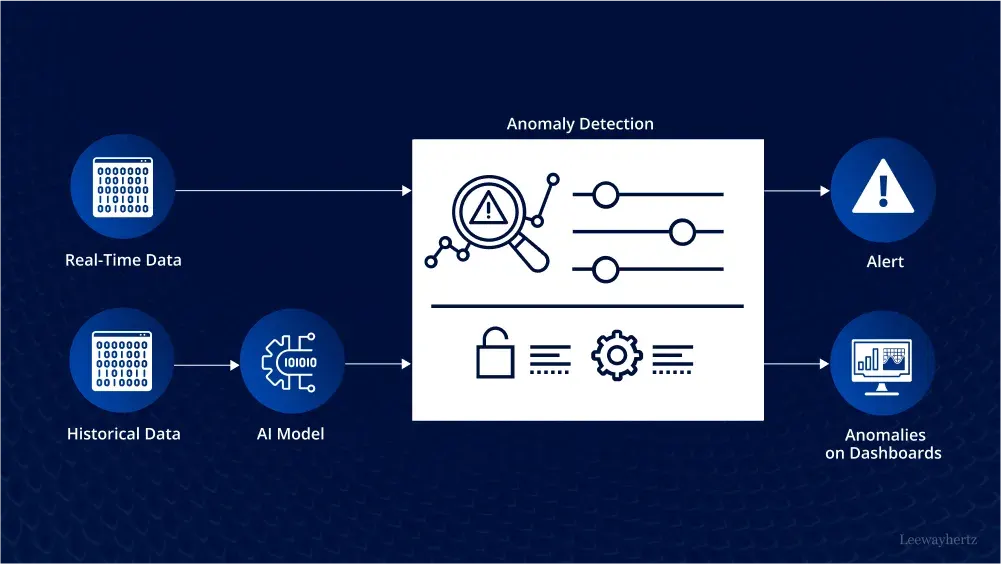
AI-Driven Anomaly Detection on the Line
Why catching abnormal behavior in real time is less about the algorithm and more about trust, data discipline, and the cost of being wrong.
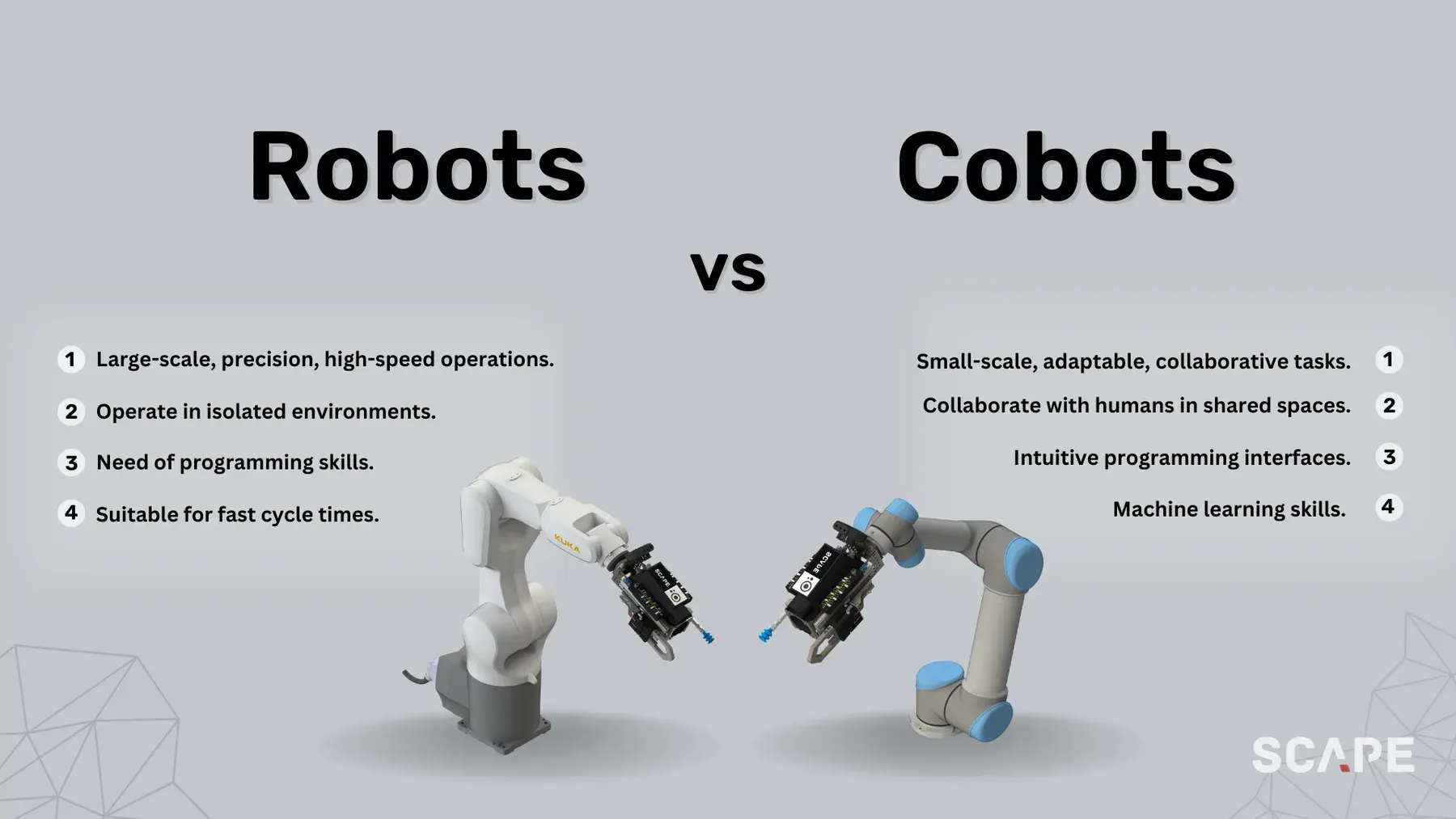
Cobots: Collaborative Robotics Basics
The robot that learned to share a room with us - and why "fenceless" is an engineering decision, not a marketing slogan.
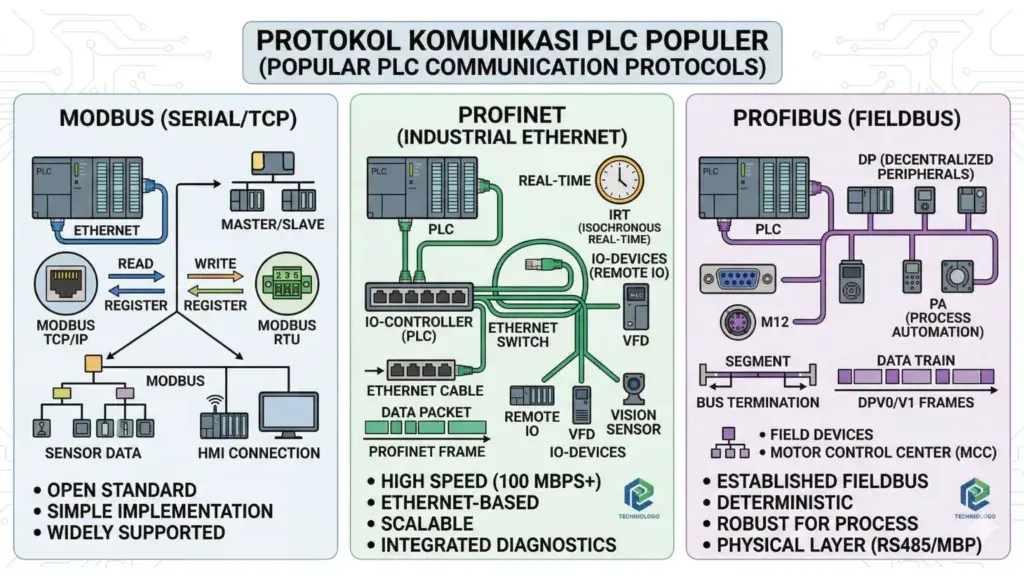
Industrial Communication Protocols (Modbus & Profinet)
Modbus and PROFINET sit at opposite ends of the industrial network spectrum - one ancient and universal, one fast and deterministic. Here is how each thinks, and why most plants run both.
Comments
No comments yet. Start the conversation.