Cobots: Collaborative Robotics Basics
The robot that learned to share a room with us - and why "fenceless" is an engineering decision, not a marketing slogan.
TL;DR
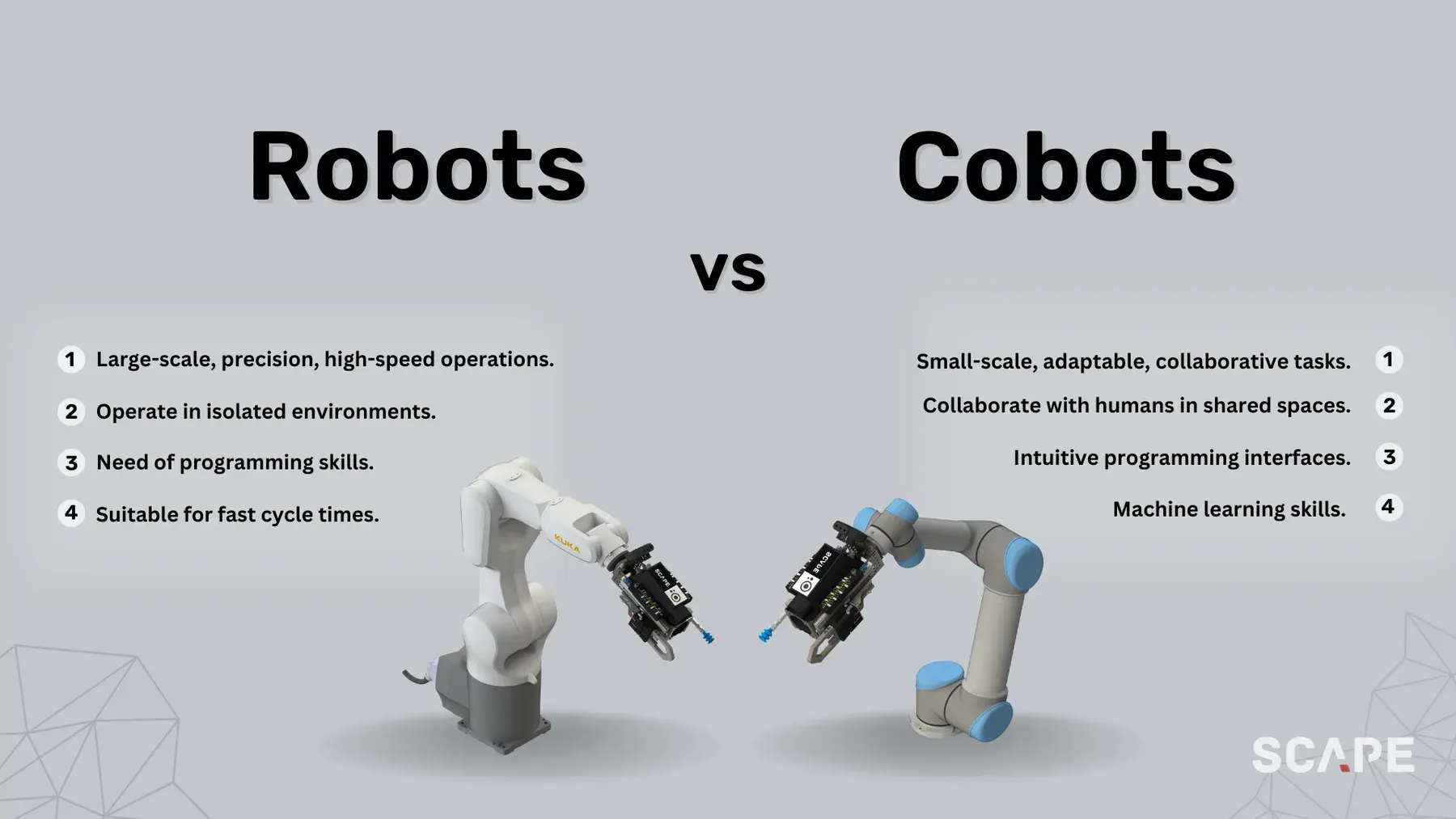
For decades industrial robots lived behind fences because they could not sense people. Collaborative robots, cobots, are designed to share space with workers, using force limiting, speed and separation monitoring and safety standards such as ISO 10218 and ISO/TS 15066. Fenceless operation is an engineering decision backed by risk assessment.
On this page
The Fence That Defined a Century
For most of the history of industrial robotics, the defining feature of a robot was not its arm, its precision, or its strength. It was its fence. Walk into any large factory built in the last fifty years and you will find robots living behind steel mesh, surrounded by light curtains and interlocked gates, separated from human beings as deliberately as a tiger in a zoo. The logic was sound. A traditional robot does not know you are there, does not slow down when you approach, and will not stop because you stepped into its path. The cage is not an accessory. It is the safety system.
That arrangement worked beautifully for high-volume manufacturing, where the same task repeats millions of times and the robot never needs to share its space. But it quietly excluded almost everyone else. The fence was expensive, the floor space it consumed was expensive, and the specialist integration to make the whole cell safe was expensive. Automation became something only the largest companies could afford, and only for the most repetitive jobs. A small workshop with a dull, back-breaking task and three employees had no realistic path to a robot.
A Different Premise
The collaborative robot, or cobot, began from a deceptively simple question: what if the robot were designed so that touching a human did not hurt? Remove that single assumption - that contact must be prevented at all costs - and the entire architecture of factory automation can be rebuilt.
A cobot answers the question with engineering, not optimism. It runs at modest speeds and carries modest loads. Its joints are wrapped in torque sensors or monitored for the tell-tale current spike of an unexpected collision, so the arm can feel a bump and halt within milliseconds. Its body is rounded and smooth, free of the sharp edges and pinch points that turn an ordinary machine into a hazard. Where a traditional robot relies on a barrier to keep humans out, a cobot relies on awareness to keep humans safe.
The effect on the factory floor is striking. The robot comes out from behind the fence and sits on a workbench beside a person, handing them parts, tending a machine they both operate, building a pallet while a worker inspects the boxes. The cage disappears, and with it the cost, the floor space, and much of the integration burden. Automation, suddenly, is something a three-person workshop can buy on a Tuesday and have running by Friday.
The Standard Behind the Magic
It would be easy to mistake all this for a triumph of clever mechanics alone. It is not. The reason a cobot can legally and genuinely share a room with people is a set of international standards, and any honest account of collaborative robotics has to give them the credit.
ISO 10218, published in 2011, lays the foundation: every cobot is, in the eyes of the law, an industrial robot, and must meet the base safety requirements for one. Layered on top is ISO/TS 15066, a technical specification from 2016 that does something quietly remarkable. It puts numbers on the human body. It specifies, region by region, how much force and pressure a robot may apply before it crosses from harmless contact into pain or injury. With those numbers in hand, an engineer can do more than hope a cobot is safe. They can prove it.
This is the part newcomers most often miss. A cobot is not safe because the brochure says “collaborative.” It is capable of safe collaboration. Whether a particular installation is actually safe depends on everything around the robot: the speed it runs at, the weight it carries, the tool bolted to its wrist, and whether the part it holds has a sharp edge or a hot surface. A cobot gently handing over a smooth plastic box is the picture of safety. The same cobot gripping a kitchen knife is not collaborative at all. The bridge between capability and reality is the risk assessment, the unglamorous, mandatory analysis that every legitimate deployment requires.
Four Ways to Share a Room
The standards recognise that “working together” can mean several different things, and they define four collaborative methods to cover them. The robot might simply freeze whenever a person is present and resume when they leave. It might be guided by hand, moving only under a human’s direct touch. It might watch the distance to a person with scanners, slowing as they approach and stopping before contact is even possible. Or it might be designed so that any contact stays below those biomechanical limits, allowing it to share a bench with no extra sensors at all. Most real applications pick the method, or the blend of methods, that fits the task. The art of deployment is choosing wisely.
What It Really Changes
The deepest shift the cobot brought is not technical but conceptual. A traditional robot is a dedicated machine, installed once and rarely moved, justifying its enormous cost through sheer volume. A cobot is closer to a power tool with a brain: light enough to relocate, simple enough for a non-programmer to teach by physically guiding its arm, and flexible enough to do one job this month and another the next. That flexibility is exactly what the small-batch, fast-changeover world of modern manufacturing needs.
The fence defined the first century of industrial robotics by keeping people and machines apart. The cobot is defining the next one by, carefully and provably, bringing them back together. The cage did not vanish by accident or by wishful thinking. It vanished because engineers replaced it with something better: a machine that pays attention.
Key takeaways 5
- Traditional industrial robots rely on fences as their safety system.
- Cobots are designed from the start to work near people.
- Standards like ISO 10218 and ISO/TS 15066 define how collaboration stays safe.
- Collaboration modes include safety-rated stops, hand guiding, speed and separation monitoring, and power and force limiting.
- Every application still needs its own risk assessment.
Watch & learn

Frequently asked questions
What is a cobot?
A cobot, or collaborative robot, is an industrial robot designed to work safely alongside people, typically by limiting force and speed and detecting contact.
Are cobots safe without fences?
They can be, if the whole application passes a risk assessment. The tool, the workpiece and the task matter as much as the robot itself.
What are the four types of human-robot collaboration?
The standard modes are safety-rated monitored stop, hand guiding, speed and separation monitoring, and power and force limiting.
Go deeper with the free masterclass
Workshop, PDF handbook and curated resources for “Cobots: Collaborative Robotics Basics”.
Related articles
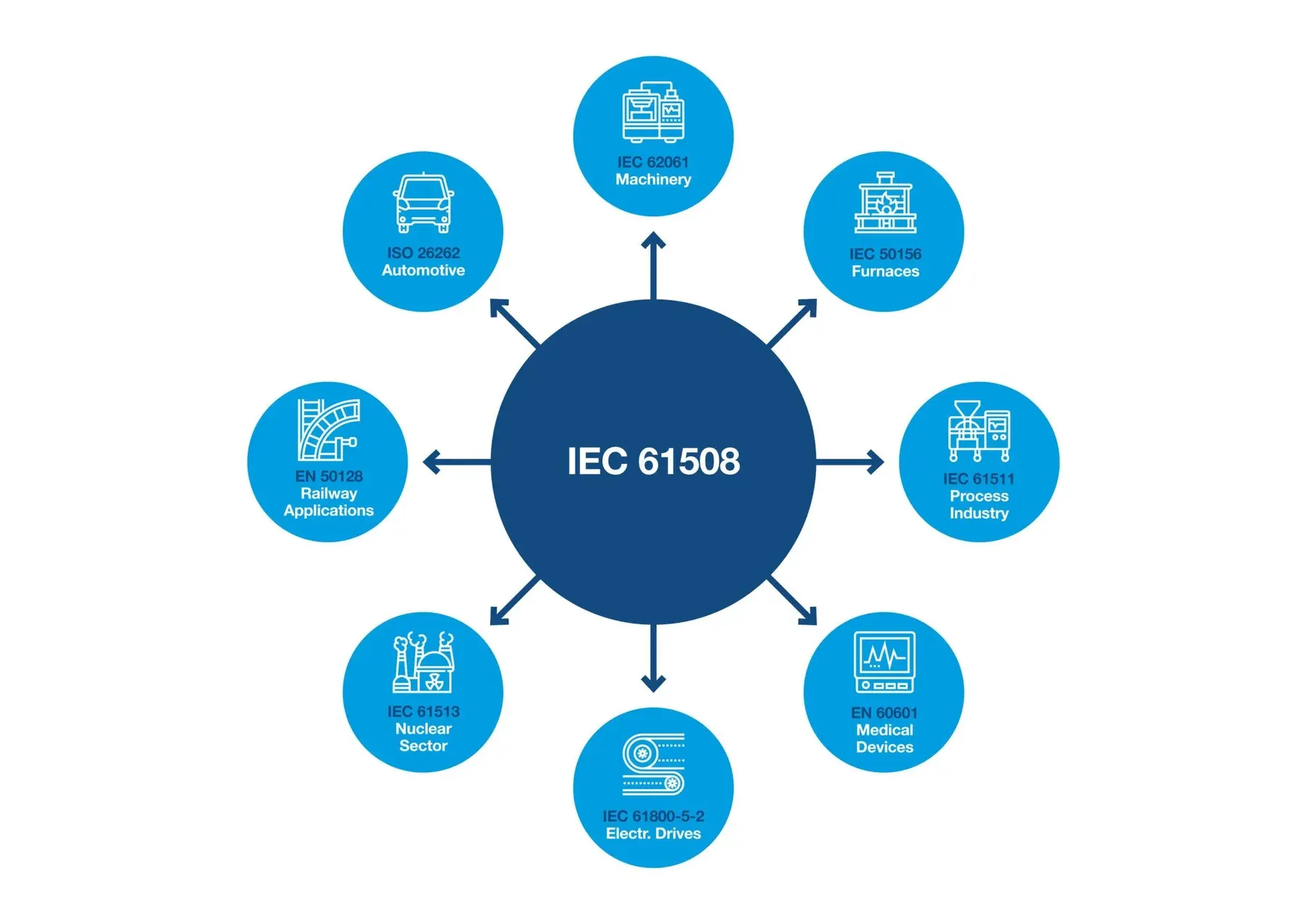
Functional Safety in Automation (IEC 61508/62061)
Functional safety is not a checkbox on a wiring diagram - it is a quantitative argument that the protective layer you are betting lives on will actually act when called.
Robotics Integration on the Line
A robot is the easy part. The hard, valuable, and underestimated work is everything around it - the cell, the handshake, and the line it has to fit into.
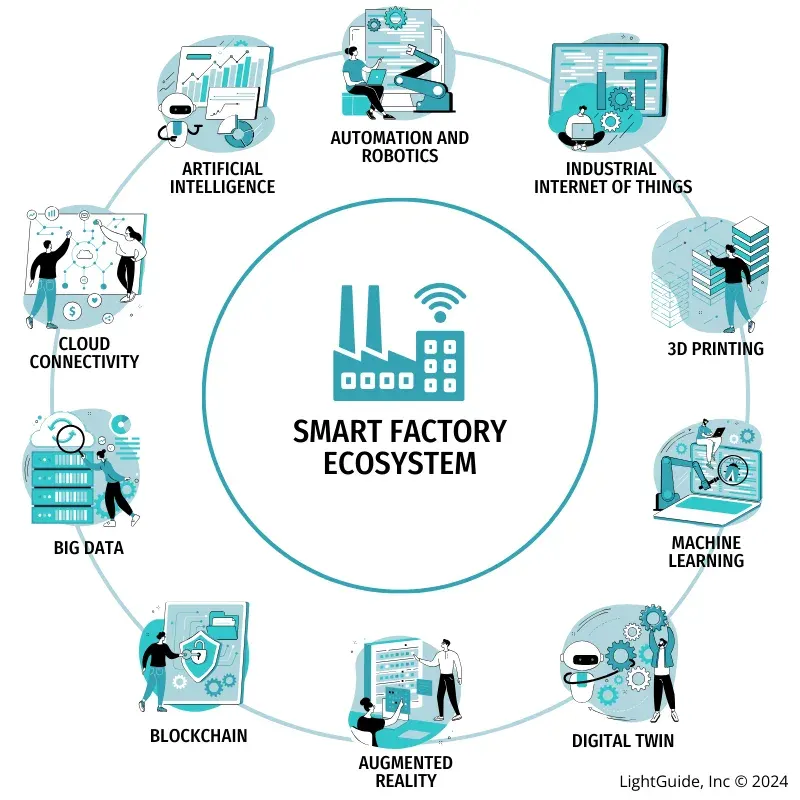
Smart Factory Fundamentals
"Smart factory" gets used as if it were a product on a shelf. It is not. Here is what actually makes a factory smart - and why the unglamorous foundations matter far more than the buzzwords.
Comments
No comments yet. Start the conversation.