Inventing the East: Edward Said's "Orientalism"
In one breath
Edward Said's Orientalism, the founding text of postcolonial studies, shows how Western scholarship, literature and art constructed an image of the Orient that revealed more about the West's assumptions than about the East. This representation was entangled with imperial power, making knowledge a form of control.
On this page
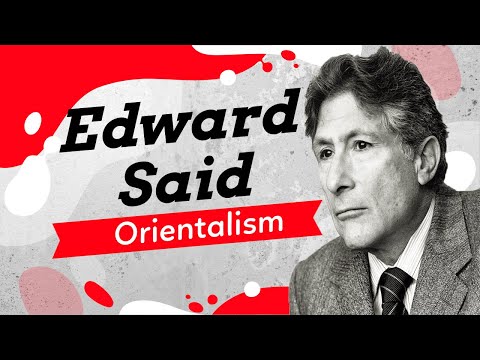
Edward Said’s Orientalism is one of the most influential works of cultural criticism of the twentieth century, the founding text of what became postcolonial studies. Said, a Palestinian-American literary scholar, examines how the West, over centuries of scholarship, literature, art, and travel writing, constructed an image of “the Orient”, the Middle East, the Islamic world, Asia, that revealed less about those societies than about the West’s own assumptions, fantasies, and will to power. This constructed “Orient,” Said argues, was not a neutral object of study but a system of representation deeply entangled with European imperialism. As someone from the part of the world Said was writing about, I found his analysis both illuminating and personally resonant.
Here is what Orientalism taught me about the West’s invention of the East, about the link between knowledge and power, and about the danger of representing others.
Key takeaways
- “Orientalism” is the Western style of representing and dominating the East.
- The “Orient” was largely invented by the West, revealing Western assumptions more than Eastern realities.
- Knowledge and power are linked; representing others can be a form of control.
- The East was cast as the West’s “Other”: exotic, irrational, backward, in contrast to a rational West.
- Who gets to represent whom is a question of power, not just scholarship.
The invention of the Orient
Said’s central claim is that “the Orient” as the West has imagined it is, to a remarkable degree, a Western invention. Over centuries, European scholars, novelists, painters, and officials built up a vast body of representations of the East, and these representations, Said argues, tell us far more about the West’s own preoccupations than about the actual, enormously diverse societies they claimed to describe. The Orient was portrayed as a single, timeless, exotic place, sensual, mysterious, irrational, despotic, unchanging, in implicit contrast to a West imagined as rational, dynamic, and progressive. This was not an accurate picture corrupted by occasional bias; it was a coherent system of representation, “Orientalism,” that constructed its object. The real, living, varied peoples of the East largely disappeared behind this Western fantasy of “the Oriental.” Recognising how much of what passed for knowledge of my own part of the world was really European projection was genuinely eye-opening.
Knowledge and power
Said’s deepest and most influential argument, drawing on Foucault, concerns the intimate link between knowledge and power. Orientalism was not innocent scholarship pursued for its own sake; it developed hand in hand with European imperialism, and the two reinforced each other. To “know” the Orient, to define it, classify it, describe it, was also to claim authority over it, to position the West as the knower and the East as the known, the studied, the managed. The expert who could speak authoritatively about “the Oriental mind” helped justify and enable the colonial administrator who ruled over actual Orientals. Representation, in other words, is never neutral; the power to define another people, to say what they are, is a form of power over them. This insight reaches far beyond the specific case of East and West. Whoever controls the representation of a group, who gets described, by whom, in what terms, holds real power over how that group is seen and treated.
The danger of representing others
What stays with me most is the broader ethical and intellectual warning in Said’s work: the danger of confidently representing and defining other people, especially from a position of power. Orientalism reduced an immense, varied humanity, dozens of cultures, languages, and histories, to a flat, manageable stereotype, “the Oriental,” and that reduction was both a falsehood and an injustice. Said’s lesson is not that we can never understand other cultures, but that we must be deeply suspicious of representations that flatten difference, that speak about others rather than listening to them, that serve the interests of the powerful while claiming objectivity. The book has been criticised, for sometimes overgeneralising, for occasionally being unfair to individual scholars, and those criticisms deserve a hearing. But its central challenge stands: to ask, of any confident account of “those people,” whose knowledge this is, and whose power it serves.
What I’m taking with me
Orientalism changed how I read every confident description of a foreign people, including descriptions of my own. What I am taking from Said is the recognition that “the Orient” was substantially a Western construction, revealing the West more than the East; the profound link between knowledge and power, the way the authority to define others is a form of control; and the lasting ethical warning against representations that reduce a living humanity to a manageable stereotype. Said taught me to ask, of any account of another people, who is speaking, who is being spoken about, and in whose interest the picture is being drawn.
Frequently asked questions
What is Orientalism by Edward Said about?
It examines how the West constructed an image of “the Orient”, the East, the Middle East, the Islamic world, that revealed Western assumptions and served Western power, especially imperialism, more than it described those societies accurately.
What does Said mean by “Orientalism”?
A Western style of thought and representation that defines, exoticizes, and stereotypes the East as the West’s “Other,” closely tied to European domination and colonialism.
How does Orientalism link knowledge and power?
Said argues that to define and “know” the Orient was also to claim authority over it. Scholarly representation and imperial control reinforced each other, showing that representing others is never politically neutral.
References & further reading
- Said, Edward W. Orientalism. Pantheon Books, 1978.
- Said, Edward W. Culture and Imperialism. Knopf, 1993.
- Fanon, Frantz. The Wretched of the Earth. 1961.
Watch: others on this book
Read along with me
Book notes, philosophy and the ideas that shape how we build. New essays every month, no spam.
Related reading notes
The Biology of Being Human: E.O. Wilson's "On Human Nature"
E.O. Wilson's On Human Nature: sociobiology, the evolutionary roots of behaviour, genes on a leash and the limits of biological explanation.
Manufacturing Consent: Chomsky on the Machinery of Opinion
Manufacturing Consent, by Noam Chomsky and Edward Herman, is one of the most influential and most challenging analyses of the mass media ever written.
Man, the Political Animal: Insights from Aristotle's "Politics"
Having read Aristotle's ethics, I turned to his Politics expecting a change of subject.
Comments
No comments yet. Start the conversation.