Foundations of Adult Learning
Adults do not learn the way children are taught. Here is what every new trainer, teacher, and subject-matter expert needs to know before stepping in front of a room of grown-ups.
TL;DR
Experts often teach adults the way they were taught as children, and lose the room. Malcolm Knowles' andragogy describes how adults learn: they need to know why, bring experience, want self-direction, learn when it is relevant to real problems and are motivated from within. Design training around that.
The first time many experts teach adults, they make the same mistake. They prepare a thorough deck, walk through everything they know, and watch the room slowly disengage. The content was accurate. The delivery was fine. So what went wrong? The answer is almost always the same: they taught adults the way they themselves were taught as children, and adults do not learn that way.
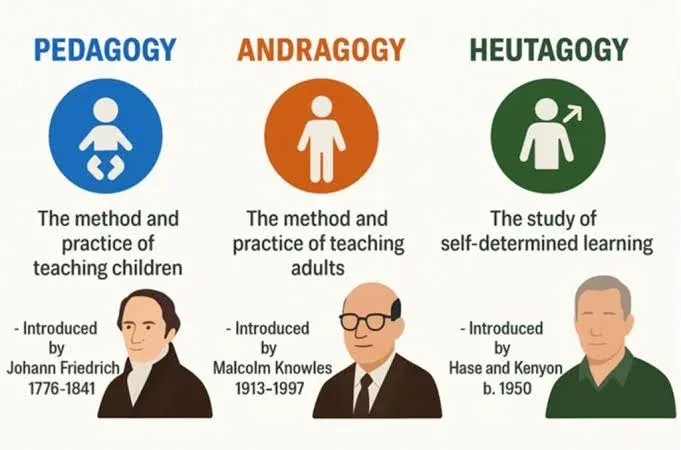
The study of how adults learn even has its own name. Malcolm Knowles popularized the term andragogy, the art and science of helping adults learn, to contrast it with pedagogy, the more directive model built for dependent young learners. Knowles described a handful of tendencies that, once you see them, change how you teach forever.
Adults are self-directing. They see themselves as responsible people and resent being treated as empty vessels to be filled. They arrive with a deep reservoir of experience, which is a resource to teach with rather than an obstacle to push past. They get ready to learn when a topic connects to a real role or problem they face. They are problem-centered, wanting to apply something now rather than bank it for a distant exam. And they are moved most strongly by internal drivers: the feeling of growing competence, of confidence, of visible progress.
That last point matters more than most new trainers expect. Certificates and mandates can get people into the room, but they rarely produce deep learning. What sustains an adult learner is the sense that they are getting better at something that matters to them. Which leads to the single most powerful tool you have: relevance.
Adults are busy, and a quiet question runs under everything you say: is this worth my time? You answer it not with a polished introduction but by naming a real stake. Compare “today we will cover the seven categories of security threats” with “last month a phishing email cost a company in our field days of downtime; by the end of this hour you will spot the three warning signs that would have caught it.” Same content, completely different reason to lean in. The second version promises a concrete capability tied to a real risk. That is what relevance looks like in practice.
Once you have their attention, the question becomes how to make the learning actually take hold. Here the most reliable guide is experiential learning, described by David Kolb as a four-stage cycle. Learners have a concrete experience, reflect on what happened, form a principle from that reflection, and then experiment by applying the idea, which leads to a new experience and around again.
The practical implication is counterintuitive. Most beginners lecture first and hope learners apply the material later. Experiential design flips the order. You let learners attempt something, even imperfectly, then guide them to reflect on it, and only then introduce the concept that explains what they just lived through. Now your explanation answers a question the activity has already raised, and it lands with far more force. Picture training new managers to give feedback: have them role-play the conversation first, discuss where it stalled, then introduce a simple feedback model, then run the conversation again. The difference between the two attempts is the learning, and they feel it themselves.
None of this survives, though, if you ignore the hard limits of attention and memory. Attention is short and easily exhausted, which is why long uninterrupted lectures fail. Break sessions into chunks and change the mode of engagement every few minutes: explain, ask, do, discuss. Working memory is small, so resist the urge to cram. Teaching fewer points well beats rushing through many and losing most of them to cognitive overload.
When it comes to making knowledge durable, the research summarized in books like Make It Stick is refreshingly clear. Rereading and re-watching feel productive but do little. What works is retrieval practice: making learners pull information from their own heads through questions and low-stakes quizzes. So does spacing, spreading practice over time instead of cramming, and elaboration, having learners explain ideas in their own words. These methods share an uncomfortable trait. They feel harder in the moment. That mild struggle, sometimes called desirable difficulty, is exactly what makes learning stick. A session that feels smooth and easy often leaves an illusion of mastery that evaporates within days.
So how do you put it all together? Start with the learners, not the content. Find out who they are, what they already know, and what problem they need to solve. Write objectives as observable actions tied to that problem: not “understand customer service” but “resolve a routine complaint using the three-step process.” Then design backward, building a real experience that lets them practice exactly that, with time to reflect, a concept to make sense of it, and a chance to try again with feedback. Protect attention by chunking, build memory through retrieval and spacing, and close by asking each learner to name one thing they will do differently.
That final step, the commitment to action, is where a pleasant session becomes a changed behavior, which is the only outcome that really counts. Treat every session as a draft. Notice what engaged people and what fell flat, then revise. The principles point you in the right direction; your own learners, over repeated sessions, will teach you the rest. Teaching adults well is less about being brilliant and more about respecting how grown-ups actually learn.
Key takeaways 5
- Adults don't learn the way children are taught.
- Andragogy, popularized by Malcolm Knowles, studies how adults learn.
- Adults need to know why they are learning something.
- Experience is a resource: connect new ideas to what learners already know.
- Make learning relevant, problem-centered and self-directed.
Watch & learn

Frequently asked questions
What is andragogy?
Andragogy is the art and science of helping adults learn, a term popularized by Malcolm Knowles to contrast with pedagogy, the teacher-directed model designed for children.
What are Knowles' principles of adult learning?
Adults need to know why they learn, have a self-concept of being responsible for their decisions, bring prior experience, are ready to learn what helps with real situations, prefer problem-centered learning and are motivated internally.
How should I design training for adults?
Explain the purpose, connect content to learners' experience and real problems, involve them in discussion and practice, and give them some control over the learning process.
Go deeper with the free masterclass
Workshop, PDF handbook and curated resources for “Foundations of Adult Learning”.
Related articles

AI Tutors & Personalized Learning
For forty years we have known one-to-one tutoring works almost magically well, and we could never afford it. Large language models change the math - but only if we remember that the model was never the teacher.
Assessment & Feedback Design
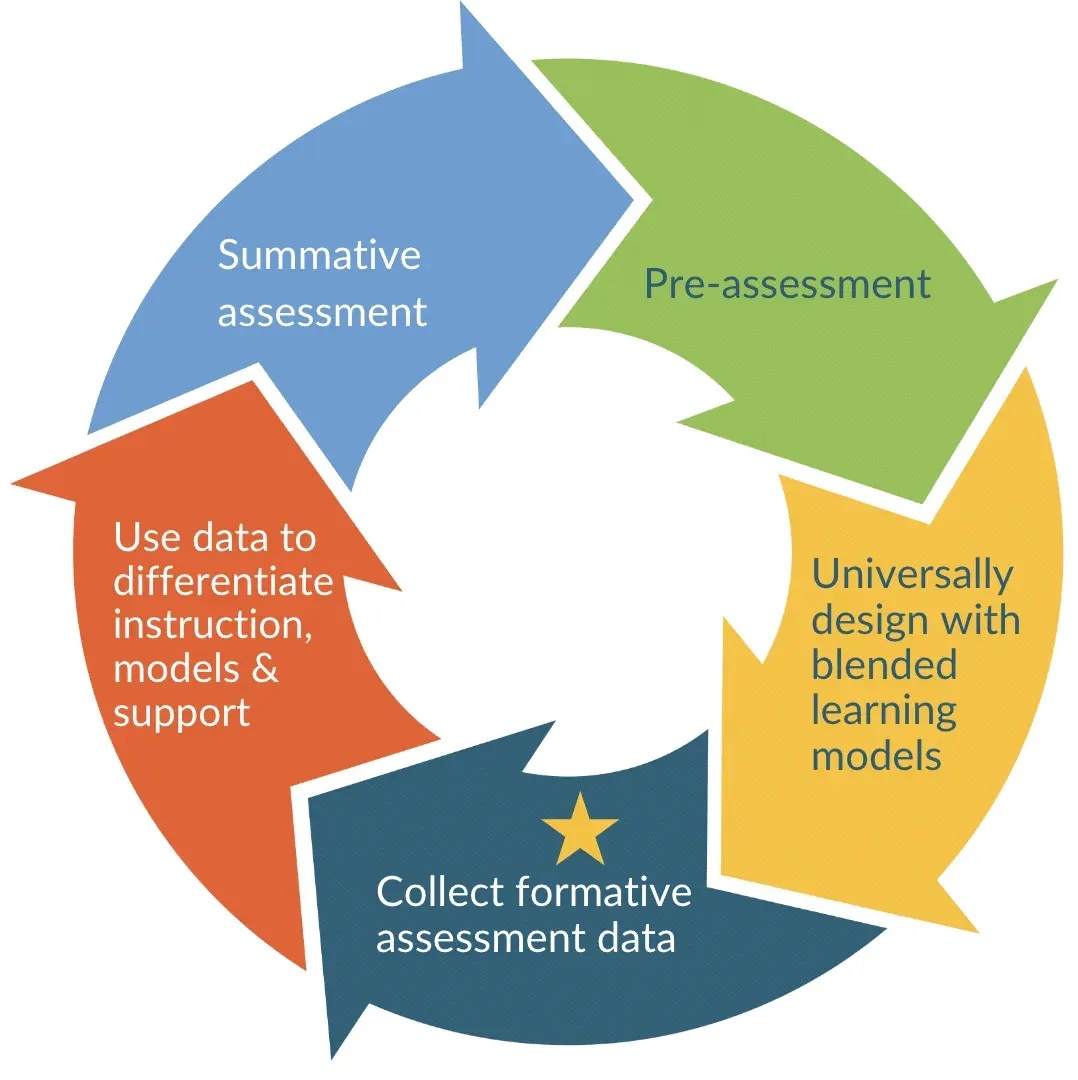
Most assessments measure the wrong thing and most feedback is never used. A designer's mindset fixes both - and it starts before you write a single question.
Designing Effective Technical Training
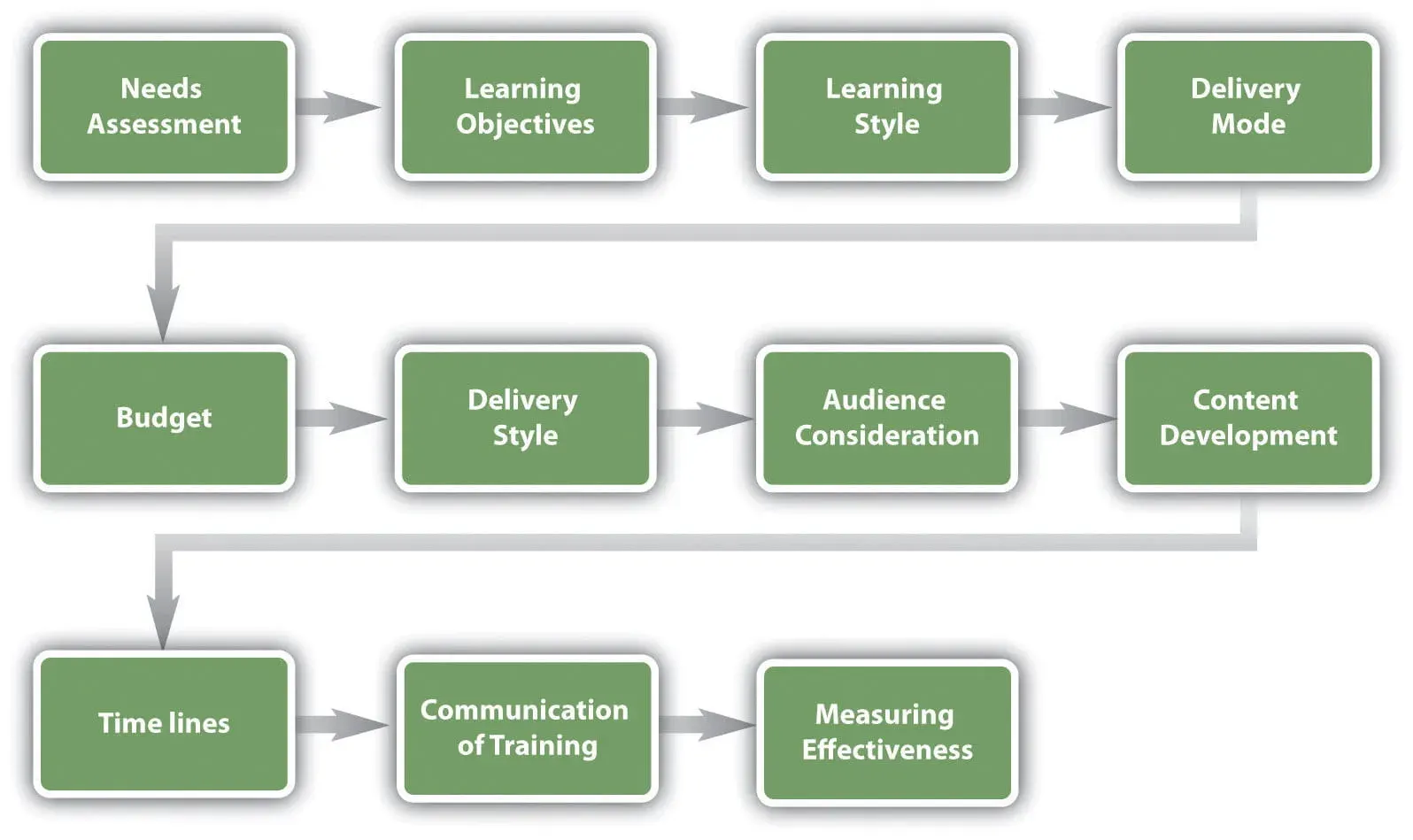
Your best engineer giving a workshop that flops is not a paradox. Expertise and the ability to teach are two different skills - and the gap between them is predictable, well-studied, and fixable.
Comments
No comments yet. Start the conversation.