Designing Effective Technical Training
Your best engineer giving a workshop that flops is not a paradox. Expertise and the ability to teach are two different skills - and the gap between them is predictable, well-studied, and fixable.
TL;DR
Being an expert and being able to teach are different skills. The curse of knowledge makes experts skip steps, use undefined terms and go too fast. Explaining is not teaching: effective technical training starts from what learners must do, manages cognitive load and builds in practice and feedback.
On this page
We have all sat through it. The most brilliant person on the team stands up to teach the rest of us something they know cold, and forty minutes later half the room is quietly lost. The slides were dense, the pace was brutal, and somewhere around minute ten a term went by undefined and never came back. Afterward the expert is baffled. “I explained everything,” they say. And they did. That is exactly the problem.
Being an expert is not the same as being able to teach. These are separate skills, and assuming one implies the other is how good organizations end up with terrible internal training.
Why knowing too much gets in the way
The villain here has a name: the curse of knowledge. Once you have deeply learned something, you cannot easily reconstruct what it felt like not to know it. Your knowledge has become automatic. A senior engineer looks at a command like git rebase -i HEAD~3 and sees a single, fluent gesture. A beginner sees a string of unfamiliar symbols, each one demanding attention.
That difference is not about intelligence. It is about how memory works. Working memory - the mental space where we hold and manipulate new information - is famously small and short-lived. Experts have spent years compiling thousands of facts into compact mental chunks, so a topic that floods a beginner’s working memory barely registers in theirs. The expert genuinely cannot feel the load the learner is carrying. Researchers call this the expert blind spot.
It produces the same three mistakes, over and over:
- Skipping steps that feel obvious but are invisible to the learner.
- Using jargon as if it were plain language.
- Going too fast, because the material is not taxing the teacher at all.
None of these come from arrogance. They come from competence. That is what makes them so hard to notice and so common.
Explaining is not teaching
Here is the deeper trap. The expert’s instinct is that teaching means explaining: transfer what is in my head into yours, clearly and completely. But learning does not work by transfer. People do not absorb understanding by listening to a clear account of it. They build understanding by doing things with the material - retrieving it, applying it, getting it wrong, and trying again.
This is why the polished lecture so often fails while a messier, more interactive session succeeds. Decades of research point the same way. Re-reading and re-hearing feel like learning because they feel easy, but that fluency is an illusion. The effortful work of pulling an answer out of your own memory is what actually builds durable knowledge - the so-called testing effect. The popular book “Make It Stick” lays this out for a general audience, and the punchline is uncomfortable for anyone who loves to lecture: if your learners are only listening, they are mostly forgetting.
The good news: teaching is learnable
If expertise does not grant teaching ability, what does? A handful of habits, none of which require a degree in education.
Start with outcomes, not content. Before building a single slide, write down three or four things a learner will be able to do by the end, using verbs you can actually observe - configure, debug, build - not “understand.” Those objectives become the filter for everything else.
Respect the limits of working memory. Teach one idea at a time. Define every term the first time it appears. Cut anything on a slide that is not doing real work. Assume nothing is obvious, because to your learners, it isn’t.
Make people do the thing. For every chunk you explain, give learners something to retrieve or attempt. Show a complete worked example first, then gradually remove the support until they can do it alone. Aim for tasks that are hard enough to require thought but achievable with effort - the zone where learning actually happens.
Check understanding constantly, and not by asking “does that make sense?” People nod regardless. Have them do a small version of the task. Use a quick question with think time. Notice where they get stuck, because that tells you where your explanation was thin.
A more honest standard
The shift that turns an expert into a teacher is mostly one of attention. Stop measuring the session by how much you covered and start measuring it by what learners can do afterward. That single change forces every other good habit: it makes you cut content, slow down, add practice, and check results.
So if the best engineer’s workshop flopped, do not conclude they are a bad teacher and give up. Conclude that teaching is a skill they have not yet practiced - and one worth practicing, because the same rigor they bring to systems works beautifully on lessons. Expertise got them the knowledge. A little instructional design is what lets them give it away.
Key takeaways 5
- Expertise and teaching ability are separate skills.
- The curse of knowledge makes experts forget what beginners don't know.
- Explaining everything is not the same as teaching.
- Design around what learners must be able to do, with practice and feedback.
- Teaching is learnable, so judge training by what learners can do afterwards.
Watch & learn

Frequently asked questions
What is the curse of knowledge?
The curse of knowledge is a cognitive bias where experts find it hard to imagine not knowing something, so they skip steps, use jargon and overestimate how clear they are.
Why do experts struggle to teach?
Experts process their field in large, automatic chunks. Beginners need smaller steps, defined terms, examples and practice, which experts often don't realize they need.
How do you design effective technical training?
Define what learners should be able to do, break content into small steps, limit new concepts per session, include hands-on practice and check understanding along the way.
Go deeper with the free masterclass
Workshop, PDF handbook and curated resources for “Designing Effective Technical Training”.
Related articles

Building an Online Course
Most online courses fail not because the teaching is bad, but because they were never designed to be finished. Here is how to build one that is.
Foundations of Adult Learning
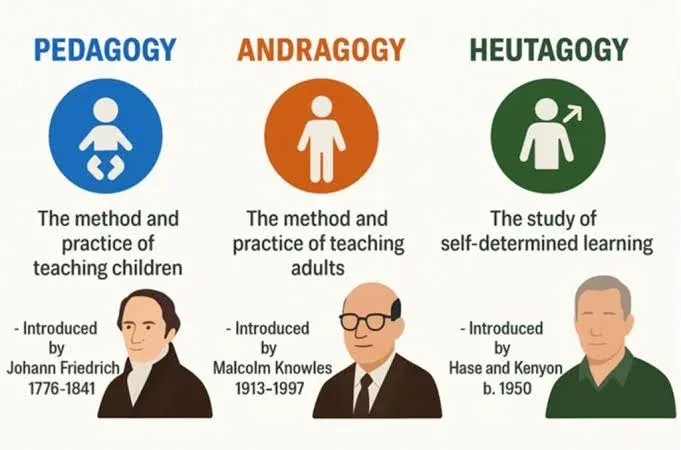
Adults do not learn the way children are taught. Here is what every new trainer, teacher, and subject-matter expert needs to know before stepping in front of a room of grown-ups.

AI Tutors & Personalized Learning
For forty years we have known one-to-one tutoring works almost magically well, and we could never afford it. Large language models change the math - but only if we remember that the model was never the teacher.
Comments
No comments yet. Start the conversation.