Control Loops & PID Tuning
Three terms, one loop, and the quiet art of making a process behave.
TL;DR
The PID controller, in industrial use since the 1920s, runs everything from cruise control to chemical plants with just three terms. Proportional reacts to the present error, integral to the past and derivative to the future trend. Tuning balances speed against stability, and doing it well is as much craft as math.
On this page
The most successful algorithm you’ve never thought about
There is a piece of software running, right now, in the engine of the car outside, in the heating system of the building you are in, in the cruise control, the disk drive, the chemical plant on the edge of town, and very likely the espresso machine that made your coffee. It has been in continuous industrial service since the 1920s. It has three tuning knobs. And the overwhelming majority of the people who depend on it could not name it.
It is the PID controller, and it is arguably the most successful control algorithm ever written. Surveys of industrial control loops consistently find that the vast majority - well over ninety percent - are some flavor of PID. Not neural networks, not model-predictive control, not anything with a fashionable acronym. Three terms, a feedback measurement, and a setpoint. The longevity is not nostalgia. It is that PID solves an astonishingly general problem with astonishingly little: keep a measured quantity at a desired value, despite a world that keeps trying to push it somewhere else.
The idea is older than the math
The conceptual leap behind PID is feedback: measure where you actually are, compare it to where you want to be, and let the difference drive your correction. It sounds obvious. It was not. For most of engineering history, control meant open loop - set the throttle and hope. The trouble with hope is that the world has disturbances. The feed gets colder. The load increases. A window opens. Open-loop control has no idea any of this happened.
Feedback closes the loop. It does not need to understand why the process variable drifted; it only needs to see that it did, and push back. That single property - correcting for causes you never modeled and never anticipated - is why feedback control quietly underpins modern industry. James Clerk Maxwell wrote the first real mathematical analysis of feedback governors in 1868, studying why steam-engine governors sometimes hunted and oscillated. The practitioners had been building the things for decades; the theory was catching up to the hardware. That gap between working practice and clean theory has never entirely closed, and it is part of what makes control engineering such a satisfying craft.
Past, present, and future
The genius of PID is how it carves up time. The proportional term reacts to the present error: the further off you are, the harder it pushes. Useful, but it can never quite land on target - to hold any output it needs a residual error, like a spring that only resists when stretched. The integral term remembers the past: it accumulates error and keeps nudging until the offset is gone. It is what finally parks the process exactly on setpoint. And the derivative term anticipates the future: it watches how fast the error is changing and eases off before you overshoot, adding a steadying hand.
Present, past, future. Three perspectives on a single number. Combine them well and you get control that is fast, accurate, and stable. Combine them badly and you get a loop that oscillates, hunts, or sleeps through disturbances. The combining is called tuning, and it is where the art lives.
Why tuning is hard, and human
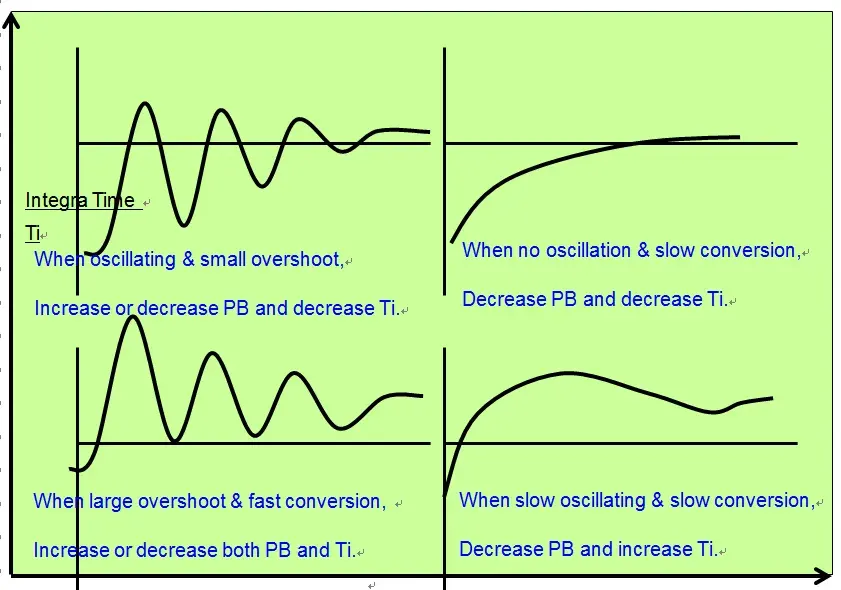
Here is the uncomfortable truth that no formula fully dissolves: tuning is a negotiation between speed and robustness, and the right answer depends on what the loop is for. A flow loop feeding a sensitive reactor wants smoothness above all - overshoot is a defect. A pressure loop guarding a safety limit wants speed - sluggishness is a hazard. The same process, tuned two legitimate ways, can look like the work of two different engineers.
The classic tuning recipes - Ziegler and Nichols published theirs in 1942 - are wonderful and slightly dangerous. They give you numbers fast, but they were designed for aggressive, quarter-amplitude-decay responses that overshoot by a quarter and sit close to the edge of instability. Lean on them blindly and your loop will be twitchy and fragile: a small change in process gain, a fouled heat exchanger, a warmer feed, and the thing starts to ring. The more modern lambda and IMC methods trade some of that speed for robustness you can dial in directly, and most seasoned engineers drift toward them for exactly that reason. The process will drift. Your tuning has to survive it.
The lessons that outlast the loop
Spend enough time with control loops and you start to notice the ideas leaking out of the plant. Feedback beats foresight when the world is uncertain. Integral action - patient, cumulative pressure - eventually removes errors that proportional force alone never will. Derivative action - reading the trend, not just the moment - prevents overshoot in everything from a temperature loop to a careless decision. And dead time, that pure delay between acting and seeing the result, is the great destroyer of stability: the longer the gap between cause and observed effect, the more cautiously you must act, because aggression in the presence of delay is just oscillation waiting to happen.
None of this requires exotic mathematics. It requires understanding your process, measuring it honestly, and respecting the trade-offs. That is the whole discipline, and it is why a ninety-year-old algorithm with three knobs is still, today, holding the world’s processes steady - quietly, reliably, and almost entirely unnoticed.
Key takeaways 5
- PID is the most widely used control algorithm in industry.
- Proportional acts on present error, integral on past error, derivative on the predicted future.
- Too aggressive tuning oscillates; too timid tuning is sluggish.
- Real processes add noise, delay and limits that make tuning a craft.
- Feedback, measurement and small corrections are lessons that go beyond control.
Watch & learn

Frequently asked questions
What is a PID controller?
A PID controller is a feedback control algorithm that adjusts an output, such as a valve or motor speed, based on the error between a setpoint and a measured value, using proportional, integral and derivative terms.
What do P, I and D do?
P responds in proportion to the current error, I accumulates past error to remove steady-state offset, and D reacts to how fast the error is changing to dampen overshoot.
How do you tune a PID loop?
Common approaches include manual tuning (increase P until oscillation, then add I and D), Ziegler-Nichols methods and software auto-tuning, always checking stability, overshoot and response time.
Go deeper with the free masterclass
Workshop, PDF handbook and curated resources for “Control Loops & PID Tuning”.
Related articles
Motion Control & Servo Drives
Servo systems feel like dark art until you see the simple logic underneath. Here is the mental model that turns motion control from guesswork into engineering.
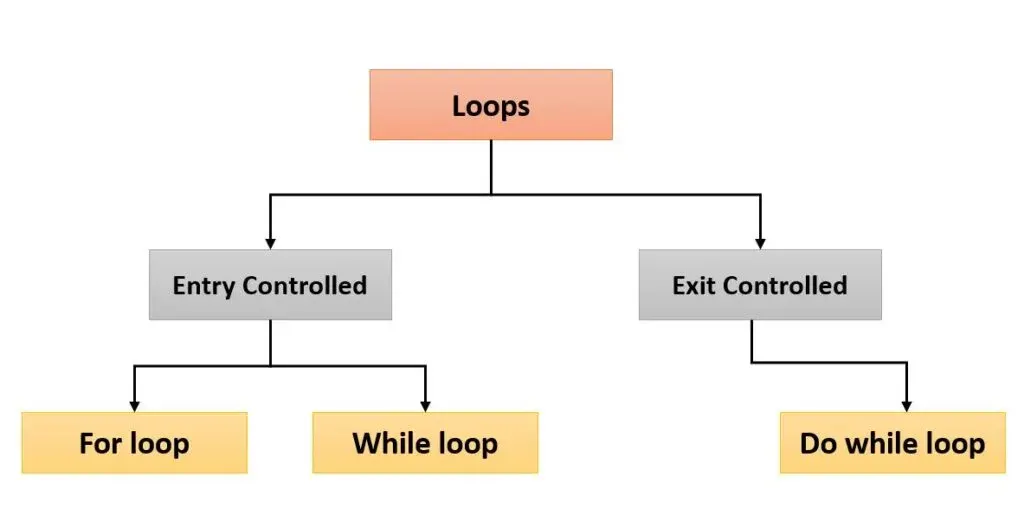
Learning C Programming: Variables, Control Structures, and Loops
Diving into the world of programming can be both exciting and challenging, especially when starting with a language as fundamental as C.
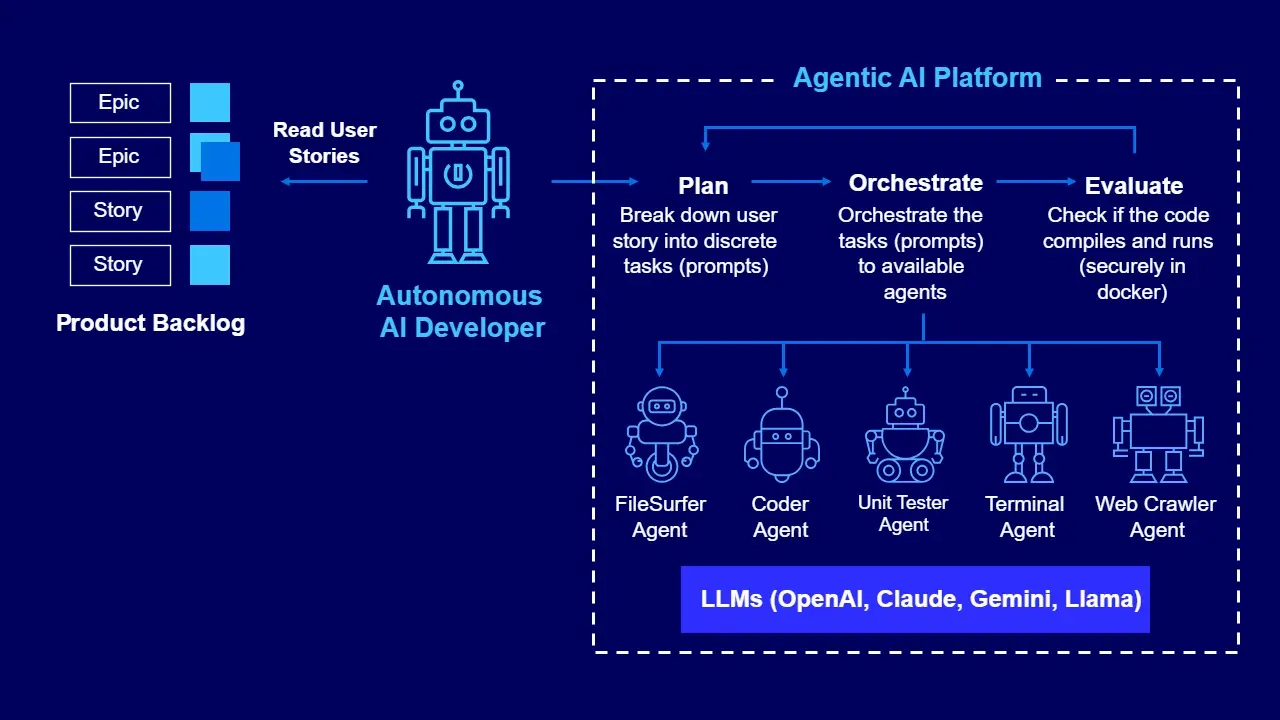
Agentic Automation: AI Agents for Business Processes
AI agents are not smarter chatbots or fancier macros — they are a third kind of automation, and the teams that win will be the ones who learn exactly where it fits.
Comments
No comments yet. Start the conversation.