Learning C Programming: Variables, Control Structures, and Loops
TL;DR
A beginner's guide to the core building blocks of C: why C is worth learning, variables and data types (with integer sizes on 64-bit systems), arithmetic, relational and logical operators, if/else conditionals, and while and for loops, put together in practical examples.
On this page
Diving into the world of programming can be both exciting and challenging, especially when starting with a language as fundamental as C. If you’re embarking on this journey, you’re likely tackling concepts that are foundational to not just C, but programming in general. In this blog post, we’ll explore some of the core topics you’ll encounter in a project focused on variables, conditional statements, and loops in C.
Why Learn C?
C is often considered the “mother of all languages” in the programming world. Many modern languages, such as C++, Java, and Python, have their roots in C. Learning C provides a strong foundation in programming principles, memory management, and system-level programming, which is invaluable for any aspiring programmer.
Key Concepts to Master
Variables and Data Types
In C, variables are used to store data that your program can manipulate. Each variable has a type, which determines what kind of data it can hold. Common data types include:
int: Integer valueschar: Single charactersunsigned int: Non-negative integer values
int age = 25;
char initial = 'A';
unsigned int score = 100;
Data Types | Integer types (on most 64-bit computers)
| Type | Storage size | Value range |
|---|---|---|
| char | 1 byte | -128 to 127 |
| unsigned char | 1 byte | 0 to 255 |
| short | 2 bytes | -32,768 to 32,767 |
| unsigned short | 2 bytes | 0 to 65,535 |
| int | 4 bytes | -2,147,483,648 to 2,147,483,647 |
| unsigned int | 4 bytes | 0 to 4,294,967,295 |
| long | 8 bytes | −9,223,372,036,854,775,808 to 9,223,372,036,854,775,807 |
| unsigned long | 8 bytes | 0 to 18,446,744,073,709,551,615 |
Arithmetic Operators
Arithmetic operators allow you to perform mathematical operations on variables. The basic arithmetic operators in C include:
+(addition)-(subtraction)*(multiplication)/(division)%(modulus)
int sum = 5 + 3;
int difference = 10 - 4;
int product = 6 * 7;
int quotient = 20 / 5;
int remainder = 10 % 3;
Conditional Statements
Conditional statements allow your program to make decisions based on certain conditions. The most common conditional statements are if and if...else.
int number = 10;

if (number > 0) {
    printf("The number is positive.\n");
} else {
    printf("The number is not positive.\n");
}
Relational and Logical Operators
Relational operators compare two values and return a boolean result (true or false). Logical operators combine multiple boolean expressions.
- Relational operators:
==,!=,<,>,<=,>= - Logical operators:
&&(logical AND),||(logical OR),!(logical NOT)
int a = 5;
int b = 10;

if (a < b && b > 0) {
    printf("Both conditions are true.\n");
}
Loops
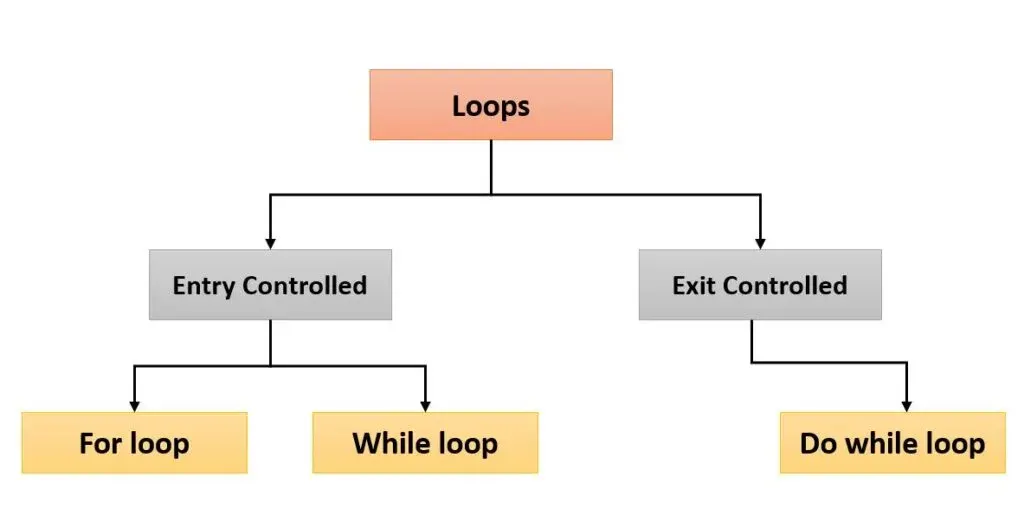
Loops allow you to execute a block of code repeatedly. The while loop is one of the simplest looping structures in C.
int count = 0;

while (count < 5) {
    printf("Count is %d\n", count);
    count++;
}
Practical Application: Putting It All Together
Let’s write a small program that uses variables, arithmetic operations, conditional statements, and loops to calculate the factorial of a given number.
#include <stdio.h>

int main() {
    int number;
    unsigned int factorial = 1;

    printf("Enter a positive integer: ");
    scanf("%d", &number);

    if (number < 0) {
        printf("Factorial is not defined for negative numbers.\n");
    } else {
        int i = 1;
        while (i <= number) {
            factorial *= i;
            i++;
        }
        printf("Factorial of %d is %u\n", number, factorial);
    }

    return 0;
}
In this program:
- We declare an integer variable
numberto store the user input. - We use a
whileloop to calculate the factorial of the entered number. - Conditional statements handle the case where the user enters a negative number.
Conclusion
Learning C programming by understanding variables, control structures, and loops forms a solid foundation for any programming endeavor. These basic concepts are not only crucial for mastering C but also for excelling in other programming languages. As you practice writing and debugging your own C programs, you’ll gain confidence and proficiency in problem-solving and logical thinking. Happy coding!
Key takeaways 5
- C underpins many modern languages and teaches how computers work.
- Variables have types with fixed sizes, such as int, char and long.
- Arithmetic, relational and logical operators build expressions.
- if, else if and else control decisions.
- while and for loops repeat code until a condition changes.
Frequently asked questions
Why learn C programming?
C teaches fundamental concepts such as memory, data types and how programs run close to the hardware, and it influenced languages like C++, Java and Python.
What is the difference between a while loop and a for loop in C?
A for loop puts initialization, condition and update in one line and suits a known number of iterations. A while loop repeats as long as a condition is true and suits unknown iteration counts.
How big is an int in C?
On most modern 64-bit systems an int is 4 bytes (32 bits), but the C standard only guarantees a minimum range, so sizes can vary by platform.
Learn it hands-on at AL Academy
Free practical programs in software, automation and IT, with labs and certificates.
Related articles
Understanding C Programming
C is an imperative (procedural) language used for system programming. All code must be inside functions.
What is Pseudocode?
Before diving into the complexities of programming languages, every programmer should start with a clear plan.
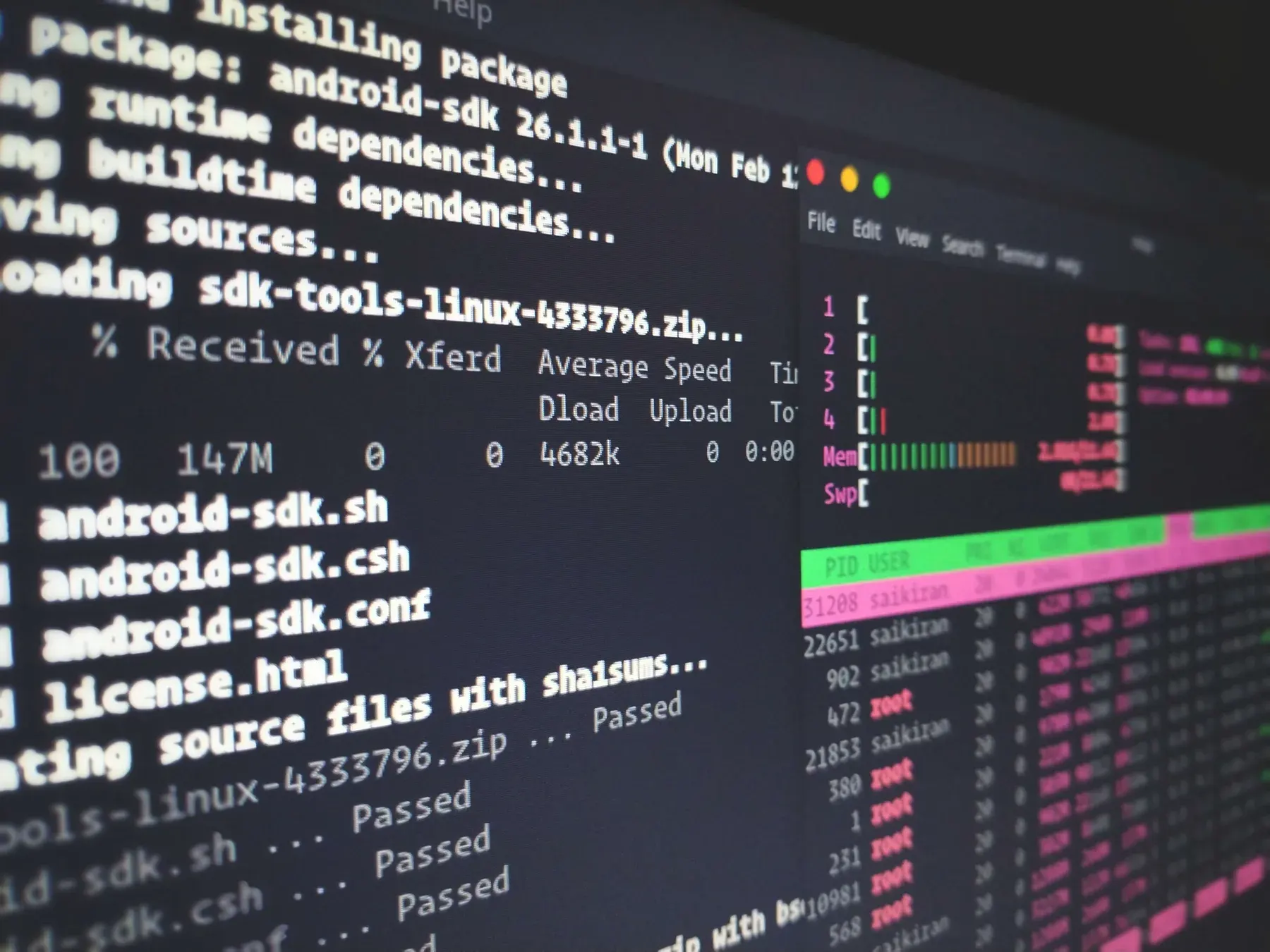
Overview of Unix Commands for C Development
Useful Unix commands for C projects: converting spaces to tabs, fixing DOS line endings, enforcing code style and compiling and debugging.
Comments
No comments yet. Start the conversation.