What is Pseudocode?
TL;DR
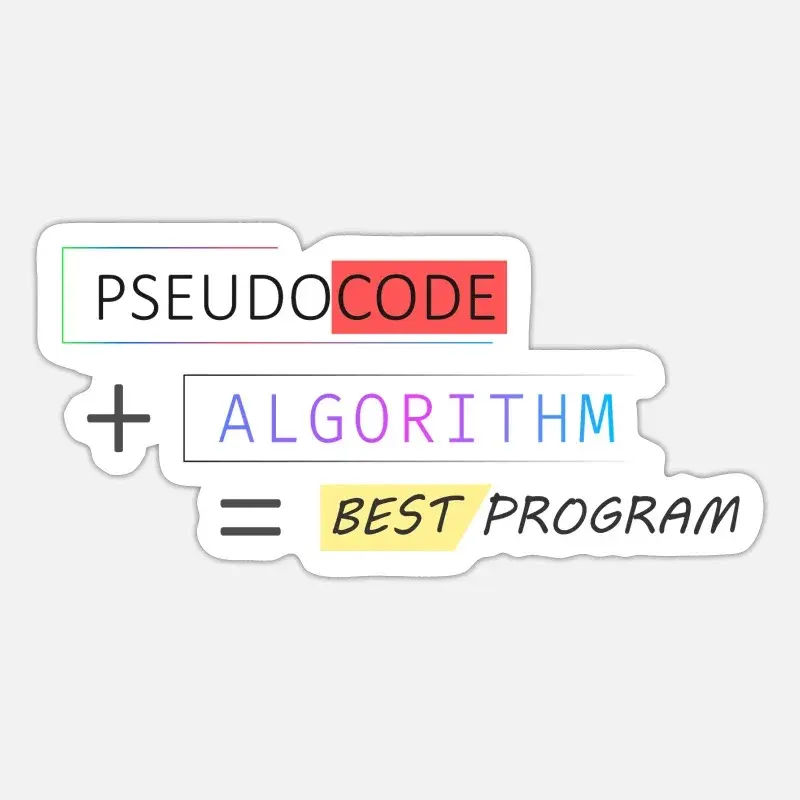
Pseudocode describes a program's logic in structured, plain language before you write real code. It clarifies problems, helps design and refine algorithms without language syntax getting in the way, and makes solutions easy to discuss with others. Write it in simple steps with clear control structures like IF, WHILE and FOR.
On this page
Understanding Pseudocode: A Programmer’s Guide
Before diving into the complexities of programming languages, every programmer should start with a clear plan. Pseudocode provides this foundation by allowing developers to outline their algorithms in a language-agnostic manner. This article explores what pseudocode is, why it’s crucial in programming, and how to effectively utilize it.
What is Pseudocode?
Pseudocode is a structured yet natural language description of a computer program’s logic. It bridges the gap between problem understanding and actual coding, serving as a blueprint for developers to map out their solutions.
Why is Pseudocoding Important?
Pseudocode offers several benefits:
- Clarity and Planning: It helps clarify complex problems and plan solutions before implementation.
- Algorithm Design: Allows for refining algorithms without being constrained by syntax.
- Collaboration: Enables effective communication among team members, including non-technical stakeholders.
- Debugging and Efficiency: Facilitates early detection of issues and enhances code efficiency.
How to Write Pseudocode
Follow these guidelines for effective pseudocode:
- Problem Definition: Clearly define the problem or task at hand.
- Step-by-Step Breakdown: Outline the solution in clear, logical steps.
- Natural Language: Use simple language to describe actions and decisions.
- Focus on Logic: Emphasize algorithm flow over specific syntax.
- Review and Refine: Continuously review and refine pseudocode for accuracy and efficiency.
Conclusion
Mastering pseudocode is an essential skill for every programmer, enhancing both the planning and execution phases of software development. By starting with a solid pseudocode foundation, developers can build more robust and efficient solutions to complex problems.
Further Reading
Key takeaways 5
- Pseudocode is a plain-language plan of a program's logic.
- It is independent of any programming language.
- It helps clarify problems and design algorithms first.
- Use simple steps and standard keywords like IF, WHILE and FOR.
- Good pseudocode translates easily into real code.
Watch & learn

Frequently asked questions
What is pseudocode?
Pseudocode is an informal, structured description of an algorithm written in plain language mixed with programming-like keywords, used to plan logic before coding.
Why write pseudocode before coding?
It lets you focus on the logic and catch design problems early, without worrying about syntax, and makes the solution easy to explain and review.
Is there a standard format for pseudocode?
No strict standard exists, but common conventions use keywords like IF, ELSE, WHILE, FOR and RETURN, indentation for blocks and one action per line.
Learn it hands-on at AL Academy
Free practical programs in software, automation and IT, with labs and certificates.
Related articles
Understanding C Programming
C is an imperative (procedural) language used for system programming. All code must be inside functions.
Learning C Programming: Variables, Control Structures, and Loops
Diving into the world of programming can be both exciting and challenging, especially when starting with a language as fundamental as C.

AI-Assisted Software Development
AI can draft code faster than you can read it. That is exactly the problem - and the skill that now separates good engineers from dangerous ones.
Comments
No comments yet. Start the conversation.