Change Management for Digital Initiatives
Your new platform works perfectly. That is exactly why it is about to fail.
TL;DR
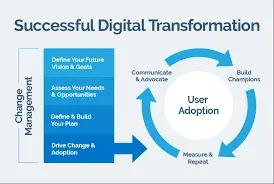
Digital rollouts often succeed technically and fail in adoption: the system works, but people keep using the old spreadsheet. Treat resistance as information, use change frameworks as scaffolding rather than magic, and invest in the unglamorous middle of training, support, reinforcement and measured adoption.
On this page
There is a particular kind of meeting that happens about four months after a big digital rollout. The dashboards are green. The system is stable. The vendor has been paid. And yet, sitting around the table, the people who championed the project can feel something is wrong. Usage is thinner than expected. The old spreadsheet keeps reappearing in email threads. Someone finally says it out loud: “The technology works fine - people just aren’t using it.”
I have heard that sentence in boardrooms across industries, and I have come to regard it as the single most revealing thing a leader can say. Because buried inside it is a confession: we built a thing, and we forgot about the people it was for.
The expensive assumption
The assumption underneath most failed digital initiatives is that adoption is automatic - that if you build something better, people will naturally migrate to it. This is one of the most expensive beliefs in modern management. Human beings do not adopt the objectively better tool. They adopt the tool that is easier, safer, and more socially rewarding than what they were doing before. Those are different criteria, and they are not satisfied by features.
The value of a digital initiative does not live in the software. It lives in the changed behavior of the people who use it. A system nobody uses is not a partial success; it is a total loss with a beautiful interface. And yet we routinely spend ninety percent of a project’s budget and attention on the ten percent of the problem that is technical, and almost nothing on the human ninety percent that decides the outcome.
Resistance is a message, not a malfunction
When adoption falters, the reflex is to find someone to blame. The laggards. The dinosaurs. The people who “won’t get with the program.” This framing feels satisfying and is almost always wrong.
Resistance is rational. When a warehouse supervisor quietly keeps using the old method, they are not being difficult - they have usually discovered that the new system adds steps to a task they are measured on, during the exact hours when they cannot afford to be slower. Their behavior is a perfectly logical response to a tool that was designed without them in the room.
This is the reframe that changes everything: stop treating resistance as an obstacle to overcome and start treating it as information to act on. Every objection is a diagnosis. “I didn’t know about this” is an awareness gap. “Why are we even doing this?” is a desire gap. “I tried but got stuck” is a knowledge gap. Each requires a different response, and the most common mistake in the field is answering a motivation problem with more training - which only confirms to people that no one is actually listening.
The frameworks are scaffolding, not magic
Practitioners reach for models - Kotter’s eight steps, Prosci’s ADKAR, Lewin’s unfreeze-change-refreeze - and they are genuinely useful, but not for the reason people think. A framework will not change your organization. What it does is stop you from skipping the step that everyone who failed before you also skipped.
Kotter’s insight that urgency must come first, before vision, before action, is really a warning: you cannot logistics your way out of a missing reason. ADKAR’s insistence that change is the sum of individual transitions is really a reminder that “the organization” never adopts anything - specific people do, one at a time, each with their own barrier. And Lewin’s unglamorous third step, refreeze, is the one almost everyone forgets, because it happens after the launch party, when attention has already moved on.
The discipline of the unglamorous middle
If there is a secret to making digital change stick, it is an unfashionable one: care about the boring parts, and keep caring after everyone else has stopped. Map the people who will actually be affected, including the middle managers who quietly decide whether a change lives or dies, and the keeper of the old spreadsheet whose expertise your system just made obsolete. Let the senior sponsor explain why, and the direct manager explain what it means for me - never the reverse. Engineer a visible win in the first three weeks so the skeptics have something real to point at. Then, crucially, measure behavior rather than activity. A login count tells you people showed up. It does not tell you they changed.
The most dangerous moment in any initiative is the week after go-live, when the room exhales and the team disbands. Old habits have gravity. Unless someone is assigned to keep pulling against it - aligning incentives, retiring the workarounds, recognizing the people who stuck with it at month three - the organization drifts gently back to where it started, now poorer by the cost of the project.
What it really takes
None of this is complicated. It is simply harder than buying software, and far less satisfying to put in a press release. But it is the whole game. The organizations that transform are not the ones with the best technology. They are the ones with someone who understood, from the first day, that they were not installing a system. They were helping a particular group of human beings work in a new way - and they refused to call it done until the new way was simply the way things are.
The technology was never the hard part. The people always were. The good news is that the people are also where the entire return is hiding, waiting for someone willing to do the unglamorous work of leading them there.
Key takeaways 5
- "The technology works, people just aren't using it" signals a change-management failure.
- Resistance is a message about real costs, not a malfunction to suppress.
- Frameworks like ADKAR or Kotter help structure the work but are not magic.
- Most effort belongs in the unglamorous middle: training, support and reinforcement.
- Measure adoption and outcomes, not just go-live.
Watch & learn

Frequently asked questions
What is change management in digital transformation?
It is the structured work of helping people adopt new systems and ways of working: communicating why, training, supporting users, addressing resistance and reinforcing new habits.
Why do people resist new digital tools?
Often for good reasons: the new tool adds work, removes something they relied on, threatens their expertise or arrived without explanation. Listening to resistance reveals what needs fixing.
What is the ADKAR model?
ADKAR is a change model describing five stages people go through: Awareness, Desire, Knowledge, Ability and Reinforcement.
Go deeper with the free masterclass
Workshop, PDF handbook and curated resources for “Change Management for Digital Initiatives”.
Related articles
Building a Digital Transformation Roadmap
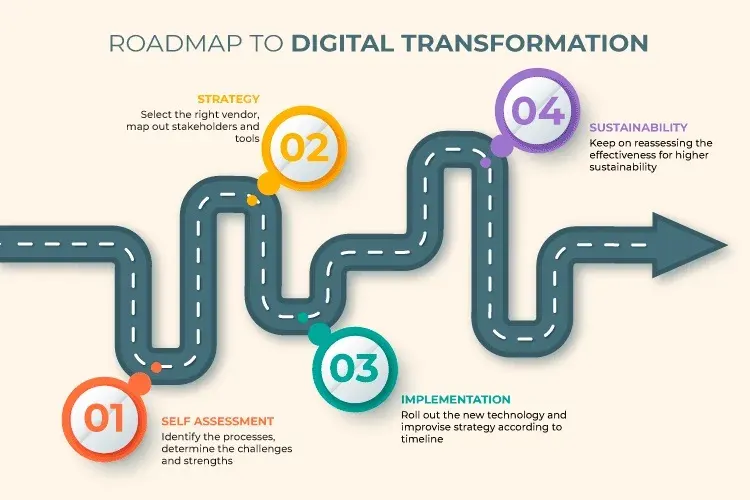
Most digital transformations do not fail at the keyboard. They fail on a slide deck that confused a list of projects with a plan. Here is how to build a roadmap that actually steers.
Getting Started with Digitalization
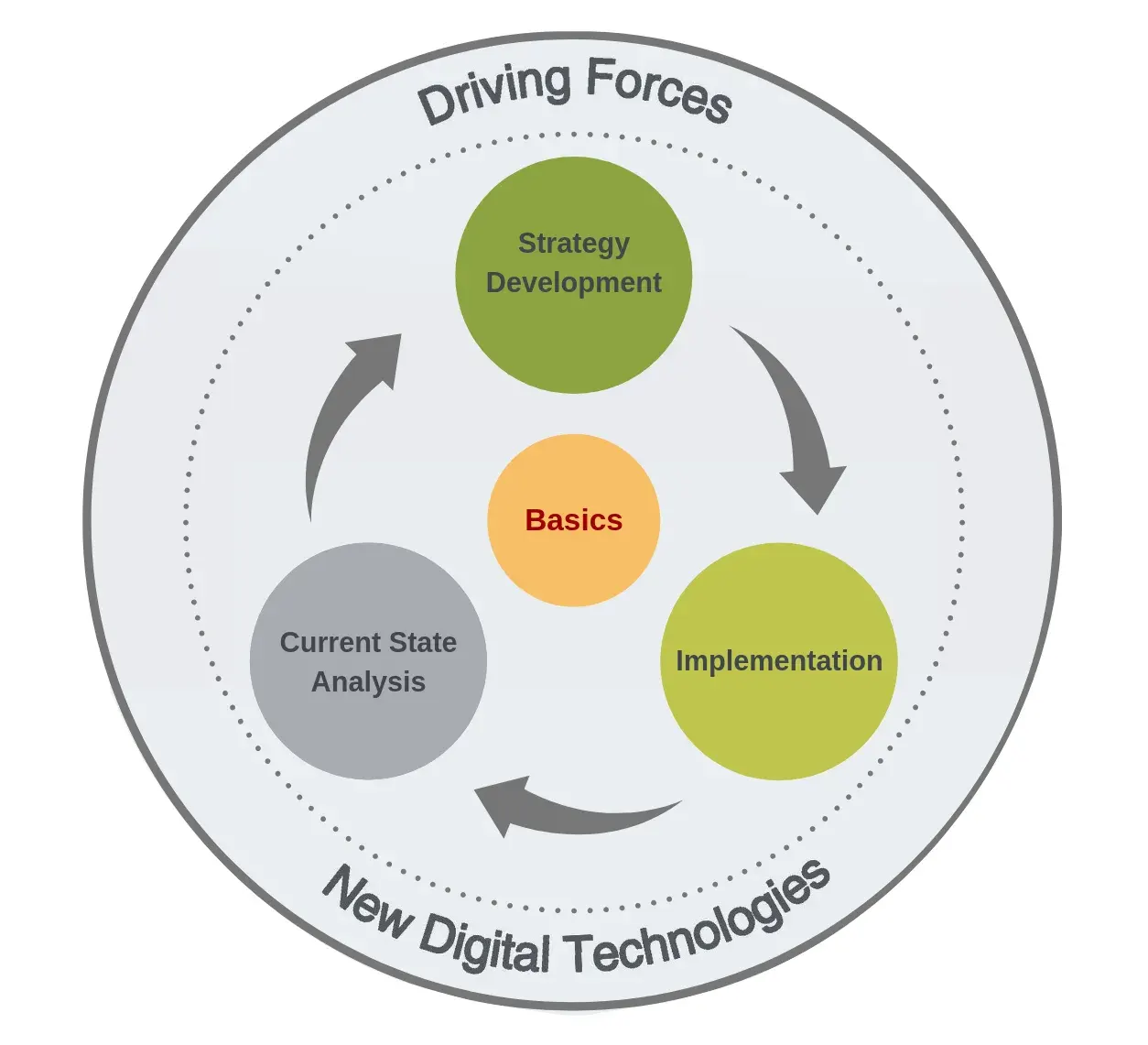
You don't need a moonshot to start digitalizing. The fastest, safest way to begin is to pick one annoying process and make it flow better with tools you already have.
Digitalizing SME Operations End-to-End
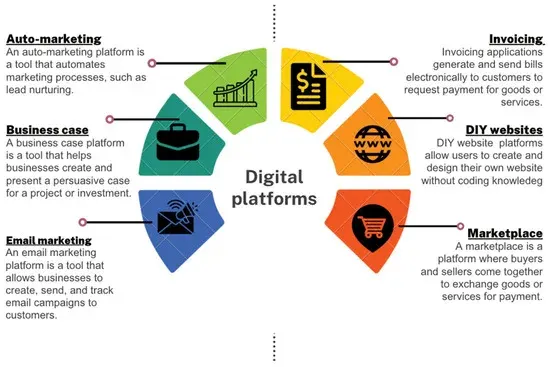
Small businesses do not fail to go digital because the software is too hard. They fail because they buy tools before they understand their own work. Here is the order that actually works.
Comments
No comments yet. Start the conversation.