Building a Digital Transformation Roadmap
Most digital transformations do not fail at the keyboard. They fail on a slide deck that confused a list of projects with a plan. Here is how to build a roadmap that actually steers.
TL;DR
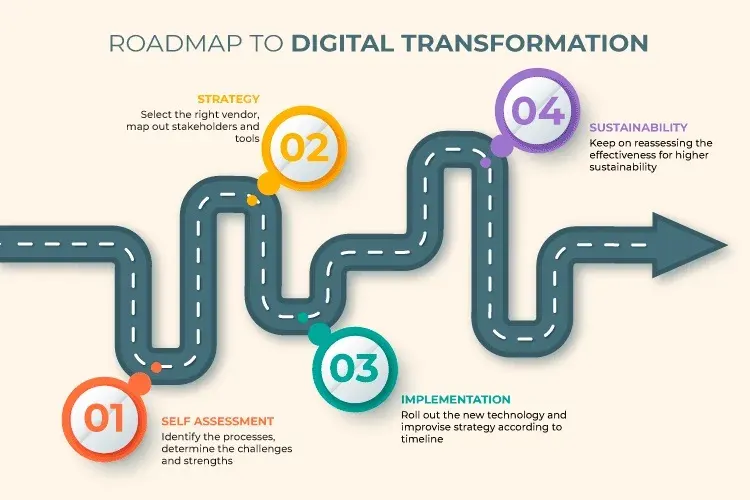
A digital transformation roadmap is not a slide of logos and projects; that is a wish list. A real roadmap starts from business outcomes, assesses where you are, sequences initiatives by value and dependencies, funds capabilities rather than one-off projects, and is reviewed as conditions change.
There is a particular kind of meeting that anyone who has worked in a large organization will recognize. A leader stands in front of a slide titled “Our Digital Transformation,” and on it is a grid of logos and project names: a new CRM, a data lake, an automation pilot, a mobile app. Everyone nods. The slide looks decisive. And yet, eighteen months later, half the boxes are stalled, the budget is contested, and nobody can quite say whether the organization is more digital than before.
The slide was not a roadmap. It was a wish list with good production values. The difference between the two is the difference between transformations that land and transformations that quietly dissolve, and it comes down to a handful of unglamorous disciplines that the logo grid skips entirely.
The first thing a real roadmap does is answer “why” before “what.” A wish list starts from technology: we should have AI, we should be on the cloud. A roadmap starts from an outcome the business already cares about and works backward. If the company’s strategy is to retain more customers, then the roadmap’s job is to make retention happen through digital means, and every initiative on it has to earn its place by serving that goal. This sounds obvious, yet it is the most commonly skipped step. Technology framed as an end in itself is impossible to prioritize, because there is no criterion by which one shiny thing beats another. Technology framed as a means to a strategy the leadership already owns is far easier to fund, because you are not asking them to believe in something new.
The second discipline is knowing where you actually stand. You cannot plan a route without a starting point, and most organizations are remarkably vague about their own capabilities. A maturity assessment fixes this. It is nothing more than rating yourself honestly across a few dimensions, such as data, operations, customer experience, and culture, on a simple scale from ad hoc to optimized. The value is not in the score. It is in the argument. When you put the operations lead and the analytics lead in the same room and ask them to rate the company’s use of data, the gap between their answers tells you more than any consultant’s report. The trick is to demand evidence for every rating. A team that claims its processes are “managed” but cannot show the metrics that manage them has just told you its real level, which is lower.
The third discipline, and the one where wish lists die, is prioritization. Every honest maturity assessment produces more good ideas than anyone can fund. The wish list responds by trying to do all of them, badly, at once. A roadmap chooses. The most useful tool here is also the simplest: a grid of impact against effort. Plot every initiative on it, and the picture sorts itself. The high-impact, low-effort corner holds your quick wins, the things you do first to prove the program works and to earn the trust you will need later. The high-impact, high-effort corner holds the major projects that need careful staging. The low-impact, high-effort corner holds the money pits, and the most important thing a roadmap can do is give you the language to say no to them out loud.
But impact and effort are not enough, because they hide risk. A high-impact initiative built on technology nobody has used before, or on the cooperation of a team that does not want to change, is a gamble dressed up as a plan. A good roadmap adds a second question to every initiative: not just how much value, but how much could go wrong. The biggest bets get piloted first, in a small and survivable way, before the organization commits real money. This is the difference between a portfolio and a list. A portfolio deliberately mixes a few certain quick wins, one slow but foundational investment, and one carefully de-risked bet. A list just ranks things and funds from the top until the money runs out.
Then comes sequence, and here the roadmap collides with an uncomfortable fact: the order you should do things in is often not the order of their importance. The customer portal might be the single most valuable thing on your list, but if it depends on a clean customer database that does not yet exist, the database has to come first, even though on its own it would never win a popularity contest. Mapping these dependencies before committing to any dates is what separates a credible roadmap from an optimistic one. And every quarter of that sequence has to deliver something a non-technical stakeholder can see and celebrate. A plan that promises nothing visible until the fourth quarter will lose its sponsors long before the payoff arrives.
Finally, a roadmap has to be steered, which means three things running from the very first day. Governance, so that when reality diverges from the plan, someone can decide what happens next, including the option to stop. Metrics that measure outcomes rather than activity, because “twelve projects completed” tells you nothing while “sixty percent of requests now self-served” tells you everything. And change management as a real workstream with its own owner, because transformations stall on people far more often than on technology, and the temporary dip in performance as teams learn new tools is something to plan for, not panic over.
None of this is exotic. It is vision, honest self-assessment, ruthless prioritization, dependency-aware sequencing, and steady governance. What makes it hard is not the technique but the temptation to skip it in favor of the slide with the logos. The organizations that succeed are simply the ones that resisted, wrote the harder document, and kept revising it as they learned. A roadmap, in the end, is not a picture of the future. It is a tool for arguing your way there, one defensible decision at a time.
Key takeaways 5
- A list of projects is not a roadmap.
- Start from the business outcomes you want, not from technologies.
- Assess current capabilities honestly before choosing initiatives.
- Sequence work by value and dependencies, with quick wins that build trust.
- Review the roadmap regularly; it must steer, not just decorate.
Watch & learn

Frequently asked questions
What is a digital transformation roadmap?
It is a plan that links business goals to a sequenced set of digital initiatives, capabilities and investments over time, with owners, milestones and measures of success.
Why do digital transformations fail?
Common reasons include starting from technology instead of business outcomes, too many parallel projects, weak leadership sponsorship, underestimating change management and not measuring results.
How do you prioritize digital transformation initiatives?
Score them by business value, feasibility and dependencies, start with foundations and visible quick wins, and avoid running more initiatives than the organization can absorb.
Go deeper with the free masterclass
Workshop, PDF handbook and curated resources for “Building a Digital Transformation Roadmap”.
Related articles
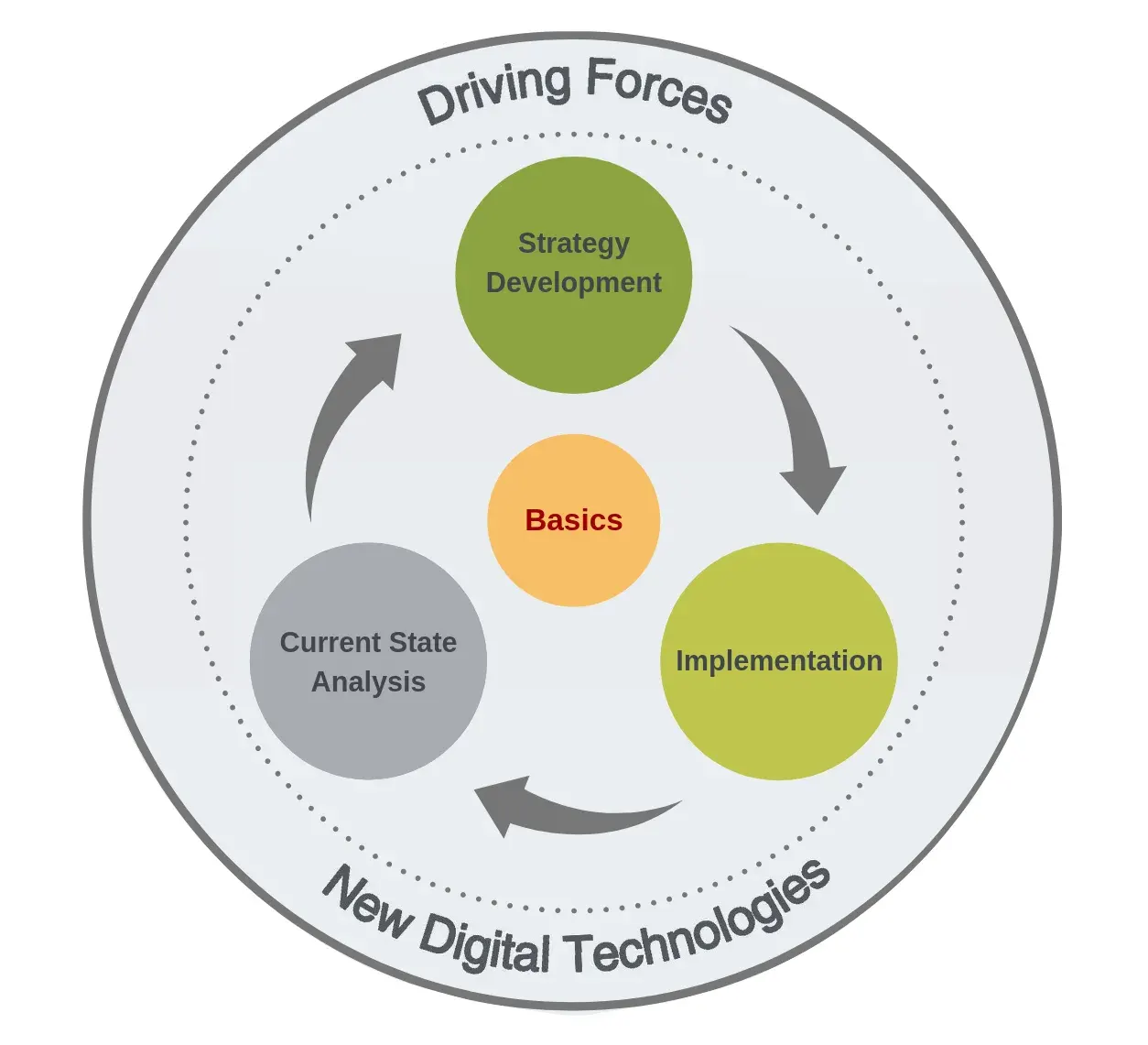
Getting Started with Digitalization
You don't need a moonshot to start digitalizing. The fastest, safest way to begin is to pick one annoying process and make it flow better with tools you already have.
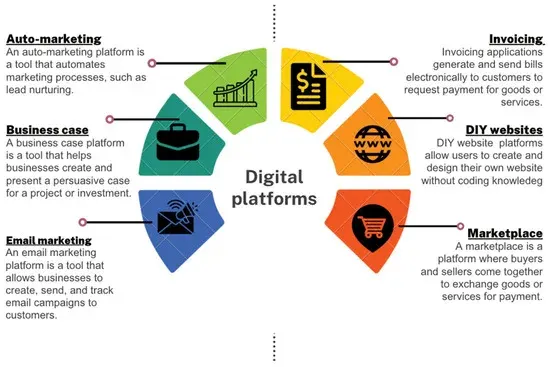
Digitalizing SME Operations End-to-End
Small businesses do not fail to go digital because the software is too hard. They fail because they buy tools before they understand their own work. Here is the order that actually works.
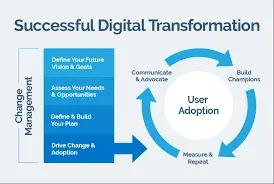
Change Management for Digital Initiatives
Your new platform works perfectly. That is exactly why it is about to fail.
Comments
No comments yet. Start the conversation.