AI-Assisted IT Support & Automation
AI will not replace your service desk. It will quietly hand the keys to whoever forgets to keep a human in the room.

TL;DR
AI is genuinely useful in IT support: instant first responses, smarter ticket triage, alert correlation and safe self-service fixes. It should augment the service desk rather than cut headcount, and success depends on unglamorous basics like clean knowledge bases, guardrails and keeping a human in the loop.
On this page
The pitch lands in every IT leader’s inbox now: a chatbot that resolves half your tickets, an engine that predicts outages, automation that fixes problems while you sleep. Some of it is real. I have watched first-response times fall from forty-five minutes to instant, and watched on-call engineers get their nights back when alert correlation collapsed a four-hundred-alert storm into one incident. The technology is genuinely good. The way most desks adopt it is genuinely not, and the gap between those two facts is where careers and outages live.
So this is the version I would give a peer over coffee, not the version in the vendor deck.
Augment the desk; do not count the heads
The first mistake is framing AI as headcount reduction. It is the wrong objective and it produces the wrong design. The dependable wins are augmentation: the same analysts, handling more, with less drudgery. The single highest-adoption feature I have rolled out is not a clever autonomous agent - it is a “draft reply” button. The analyst clicks it, edits a clear first draft instead of staring at a blank box, and sends. Multiply that across hundreds of replies a day and you have bought back real time without anyone losing a job or a decision.
The mental model that has served me: AI is a brilliant, tireless junior who has read every article in your knowledge base and has never once been accountable for an outage. You would let that junior draft, summarise, and suggest. You would not let them push a change to production unsupervised. Design your AI rollout the same way.
The front door is where the value is
Most of the payoff lands at the moment a user describes their problem. Triage is a natural fit, because the input is exactly what language models are built for - messy free text. A good triage prompt turns “VPN broke again, urgent!!!” into a category, a priority, a target team, and a one-line summary, more consistently than a human at hour seven of a shift. Keep it suggested rather than silent, let analysts override, and log every override. That override rate is the truest accuracy metric you will get.
Then there is the knowledge assistant, and here is the one piece of jargon worth learning: RAG, retrieval-augmented generation. A raw model knows nothing about your environment and will happily invent an answer. RAG forces it to retrieve passages from your own runbooks first and answer using only those, with a citation. The behaviour you are actually buying is the refusal - when the runbook is silent, a well-built assistant says “I do not have that, escalating,” instead of confidently inventing a registry edit. If you take one thing from the knowledge-assistant hype, take this: the corpus is the product. A stale runbook becomes a confidently wrong answer at scale. Treat knowledge-base curation as the real project and the model as the easy part.
Where AI stops talking and starts doing
The capability that excites engineers and should worry leaders is generation plus execution. Modern models write good PowerShell and Bash. Combine that with automation and you get scripts that write themselves - and the entire craft becomes knowing where to put the brakes.
My rule is short enough to put on a wall. AI proposes; humans dispose, for anything that changes state. Detection, diagnosis, drafting, and suggestion can be heavily automated. Execution of a change that touches privileged access, deletes data, or hits many users at once passes through a human approval gate. The clean pattern is this: AIOps detects an issue, AI diagnoses it and proposes a ready-to-run, fully-commented script with a plain-English explanation, a human reads it and clicks approve, the automation runs and reports back. You keep the speed of machines and the judgement of a person exactly where judgement earns its keep. The day you let generated code run unreviewed is the day a plausible, confident, wrong command runs with admin rights.
Proactive support is real, prediction is oversold
On the operations side, AIOps delivers two things I would not give back. Anomaly detection asks a smarter question than thresholds do - not “is this above a number I guessed?” but “is this behaving unlike its own normal?” And alert correlation directly cures the pager fatigue that burns out good engineers. Both depend on an unglamorous prerequisite: you cannot detect anomalies in telemetry you never collected. Fix monitoring coverage first.
Incident prediction is the corner I would caution you on. Treat predictions as early warnings that buy you time, not prophecy. A model that gives you twenty minutes to drain a node gracefully is worth a great deal. A model you trust blindly will eventually embarrass you in front of the business.
The unglamorous parts that decide it
Three things separate a leader who deploys AI from one who survives deploying it. First, privacy: tickets are full of names, asset tags, and credentials users should never have pasted. Know your data flow, redact what you can, and get security and legal to sign off before the pilot, not after the breach. Second, measurement: baseline your MTTR, CSAT, and first-response before you switch anything on, and write your go/no-go threshold down while you are still calm. “It feels faster” is not a result. Third, deskilling: if your juniors only ever click accept, you will have no seniors in five years - so make them review and understand, not rubber-stamp.
Adopt AI the way you would onboard that talented, overconfident new hire. Give it real work. Supervise it closely. Measure its output honestly. And never, ever hand it the keys to production without a human in the room.
Key takeaways 5
- Use AI to augment the service desk, not to cut heads.
- The biggest gains are at the front door: triage, routing and instant answers.
- Let AI act (resets, fixes) only with guardrails, approvals and audit logs.
- Alert correlation is real value; outage prediction is often oversold.
- Knowledge-base quality and change management decide success.
Watch & learn

Frequently asked questions
How is AI used in IT support?
Common uses include chatbots that answer and route tickets, automatic classification and prioritization, suggested fixes for agents, alert correlation in monitoring and automated self-service actions such as password resets.
Will AI replace the IT service desk?
Not fully. AI handles repetitive requests and speeds up triage, but people are still needed for complex issues, judgment calls, empathy and oversight of automated actions.
What is the biggest risk of AI in IT support?
Letting automation act without guardrails. Automated changes need limited permissions, approval steps for risky actions and full logging so mistakes are caught and reversible.
Go deeper with the free masterclass
Workshop, PDF handbook and curated resources for “AI-Assisted IT Support & Automation”.
Related articles
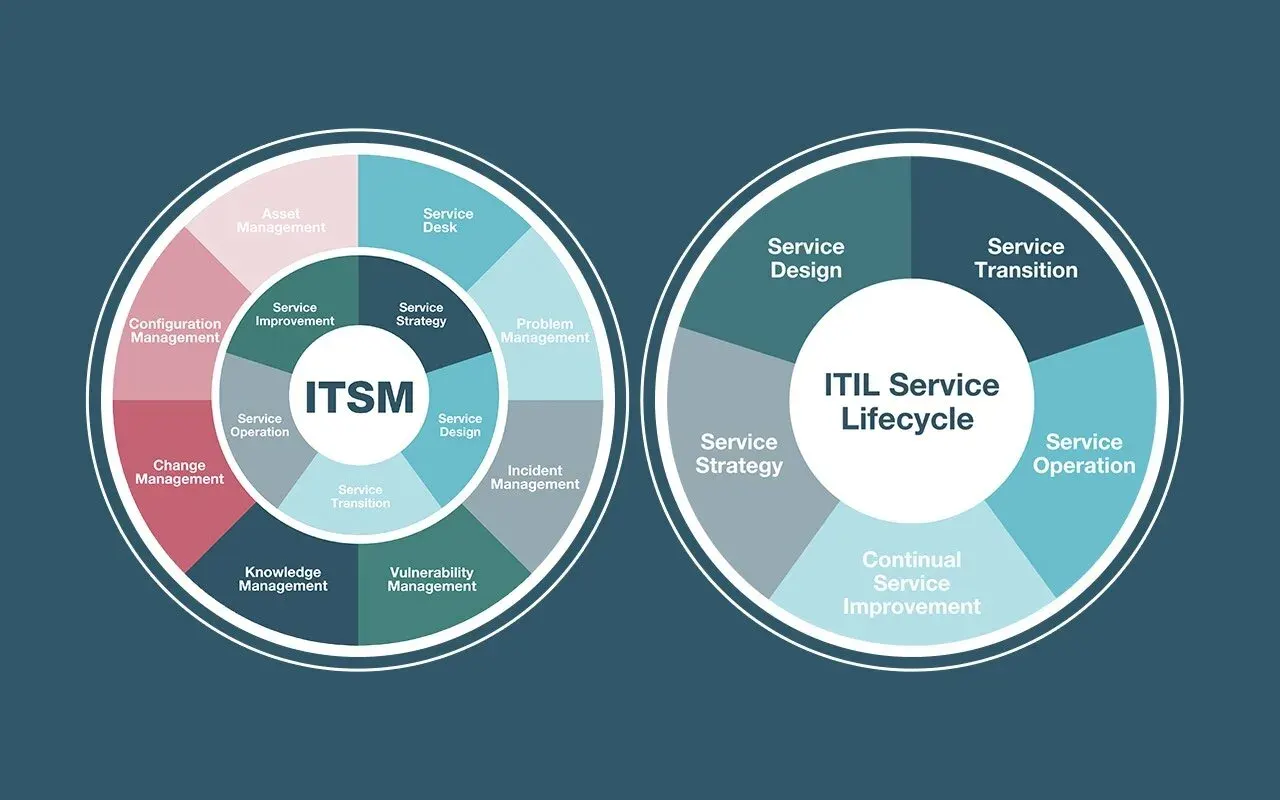
ITSM & the Service Desk (ITIL)
The service desk is the most underrated team in IT. Run it as a service, not a switchboard, and it quietly makes the whole organisation better.

Supporting Hybrid & Remote Workforces
The office help desk assumed it could walk over and fix things. When the users scattered, the service desk had to be rebuilt around a single uncomfortable truth - you can never touch the device.
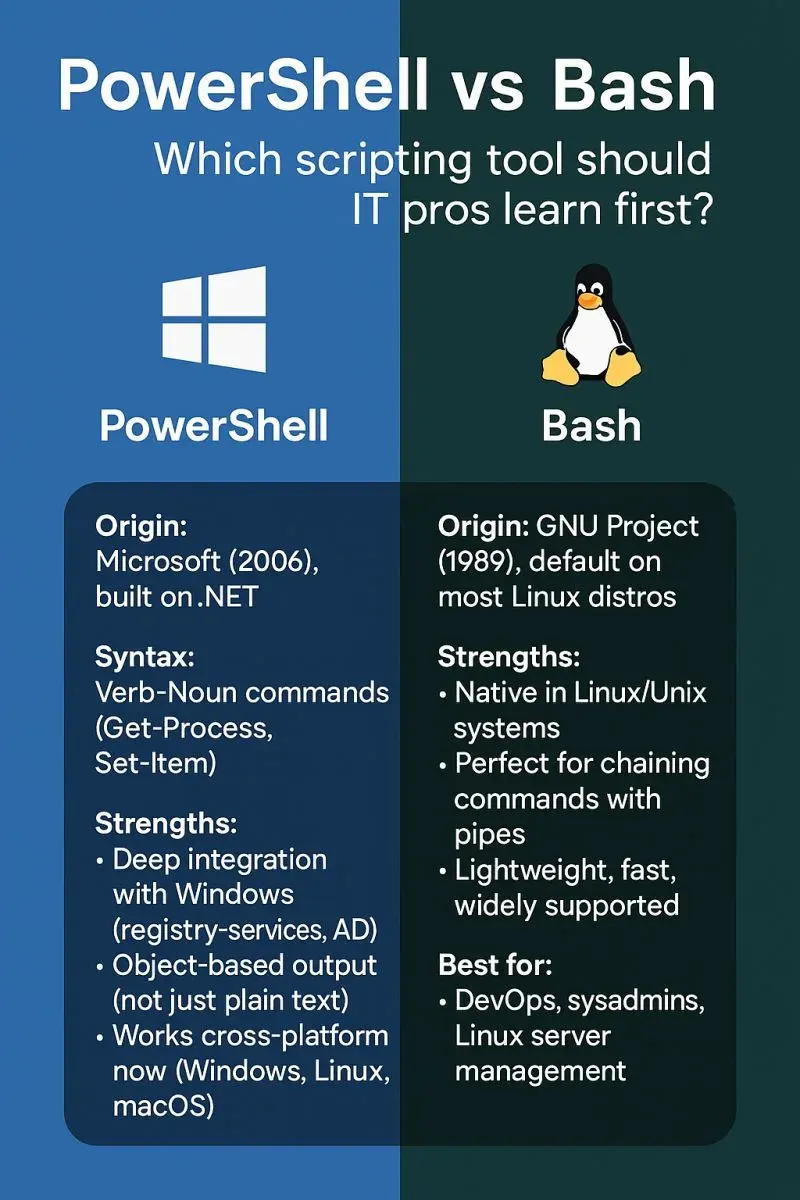
Scripting for IT Support (PowerShell & Bash)
Every support engineer hits a ceiling doing things by hand. Scripting is how you break through it, and you only need two shells to start.
Comments
No comments yet. Start the conversation.