Washing the Dishes to Wash the Dishes: Thich Nhat Hanh's "The Miracle of Mindfulness"
In one breath
The Miracle of Mindfulness began as Thich Nhat Hanh's letter of guidance to Buddhist workers in war-torn Vietnam. Mindfulness means keeping consciousness alive to the present: wash the dishes to wash the dishes, use the breath as an anchor and find the miracle of being awake in ordinary moments.
On this page
Thich Nhat Hanh’s The Miracle of Mindfulness is a small, gentle, profound book that began as a long letter of practical guidance to fellow Buddhist workers in war-torn Vietnam. Thich Nhat Hanh, a Zen monk, poet, and peace activist, wanted to teach not abstract doctrine but a simple, transformative practice: mindfulness, the art of being fully present and aware in each moment of ordinary life. His teaching is disarmingly plain and accessible, full of homely examples, washing the dishes, drinking tea, walking, breathing, and yet it points toward something deep. The “miracle” of the title is not anything supernatural; it is the quiet, available wonder of being truly awake to the life that is actually happening, right now.
Here is what The Miracle of Mindfulness taught me about being present, about washing the dishes to wash the dishes, and about the practice of mindful breathing.
Key takeaways
- Mindfulness is keeping one’s consciousness alive to the present moment.
- “Wash the dishes to wash the dishes”: do each thing fully, for its own sake.
- The present moment is the only place where life is actually lived.
- Breathing is a simple anchor that returns us to the now.
- Mindfulness is a practice, available in the most ordinary activities.
Being present
At the heart of the book is the simple but radical practice of mindfulness, which Thich Nhat Hanh defines as keeping one’s consciousness alive to the present reality. So much of our lives, he observes, is lived in a kind of absence: while doing one thing we are thinking of another, rushing through the present to get to some imagined future, our minds scattered, our bodies here but our attention elsewhere. Mindfulness is the practice of gathering our attention back, of being fully here, fully awake to whatever we are actually doing and experiencing, moment by moment. This sounds simple, almost too simple, but anyone who tries it discovers how rarely they are truly present, and how transforming it is to be so. The ordinary moment, attended to fully, turns out to be richer and more alive than we ever notice when we rush through it.
Washing the dishes to wash the dishes
The book’s most famous teaching is captured in a homely example. There are, Thich Nhat Hanh says, two ways to wash the dishes. The first is to wash the dishes in order to have clean dishes, treating the task as a chore to be gotten through as fast as possible so we can move on to something more pleasant. The second is to “wash the dishes to wash the dishes”, to be fully present to the act itself, aware of the warm water, the movement of the hands, the dishes in our grasp, doing it completely, for its own sake. If we wash the dishes only to be done with them, he points out, we are not really alive during the washing, and worse, we will likely rush through whatever comes next too, never truly present for any of it. But if we wash the dishes mindfully, the most ordinary chore becomes a moment of genuine living, even of peace. This small example contains the whole practice: any activity, done with full presence, becomes a doorway into being truly alive.
The anchor of breathing
The most practical tool Thich Nhat Hanh offers is mindful breathing. The breath, he teaches, is always with us, always in the present, and so it makes a perfect anchor for a wandering mind. When we notice that our attention has scattered into worries about the future or regrets about the past, we can simply return to the breath, “breathing in, I know I am breathing in; breathing out, I know I am breathing out”, and in doing so we return to the present moment, to ourselves, to life as it actually is. The breath is the bridge between body and mind, the gentlest possible way to come home to the now. I find this beautifully practical: no special equipment, no retreat, no doctrine required, only the breath that is always there, ready to bring us back whenever we have wandered off into the noise of the mind.
What I’m taking with me
The Miracle of Mindfulness is the gentlest and most practical introduction to mindfulness I know, free of jargon and full of quiet wisdom. What I am taking from Thich Nhat Hanh is the simple, transformative practice of being fully present to each moment; the homely, unforgettable teaching to “wash the dishes to wash the dishes,” to do each ordinary thing completely and for its own sake; and the breath as a humble, ever-available anchor that returns me to the now. The miracle he points to is real and ordinary and within reach: not some distant enlightenment, but the wonder of being genuinely awake to the life that is happening, this dish, this breath, this moment, right now.
Frequently asked questions
What is The Miracle of Mindfulness about?
It is Thich Nhat Hanh’s gentle, practical guide to mindfulness, the practice of being fully present and aware in each moment of ordinary life, illustrated with simple examples like washing the dishes and mindful breathing.
What does “wash the dishes to wash the dishes” mean?
To do each activity fully and for its own sake, being completely present to it, rather than rushing through it to reach something else. It is the essence of mindful living applied to ordinary tasks.
How does mindful breathing work?
By gently bringing attention to the breath, “breathing in, I know I am breathing in,” we anchor ourselves in the present moment and return our scattered minds to the here and now.
References & further reading
- Thich Nhat Hanh. The Miracle of Mindfulness. (1975; English translation, Beacon Press, 1976.)
- Kabat-Zinn, Jon. Wherever You Go, There You Are. Hyperion, 1994.
- Suzuki, Shunryu. Zen Mind, Beginner’s Mind. Weatherhill, 1970.
Watch: others on this book
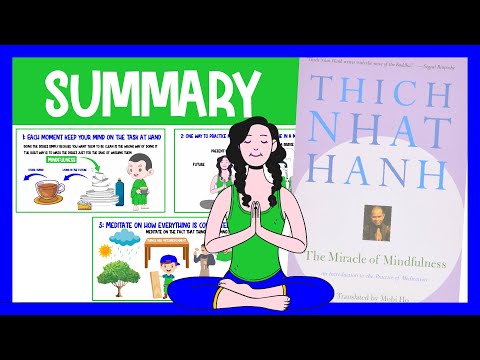

Read along with me
Book notes, philosophy and the ideas that shape how we build. New essays every month, no spam.
Related reading notes
The Beginner's Mind: Lessons from Shunryu Suzuki
Zen Mind, Beginner's Mind is a collection of talks by Shunryu Suzuki, the Japanese Zen master who helped bring Zen practice to the West.
The Path of the Calm Mind: Walking Through the "Dhammapada"
Lessons from the Dhammapada: the mind shapes experience, hatred ends only through love, craving causes suffering and self-mastery is the greatest victory.
Satori and the Sudden Glimpse: D.T. Suzuki on Zen
D.T. Suzuki's An Introduction to Zen Buddhism: satori, the limits of the intellect, koans and Zen as direct experience rather than doctrine.
Comments
No comments yet. Start the conversation.