Waking Up as an Insect: Alienation in Kafka's "The Metamorphosis"
In one breath
Gregor Samsa wakes to find himself transformed into a monstrous insect, and Kafka never explains why. The novella follows what happens next: unable to work, Gregor is gradually discarded by the family that depended on him. It is a parable of alienation and of worth measured only by usefulness.
On this page
Few opening sentences in literature are as famous as the one that begins Franz Kafka’s The Metamorphosis: when Gregor Samsa woke one morning from uneasy dreams, he found himself transformed in his bed into a monstrous insect. What is extraordinary is how matter-of-factly the story proceeds from there. There is no explanation, no cause, no cure. The transformation simply happens, and the rest of the novella follows, with awful logic, what becomes of Gregor and his family afterward. It is a story you can read in an afternoon and think about for the rest of your life, because beneath its bizarre surface it is about something painfully ordinary: what happens to a person when they can no longer be useful.
Here is what The Metamorphosis taught me about alienation, about our worth being measured by usefulness, and about the family’s chilling adjustment.
Key takeaways
- Gregor’s transformation is presented without explanation, as simple fact.
- It is a parable of alienation, of feeling monstrous and shut out.
- Worth is measured by usefulness; once Gregor cannot work, he is discarded.
- The family slowly turns against him, their pity hardening into resentment.
- Gregor keeps his human feeling even as everyone treats him as a thing.
The transformation without a cause
What makes the story so unsettling is Kafka’s refusal to explain. There is no curse, no science-fiction accident, no moral lesson about something Gregor did to deserve this. He simply wakes up as an insect, and the absurdity is total and unexplained. Even stranger, Gregor’s first reaction is not horror at his body but anxiety about being late for work. The story treats the impossible as mundane and the mundane, his job, his commute, his family’s finances, as the real source of dread. This is Kafka’s peculiar genius: the literal transformation is a metaphor made flesh, and by refusing to explain it, he forces us to focus not on why it happened but on what it reveals about Gregor’s life and the people around him.
When you can no longer be useful
The heart of the novella, for me, is its devastating commentary on human worth. Before his transformation, Gregor was the sole breadwinner, sacrificing his own life to support his family and pay off his father’s debts. He was valued, but valued for what he produced. The moment he can no longer work, the moment he becomes a burden rather than a provider, his value collapses. The transformation simply makes literal what was already true: he was loved for his usefulness, not for himself. I find this one of the most quietly horrifying ideas in literature, because it is so recognisable. How much of our sense of being valued, in our families, our workplaces, our societies, is really a valuation of our usefulness, conditional and revocable the instant we can no longer produce?
The family’s adjustment
The most painful thread is the family’s slow transformation, which mirrors Gregor’s own. At first there is shock and a kind of pity. But as the weeks pass and Gregor remains a useless, frightening creature in the back room, pity curdles into resentment, neglect, and finally a wish to be rid of him. His beloved sister, who first cared for him, comes to lead the campaign to declare that “it” must go. Meanwhile Gregor, trapped in an insect’s body, retains his human thoughts and feelings, his love for his family, his shame at being a burden, his longing for connection, none of which anyone can see. He dies alone, and the family’s overwhelming reaction is relief, even a kind of renewal. That final, casual cruelty, the ease with which they move on, is harder to bear than any monster.
What I’m taking with me
The Metamorphosis is short and strange and unforgettable, and it works on me like a slow-acting question. What I am taking from Kafka is its searing image of alienation, the experience of feeling monstrous and shut out from the human world; its uncomfortable exposure of how often our worth is measured by our usefulness; and its quiet horror at how conditionally we are loved. Gregor kept his human heart to the end while everyone treated him as a thing. The story leaves me wanting to love people for who they are rather than what they provide, and uneasily aware of how rarely we manage it.
Frequently asked questions
What is The Metamorphosis about?
It is Kafka’s novella about Gregor Samsa, who wakes up transformed into a giant insect and is gradually rejected by his family. It is widely read as a parable of alienation and of human worth reduced to usefulness.
Why does Gregor turn into an insect?
Kafka never explains. The transformation is presented as an unexplained fact, which directs attention away from its cause and toward what it reveals about Gregor’s life and his family’s conditional love.
What is the main theme of The Metamorphosis?
Alienation and the conditional nature of human worth. Once Gregor can no longer work and provide, he is treated as a burden and discarded, even as he keeps his human feelings inside.
References & further reading
- Kafka, Franz. The Metamorphosis. (Translated by Willa and Edwin Muir; or Stanley Corngold, Bantam, 1972.)
- Corngold, Stanley. The Commentators’ Despair: The Interpretation of Kafka’s Metamorphosis. Kennikat Press, 1973.
- Brod, Max. Franz Kafka: A Biography. 1937.
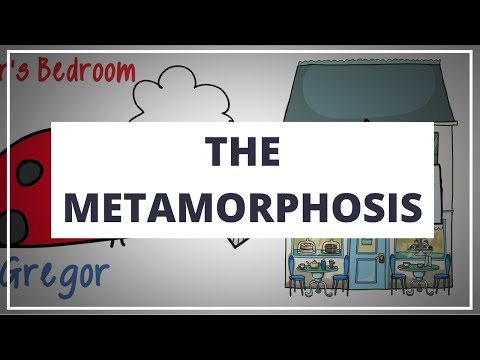
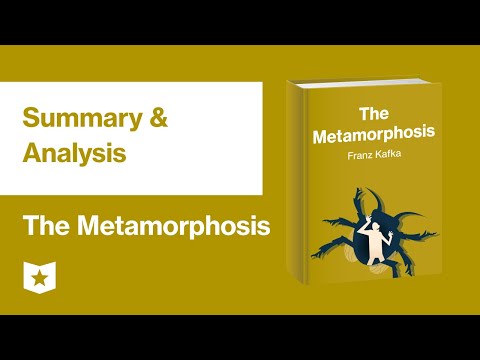
Watch: others on this book
Read along with me
Book notes, philosophy and the ideas that shape how we build. New essays every month, no spam.
Related reading notes
Guilty Without a Crime: The Nightmare Logic of Kafka's "The Trial"
Kafka's The Trial explained: Josef K.'s nameless charge, faceless bureaucratic power, the parable Before the Law and what Kafkaesque really means.
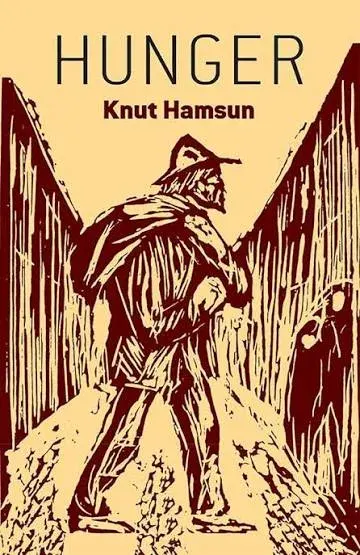
The Starving Mind: Knut Hamsun's "Hunger"
Knut Hamsun's Hunger (1890): a starving writer's mind in Kristiania, the birth of the psychological novel and the strange pride of the destitute.
Forging the Conscience of a Soul: Joyce's "A Portrait of the Artist as a Young Man"
Joyce's A Portrait of the Artist as a Young Man: Stephen Dedalus escaping the nets of family, religion and nation, and a style that grows with him.
Comments
No comments yet. Start the conversation.