Forging the Conscience of a Soul: Joyce's "A Portrait of the Artist as a Young Man"
In one breath
A Portrait of the Artist as a Young Man traces Stephen Dedalus from childhood to young manhood as he breaks free of the nets of family, religion and nation to become an artist. Joyce's style grows with him, from a child's simple words to complex, allusive modernist prose.
On this page
James Joyce’s A Portrait of the Artist as a Young Man is the great novel of artistic awakening, the story of how Stephen Dedalus, a sensitive young Irishman, grows from childhood into a fledgling artist, breaking free of the forces, family, religion, and nation, that would bind and define him. It is also a landmark of literary modernism, and one of its pleasures is watching Joyce’s very style evolve as Stephen grows: the language of the opening pages is that of a small child’s consciousness, and it matures, page by page, alongside its hero, until it becomes the complex, allusive prose of a young intellectual. The name Stephen Dedalus is no accident, it evokes Daedalus, the mythic craftsman who fashioned wings to escape his island prison, and the novel is about exactly such an escape into art.
Here is what A Portrait of the Artist as a Young Man taught me about the awakening of the artist, about breaking free of the nets, and about Joyce’s revolutionary style.
Key takeaways
- The novel traces the awakening of an artist’s consciousness from childhood to young manhood.
- The “nets” of family, religion, and nation must be escaped to become oneself.
- The style evolves with Stephen, from a child’s words to a young intellectual’s prose.
- The artist’s vocation demands the courage to forge one’s own path.
- Daedalus, not Icarus: the maker of wings who escapes, the artist’s myth.
The awakening of the artist
The novel is, above all, the story of an awakening, of how a particular sensibility, a future artist’s, comes into being. We follow Stephen from his earliest, fragmentary childhood impressions, through his Jesuit schooling, his adolescent crises of faith and flesh, his terror at a famous hellfire sermon, his brief, intense religiosity, to his gradual discovery of his true vocation: art. Joyce traces, with extraordinary intimacy, the slow formation of an artistic consciousness, the dawning sense of beauty, the growing need to create, the recognition of a calling that sets Stephen apart from those around him. The climactic moment comes when Stephen, walking on the beach, sees a girl wading in the water and experiences a kind of secular epiphany, a profound aesthetic awakening in which he understands, with joy, that his destiny is to be an artist, to create, to “live, to err, to fall, to triumph, to recreate life out of life.” It is one of the great depictions of a young soul finding its purpose.
Breaking free of the nets
Central to the novel is Stephen’s struggle to free himself from the forces that would define and constrain him, which he famously calls the “nets.” When you are born in Ireland, Stephen says, nets are flung at your soul to hold it back from flight, the nets of nationality, language, and religion. To become himself, to become an artist, Stephen must break free of all three: of the demands of family, of the dominating Catholic Church of his upbringing, and of the claims of Irish nationalism. This is painful and isolating; it means defying expectations, disappointing those who love him, and accepting a profound aloneness. Stephen’s declared aim is to escape these nets and “to forge in the smithy of my soul the uncreated conscience of my race”, to become a free individual and a true artist, beholden to nothing but his own vision. The novel honours both the necessity and the cost of this break: to become oneself, sometimes one must refuse everything that made one.
Joyce’s revolutionary style
What makes the novel a landmark of modernism is Joyce’s revolutionary technique, especially the way his style grows and changes along with his hero. The famous opening, “Once upon a time and a very good time it was there was a moocow coming down along the road”, renders the world as experienced by a very small child, in a child’s language and rhythms. As Stephen grows, the prose matures with him, becoming more complex, more abstract, more intellectual, until it reaches the sophisticated aesthetic theorising of the young man at the end. Joyce also pioneers a form of “stream of consciousness,” taking us inside Stephen’s mind, following the actual flow of his perceptions and thoughts. This marriage of form and content, of a style that itself enacts the growth it describes, was genuinely new, and it shaped the novel for the century that followed. Reading it, one feels the very birth of modern fiction.
What I’m taking with me
A Portrait of the Artist as a Young Man is the definitive novel of artistic awakening, and a milestone in the history of fiction. What I am taking from Joyce is its intimate tracing of the birth of an artistic consciousness, the slow discovery of one’s calling; Stephen’s struggle to break free of the “nets” of family, religion, and nation in order to become himself, with all its necessity and cost; and Joyce’s revolutionary style, which grows and matures along with its hero. The novel’s deepest resonance, for me, is its image of the soul that must learn to fly on its own wings, like Daedalus, refusing every net, in order to forge, in the smithy of itself, something genuinely its own.
Frequently asked questions
What is A Portrait of the Artist as a Young Man about?
It is James Joyce’s semi-autobiographical novel tracing the growth of Stephen Dedalus from childhood to young manhood as he awakens to his vocation as an artist and struggles to free himself from family, religion, and nation.
What are the “nets” Stephen wants to escape?
Stephen calls nationality, language, and religion the “nets” flung at the soul to hold it back from flight. To become a free artist, he must break free of family, the Catholic Church, and Irish nationalism.
Why does the novel’s style change as it goes?
Joyce makes the prose mature along with Stephen: the opening uses a small child’s language, and the style grows more complex and intellectual as Stephen ages, a pioneering modernist technique that mirrors his developing consciousness.
References & further reading
- Joyce, James. A Portrait of the Artist as a Young Man. B. W. Huebsch, 1916.
- Ellmann, Richard. James Joyce. Oxford University Press, 1959.
- Joyce, James. Dubliners. Grant Richards, 1914.
Watch: others on this book

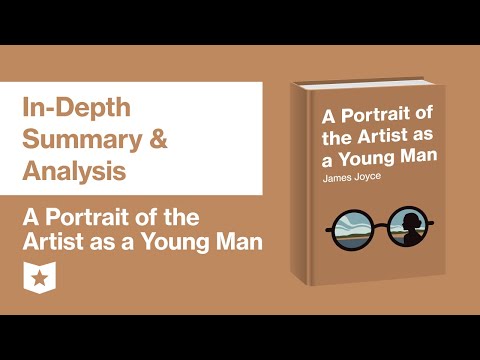
Read along with me
Book notes, philosophy and the ideas that shape how we build. New essays every month, no spam.
Related reading notes
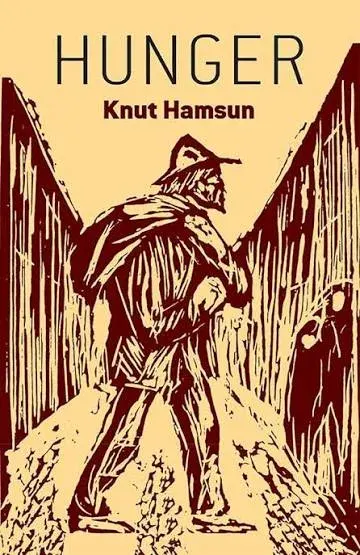
The Starving Mind: Knut Hamsun's "Hunger"
Knut Hamsun's Hunger (1890): a starving writer's mind in Kristiania, the birth of the psychological novel and the strange pride of the destitute.
Time, Illness, and Ideas on the Mountain: Thomas Mann's "The Magic Mountain"
Thomas Mann's The Magic Mountain: time on the mountain, illness as a window onto life, Settembrini versus Naphta and Europe before the war.
The Man Who Would Not Rise: Goncharov's "Oblomov"
Goncharov's Oblomov: the kindly man who cannot get off his couch, what Oblomovism means and why this comedy of inertia is a gentle tragedy.
Comments
No comments yet. Start the conversation.