Unveiling the Manipulative Mechanisms: Lessons from "Propaganda: The Public Mind in the Making"
In one breath
In Propaganda (1928), Edward Bernays, the father of public relations, argued that democracy requires shaping public opinion through persuasion. He called it engineering consent: using psychology, symbols and mass media to guide people without their awareness. In an age of social media and spin, his methods demand ethical scrutiny.
On this page
The Power of Psychological Manipulation
In Edward Bernays’ seminal work “Propaganda: The Public Mind in the Making,” the father of public relations delves into the intricate world of persuasion, manipulation, and the shaping of public opinion. Originally published in 1928, this book remains a timeless guide to understanding the mechanisms behind influencing mass behavior. In our contemporary age of social media, advertising, and political spin, Bernays’ insights are as relevant as ever.
Engineering Consent
Bernays argues that democracy necessitates the manipulation of public opinion, not through coercion, but through the subtle art of persuasion. He coined the term “engineering consent” to describe this process, wherein individuals are guided towards predetermined outcomes without being aware of the forces at play. This raises ethical questions about the boundaries of persuasion in a democratic society.
The Role of Propaganda in Society
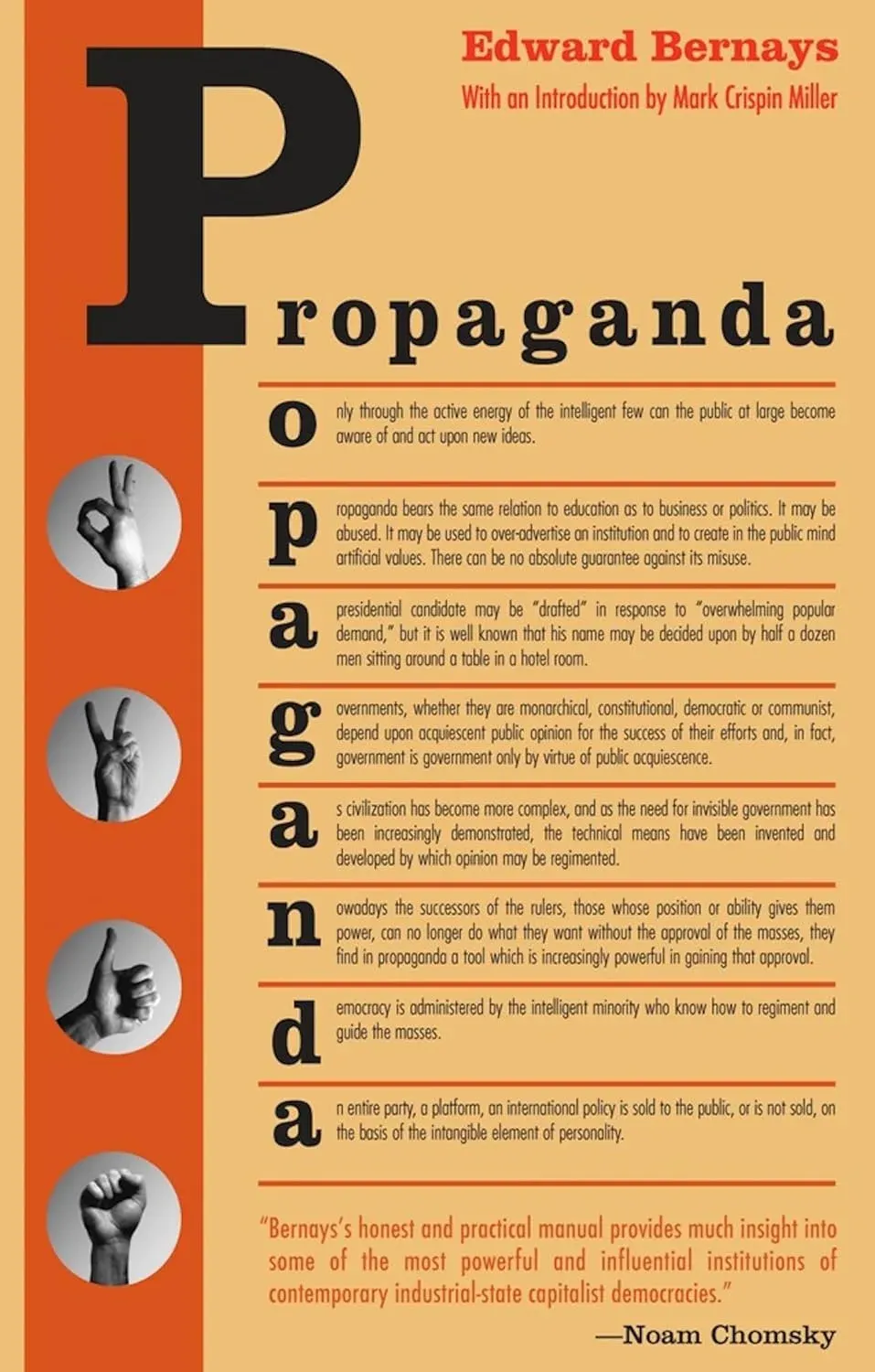
Contrary to its negative connotations, Bernays presents propaganda as an essential tool for maintaining social order and advancing societal goals. Whether in politics, business, or social movements, propaganda shapes collective beliefs and mobilizes populations towards particular objectives. However, it also highlights the dangers of unchecked manipulation and propaganda-driven agendas.
The Importance of Symbols and Imagery
Bernays emphasizes the potency of symbols, imagery, and storytelling in influencing public perception. By associating products, ideas, or individuals with positive symbols or emotions, propagandists can create powerful connections in people’s minds. This underscores the significance of narrative framing and visual communication in shaping public discourse.
The Manipulation of Mass Media
Bernays discusses the symbiotic relationship between propaganda and mass media. In his view, media serves as a conduit for disseminating propaganda to the masses, amplifying its reach and impact. This underscores the media’s responsibility in vetting information and maintaining journalistic integrity in the face of manipulative influences.
The Need for Ethical Considerations
While Bernays elucidates the effectiveness of propaganda techniques, he also acknowledges their potential for abuse. He calls for ethical reflection and responsible use of persuasion tactics, urging practitioners to consider the broader societal implications of their actions. This resonates strongly in today’s era of fake news, echo chambers, and algorithmic manipulation.
In conclusion, “Propaganda: The Public Mind in the Making” serves as a wake-up call to the pervasive influence of propaganda in our lives. It underscores the importance of vigilance, critical thinking, and ethical consciousness in navigating the complex landscape of mass persuasion. By understanding the principles outlined by Bernays, we can equip ourselves with the tools necessary to resist manipulation and safeguard the integrity of public discourse in our democratic societies.
Key takeaways 5
- Bernays saw managing public opinion as essential to democracy.
- "Engineering consent" guides people without them noticing.
- Psychology, symbols and imagery drive mass persuasion.
- Mass media amplify these techniques.
- Recognizing the methods helps resist manipulation.
Watch: others on this book


Frequently asked questions
Who was Edward Bernays?
Edward Bernays (1891–1995) was an American pioneer of public relations, nephew of Sigmund Freud, who applied psychology to advertising and political persuasion.
What does "engineering consent" mean?
It is Bernays' term for deliberately shaping public opinion through planned communication, psychology and symbols, so people come to accept particular ideas or products.
Why is Propaganda still relevant?
Its techniques underpin modern marketing, political campaigns and social media influence, so understanding them helps people think critically about persuasion.
Read along with me
Book notes, philosophy and the ideas that shape how we build. New essays every month, no spam.
Related reading notes
Unlocking the Depths of the Mind: Lessons from Freud's "The Interpretation of Dreams"
Lessons from Freud's The Interpretation of Dreams: the unconscious, dreams as wish fulfillment, symbolism and dream work, and their lasting influence.

The Psychology of Yes: Robert Cialdini's "Influence"
Robert Cialdini's Influence: The Psychology of Persuasion is the classic study of how, and why, we say yes.
Manufacturing Consent: Chomsky on the Machinery of Opinion
Manufacturing Consent, by Noam Chomsky and Edward Herman, is one of the most influential and most challenging analyses of the mass media ever written.
Comments
No comments yet. Start the conversation.