The Thinker and the Wanderer: Hesse's "Narcissus and Goldmund
In one breath
In Hesse's Narcissus and Goldmund, two friends in medieval Germany embody opposite paths: Narcissus, the disciplined scholar-monk, and Goldmund, the sensual artist who wanders the world through love, suffering and beauty. Art unites spirit and senses, and the friends complete what each other lacks.
On this page
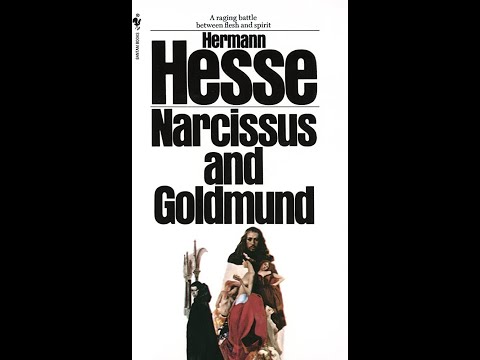
Hermann Hesse’s Narcissus and Goldmund is one of the German-Swiss Nobel laureate’s most beloved novels, a luminous, lyrical meditation on two opposed ways of being human, embodied in two friends in medieval Germany. Narcissus is the ascetic scholar-monk: disciplined, intellectual, spiritual, devoted to thought, faith, and the life of the mind, finding his fulfilment within the ordered walls of the monastery. Goldmund is his opposite: sensual, artistic, restless, who leaves the monastery to wander the world, plunging into a life of passion, love, beauty, suffering, and art. Through their lifelong friendship and their utterly different paths, Hesse explores one of his perennial themes, the tension between the spirit and the senses, the mind and the body, the contemplative and the passionate life, and asks whether these opposites might, in the end, be reconciled.
Here is what Narcissus and Goldmund taught me about the two paths, about the wanderer’s road of experience, and about the reconciliation of opposites.
Key takeaways
- Two ways of life: the intellectual-spiritual (Narcissus) and the sensual-artistic (Goldmund).
- Goldmund’s wandering is a road of experience, love, suffering, and beauty.
- Art emerges as a way of uniting the spiritual and the sensual.
- The friends complete each other, each embodying what the other lacks.
- The tension of opposites may be reconciled rather than resolved away.
The two paths
The novel is built on a fundamental opposition, dramatised in its two heroes, between two ways of being human that Hesse saw as perennial. Narcissus represents the path of spirit and mind: the disciplined, contemplative, intellectual life, the way of thought, faith, abstraction, and self-mastery, lived within the ordered, ascetic world of the monastery. He is the thinker, who knows himself and his vocation, who finds the divine through reason and spiritual discipline. Goldmund represents the path of the senses and the heart: the life of passion, art, love, beauty, and raw experience, lived out in the wide, dangerous, alluring world beyond the walls. It is Narcissus, with deep insight, who recognises that Goldmund does not belong in the monastery, that his nature is that of the artist and the lover, the wanderer, not the monk, and who sets him free to follow his own road. The novel thus poses, through these two friends, a question that recurs across human life: are we made for the life of the spirit or the life of the senses, for contemplation or for passionate experience, for the ordered inner world or the wild outer one?
The wanderer’s road
Much of the novel follows Goldmund on his long wandering through the world, and it is a rich, sensuous, often painful journey of experience that I found deeply absorbing. Leaving the monastery, Goldmund gives himself fully to life in all its beauty and brutality: he loves many women and learns the joys and sorrows of love; he encounters beauty and art, suffering and cruelty, plague and death; he tastes freedom and loneliness, ecstasy and despair. His is the road of immersion in the world, of living through the senses and the emotions, of seeking truth not in books and doctrines but in lived experience, in the fullness, beauty, and pain of existence. And out of all this wandering and experience, crucially, Goldmund becomes an artist, a sculptor, learning to transform the beauty, suffering, and impermanence he has known into enduring works of art. Hesse renders this wanderer’s path with great lyrical beauty, neither idealising nor condemning it; Goldmund’s life is full of joy and meaning but also of loss, restlessness, and pain. It is the road of the senses and of experience, with all its richness and all its cost.
The reconciliation of opposites
The deepest movement of the novel is toward a reconciliation, or at least a mutual completion, of the two paths it sets in opposition. Narcissus and Goldmund, though they live utterly different lives, remain bound by a profound, lifelong love and friendship, and each, Hesse shows, needs and is completed by the other. Narcissus, the man of pure spirit, recognises in Goldmund a wholeness of lived experience and a connection to the sensual, creative depths of life that his own disciplined path lacks; Goldmund, the wanderer, is guided and ultimately drawn home by the steady wisdom and love of his friend. And in Goldmund’s art Hesse finds a kind of synthesis: art is born of the senses and of lived experience, yet it reaches toward the eternal and the spiritual, uniting body and spirit, the passing and the permanent, in the creation of beauty. The novel suggests that the great opposites of human nature, mind and body, spirit and senses, contemplation and passion, are not simply to be chosen between, one path right and the other wrong, but are complementary halves of our full humanity, each incomplete without the other. The goal is not to resolve the tension by eliminating one side, but to recognise that a whole human life, or a whole vision of humanity, embraces both.
What I’m taking with me
Narcissus and Goldmund is a beautiful, contemplative, and deeply humane novel, and its central question, the spirit or the senses, the cloister or the road, is one I think every reflective person feels in some form. What I am taking from Hesse is his rich dramatisation of the two paths, the intellectual-spiritual and the sensual-artistic; his lyrical rendering of Goldmund’s wanderer’s road of experience, love, suffering, and art; and above all his vision of reconciliation, the recognition that these opposites complete rather than negate each other, and that art can unite them. The novel leaves me not with a choice to make between mind and body, thought and passion, but with an invitation to honour both, to seek a fuller humanity that embraces the spirit and the senses alike, as Narcissus and Goldmund, in their lifelong love, embraced and completed each other.
Frequently asked questions
What is Narcissus and Goldmund about?
It is Hermann Hesse’s novel about two friends in medieval Germany, the ascetic scholar-monk Narcissus and the sensual, artistic wanderer Goldmund, who embody two opposed ways of life, exploring the tension between spirit and senses, mind and body.
What do Narcissus and Goldmund represent?
Narcissus represents the intellectual, spiritual, contemplative life of the mind and discipline; Goldmund represents the sensual, artistic, passionate life of experience, love, and the senses. Together they embody complementary halves of human nature.
What is the novel’s central theme?
The tension and possible reconciliation between opposites, spirit and senses, mind and body, contemplation and passion, with art emerging as a way of uniting them and the two friends completing each other.
References & further reading
- Hesse, Hermann. Narcissus and Goldmund. (1930; translated by Ursule Molinaro, 1968.)
- Hesse, Hermann. Siddhartha. 1922.
- Hesse, Hermann. The Glass Bead Game. 1943.
Watch: others on this book

Read along with me
Book notes, philosophy and the ideas that shape how we build. New essays every month, no spam.
Related reading notes
The Game of Life and Knowledge: Hesse's "The Glass Bead Game"
The Glass Bead Game was Hermann Hesse's last and most ambitious novel, the work for which he was awarded the Nobel Prize.
The Wolf and the Man Within: Reflections on Hesse's "Steppenwolf"
If Siddhartha is Hesse at his most serene, Steppenwolf is Hesse at his most tormented.
Teaching the Mind to Dance: Kazantzakis' "Zorba the Greek"
Nikos Kazantzakis's Zorba the Greek is a novel about the collision of two ways of being.
Comments
No comments yet. Start the conversation.