Teaching the Mind to Dance: Kazantzakis' "Zorba the Greek"
In one breath
Zorba the Greek pits a bookish young narrator against Alexis Zorba, an exuberant man who lives fully through body and senses. Their friendship in Crete confronts intellect with instinct, and dance becomes the symbol of embodied living, even in grief: to live fully is to embrace experience, not just think about it.
On this page
Nikos Kazantzakis’s Zorba the Greek is a novel about the collision of two ways of being. Its narrator is a bookish young intellectual, cerebral, cautious, lost in his books and his ideas, who travels to Crete to reopen a mine and there meets Alexis Zorba, an older, earthy, exuberant working man who lives entirely through his body, his senses, and his passions. Zorba dances, eats, loves, works, fights, and grieves with his whole being; he plays the santuri, weeps openly, laughs uproariously, and treats every moment as something to be lived to the full. Through their friendship, the narrator, and the reader, is confronted with a profound question: have we been so busy thinking about life that we have forgotten how to live it?
Here is what Zorba the Greek taught me about living fully, about the tension between intellect and instinct, and about teaching the mind to dance.
Key takeaways
- Zorba lives through the body and senses, fully present in each moment.
- The narrator lives through books and ideas, and learns he has missed life.
- Intellect and instinct are two ways of being, and the book favors the lived.
- Dance becomes the symbol of full, embodied living, even in grief.
- To live fully is to embrace experience, risk, and feeling, not just to think.
The man who lives
Zorba is one of the great life-affirming characters in literature, and his vitality leaps off the page. He has no patience for abstraction or for the narrator’s endless theorising; he lives directly, through his appetites, his work, his music, his loves, his griefs, all felt and expressed without reservation. When he is happy, he dances; when he is sad, he dances; when words fail, which for him is often, he dances. He throws himself wholly into whatever the moment offers, and he is baffled and a little pitying toward the narrator, who is forever watching life from behind a book, analysing experiences instead of having them. Zorba is not wise in any scholarly sense, he can barely read, but he possesses a deeper wisdom: he knows how to be alive. He is, in a way, the answer the narrator did not know he was looking for.
Intellect and instinct
The heart of the novel is the contrast and friendship between these two men, between the life of the mind and the life of the body, between thinking and living. The narrator, whom Zorba teasingly calls “Boss,” is intelligent, sensitive, and thoroughly civilised, but he is also paralysed by his own caution and abstraction, holding himself back from full engagement with life, with work, with women, with feeling, always retreating into analysis. Zorba challenges all of this. He confronts the narrator with the possibility that all his learning has come at the cost of his living, that books can become a way of avoiding life rather than understanding it. Kazantzakis, himself a deeply intellectual writer and philosopher, is clearly wrestling with his own tension here, and the novel comes down, with love and some sorrow, on the side of the lived life. The intellect is not condemned, but it is found wanting next to Zorba’s full-blooded vitality.
Teaching the mind to dance
The novel’s most famous image, and its deepest lesson, is dance. For Zorba, dance is the supreme expression of being fully alive, the way the whole self, body and soul, pours itself into the moment. In the book’s unforgettable climax, after a catastrophe destroys the project they have poured everything into, after total failure and loss, the narrator turns to Zorba and, instead of despairing, asks Zorba to teach him to dance. And they dance together on the beach, in the face of ruin, laughing. It is a moment of pure existential triumph: the refusal to let failure or grief crush the affirmation of life. The intellectual finally learns, from the unlettered workman, the thing no book could teach him, how to throw himself into life, how to dance even when everything has fallen apart. To teach the mind to dance is to reconcile thought and life at last.
What I’m taking with me
Zorba the Greek is a joyous, life-affirming book that speaks directly to anyone who, like me, is tempted to live too much in their head. What I am taking from Kazantzakis is the unforgettable figure of Zorba, who lives through his body and senses with total presence; the searching contrast between intellect and instinct, and the warning that books can become a way of avoiding life; and above all the image of dance as full, embodied living, even in the face of loss. As someone who has spent this whole year deep in books, I take Zorba’s challenge to heart: not to stop thinking, but to remember, finally, to dance.
Frequently asked questions
What is Zorba the Greek about?
It is Nikos Kazantzakis’s novel about a bookish young intellectual who, on Crete, befriends the earthy, exuberant Alexis Zorba, and learns from him about living fully through the body, the senses, and the passions rather than only through thought.
What does Zorba represent?
The fully lived life: spontaneity, vitality, and total presence in each moment, lived through the body and senses, in contrast to the narrator’s cautious, cerebral, book-bound existence.
Why is dance so important in the novel?
Dance is Zorba’s symbol of being fully alive, pouring the whole self into the moment. In the climax, the narrator asks Zorba to teach him to dance even after total failure, affirming life in the face of loss.
References & further reading
- Kazantzakis, Nikos. Zorba the Greek. (1946; translated by Carl Wildman, 1952.)
- Bien, Peter. Kazantzakis: Politics of the Spirit. Princeton University Press, 1989.
- Kazantzakis, Nikos. Report to Greco. Simon & Schuster, 1965.
Watch: others on this book
Read along with me
Book notes, philosophy and the ideas that shape how we build. New essays every month, no spam.
Related reading notes
The Starving Mind: Knut Hamsun's "Hunger"
Knut Hamsun's Hunger (1890): a starving writer's mind in Kristiania, the birth of the psychological novel and the strange pride of the destitute.
The Game of Life and Knowledge: Hesse's "The Glass Bead Game"
The Glass Bead Game was Hermann Hesse's last and most ambitious novel, the work for which he was awarded the Nobel Prize.
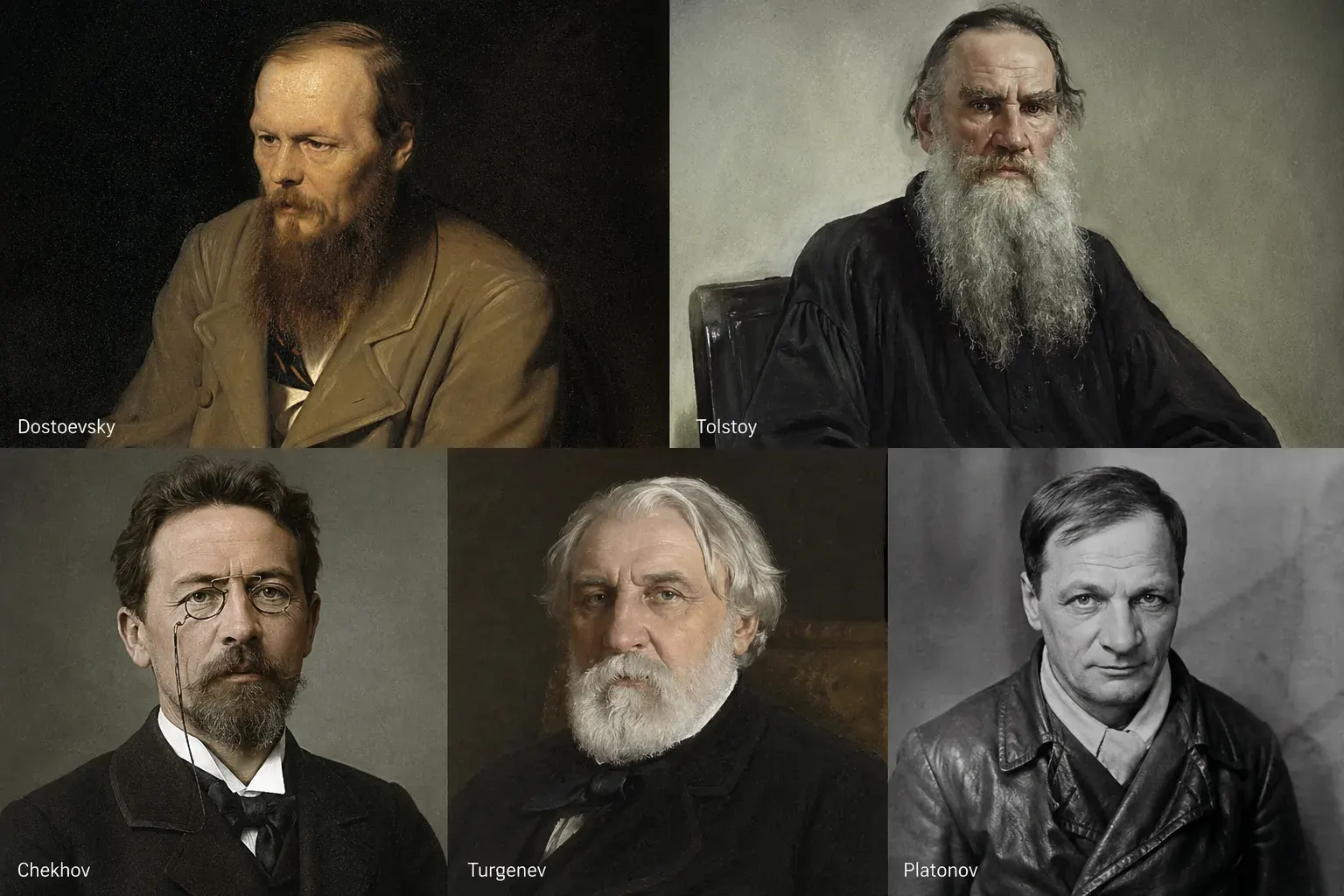
Dostoevsky, Tolstoy, Chekhov, Turgenev and Platonov
Where to start with Russian literature: essential works by Dostoevsky, Tolstoy, Chekhov, Gogol, Turgenev and Platonov, and why each is worth reading.
Comments
No comments yet. Start the conversation.