The Roulette of the Soul: Dostoevsky's "The Gambler"
In one breath
Dostoevsky dictated The Gambler in a few weeks to meet a ruinous deadline, drawing on his own gambling addiction. Its narrator, a young tutor drawn to the roulette tables, becomes a searing portrait of compulsion, where the thrill of risk overpowers reason and freedom turns self-destructive.
On this page
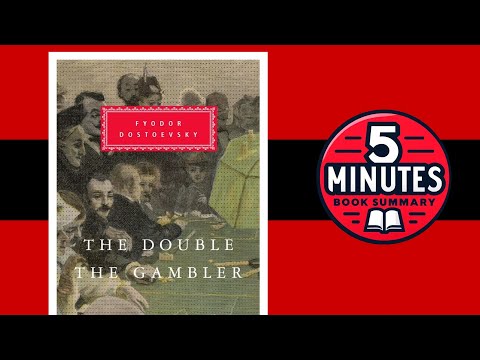
Fyodor Dostoevsky’s The Gambler is a short, intense, and remarkable novel, made all the more fascinating by the famous circumstances of its writing. Deep in debt, partly from his own gambling addiction, and bound by a ruinous contract, Dostoevsky dictated the entire book in just a few weeks to meet an impossible deadline (and in the process met the stenographer who would become his wife). The novel draws directly on his own experience of the gambling compulsion, and it is a searing psychological portrait of the addictive personality. Its narrator, Alexei Ivanovich, a young tutor in the household of a chaotic Russian family abroad, is drawn into the world of the roulette tables in a German spa town, and into a destructive passion for the proud Polina, and the novel charts, with terrifying insight, the descent into the grip of compulsion. It is Dostoevsky writing from the inside of an obsession he knew all too well.
Here is what The Gambler taught me about the psychology of compulsion, about the chaos of passion, and about a freedom turned self-destructive.
Key takeaways
- A vivid portrait of the gambling compulsion, written from the inside.
- The thrill of risk becomes more powerful than reason or self-interest.
- Gambling and obsessive love mirror each other as forms of passion.
- The self can crave its own ruin, seeking intensity over safety.
- Compulsion is a freedom turned against itself, destroying the one who acts.
The psychology of compulsion
The novel’s greatest achievement is its penetrating, first-hand portrait of the psychology of compulsive gambling, and by extension of addiction itself. Dostoevsky, who knew the gambling fever intimately, renders with terrifying accuracy the inner experience of the compulsion: the irresistible pull of the roulette wheel, the feverish excitement, the elaborate self-deceptions and superstitious systems, the wild swings between euphoric winning and devastating loss, and above all the way the compulsion overrides all reason, all self-interest, all resolve. Alexei knows, on some level, that gambling will ruin him, and he cannot stop; the craving is stronger than his knowledge, stronger than his will. Dostoevsky captures the characteristic logic of addiction, the conviction that the next spin will redeem everything, the inability to walk away while ahead, the helpless return to the very thing that is destroying him. It is one of literature’s truest depictions of what it is to be in the grip of a compulsion one cannot master, and its psychological insight, drawn from bitter personal experience, gives it a raw authenticity that is genuinely harrowing to read.
The chaos of passion
Dostoevsky deepens the portrait by intertwining Alexei’s gambling compulsion with his tormented, obsessive passion for Polina, so that the two mirror and illuminate each other. Alexei’s love for Polina is no serene affection but a feverish, humiliating, all-consuming obsession, as irrational and self-destructive as his gambling, full of the same intensity, helplessness, and craving for an unattainable thrill. The novel suggests that the gambling and the obsessive love spring from the same source in Alexei’s chaotic, passionate nature: the same hunger for extreme emotion, for the intoxication of risk and intensity, the same inability to find peace or stability or measured feeling. Around them swirls a whole cast of characters consumed by their own passions, especially greed, all of them awaiting the death of a wealthy old aunt whose fortune they covet, until she arrives, very much alive, and gambles the inheritance away herself at the tables in one of the novel’s great set pieces. Dostoevsky paints a world in the grip of ungoverned passion, where money, love, and the roulette wheel become arenas for the same chaotic, driving hungers of the human heart, hungers that bring not satisfaction but turmoil and ruin.
Freedom turned self-destructive
What makes The Gambler so characteristically Dostoevskian, and so disturbing, is its insight into the way the human will can turn against itself, craving its own destruction. There is in Alexei, as in so many of Dostoevsky’s characters, a strange, perverse element: the gambling is not only a weakness but, in a dark way, an assertion, a refusal of the safe, prudent, calculating life, a plunge into pure risk and intensity for their own sake, even at the cost of ruin. Dostoevsky understood, here and throughout his work, that human beings do not always act in their rational self-interest, that they can be driven by a hunger for intensity, freedom, and even suffering that overrides all calculation, that they can will their own destruction precisely as an exercise of a wild, ungoverned freedom. The gambler’s compulsion is a freedom gone wrong, a liberty turned against the self, choosing the intoxication of the abyss over the dull safety of sense. This is one of Dostoevsky’s deepest and darkest themes, the irrational, self-destructive depths of human freedom, and The Gambler, small as it is, renders it with unforgettable, fevered power, all the more haunting for being drawn from the author’s own affliction.
What I’m taking with me
The Gambler is a small, intense, and unforgettable novel, and knowing that Dostoevsky wrote it from the depths of his own addiction gives it a terrible authenticity. What I am taking from it is its searing, first-hand portrait of the psychology of compulsion, the way craving overrides reason and will; its insight into the chaos of ungoverned passion, with gambling and obsessive love springing from the same feverish source; and its dark understanding of how human freedom can turn against itself, craving intensity and even ruin over safety and sense. The novel leaves me with a sobering glimpse into the abyss of compulsion and self-destruction that lies within human nature, rendered by a writer who knew it intimately, and a deepened appreciation for the hard-won freedom of being able to master, rather than be mastered by, our own driving passions.
Frequently asked questions
What is The Gambler about?
It is Fyodor Dostoevsky’s short novel about Alexei Ivanovich, a young tutor drawn into compulsive roulette gambling and an obsessive love at a German spa town, a searing psychological portrait of addiction and ungoverned passion.
Did Dostoevsky write The Gambler from personal experience?
Yes. Dostoevsky struggled with a gambling addiction himself and dictated the novel in just a few weeks to pay off debts and meet a punishing contract, which gives its depiction of the gambling compulsion its raw authenticity.
What is the main theme of The Gambler?
The psychology of compulsion and self-destructive passion: how craving overrides reason and self-interest, how gambling and obsessive love mirror each other, and how human freedom can turn against itself, craving ruin over safety.
References & further reading
- Dostoevsky, Fyodor. The Gambler. (1866; translated by Constance Garnett, 1917.)
- Dostoevsky, Fyodor. Notes from Underground. 1864.
- Frank, Joseph. Dostoevsky: The Miraculous Years, 1865–1871. Princeton University Press, 1995.
Watch: others on this book

Read along with me
Book notes, philosophy and the ideas that shape how we build. New essays every month, no spam.
Related reading notes
The Spite of the Underground Man: Dostoevsky's First Existential Cry
Fyodor Dostoevsky's Notes from Underground is short, ugly, and astonishing.
Guilt, Redemption, and the Divided Self: Dostoevsky's "Crime and Punishment"
Few novels live inside your head the way Fyodor Dostoevsky's Crime and Punishment does.
The Possessed and the Possibility of Meaning: Dostoevsky’s Warning to the Modern World
Lessons from Dostoevsky's The Possessed (Demons): ideology without morality, the crisis of meaning without faith and why true change begins within.
Comments
No comments yet. Start the conversation.