Guilt, Redemption, and the Divided Self: Dostoevsky's "Crime and Punishment"
In one breath
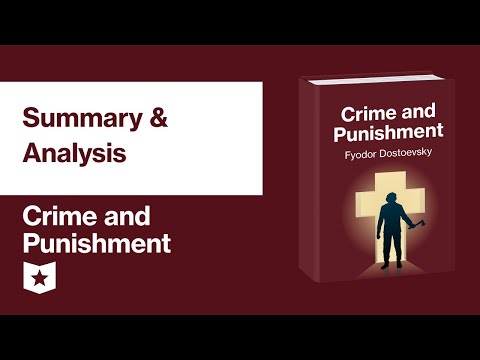
Crime and Punishment follows Raskolnikov, a brilliant, poor ex-student who convinces himself that an extraordinary man may kill a vile pawnbroker. The murder comes early; the novel is about the aftermath inside his mind, where conscience becomes a fever and redemption comes through confession, suffering and love.
On this page
Few novels live inside your head the way Fyodor Dostoevsky’s Crime and Punishment does. We follow Rodion Raskolnikov, a poor, brilliant, feverish ex-student in St. Petersburg, as he convinces himself that he is an extraordinary man, above the ordinary moral law, and that murdering a vile old pawnbroker would be permitted, even rational. The crime happens early. The rest of the book is the long, suffocating aftermath inside his mind. This is not a detective story about who did it. It is a study of what a deed like this does to the person who commits it.
Here is what Crime and Punishment taught me about the lie of the “extraordinary man,” about conscience as a force we cannot reason away, and about the strange road to redemption.
Key takeaways
- Raskolnikov’s theory that great men may transgress morality collapses against his own conscience.
- Guilt is not a feeling he can argue with; it is a sickness that invades his body and mind.
- Reason can justify almost anything, which is exactly why reason alone is a dangerous master.
- Real punishment is internal, beginning long before any court is involved.
- Redemption comes through confession, suffering, and love, not through cleverness.
The seductive theory
What makes the novel so disturbing is that Raskolnikov is not a monster. He is intelligent, capable of tenderness, and his theory is almost persuasive. History, he reasons, is made by extraordinary individuals who step over the rules ordinary people obey. If one such person could remove a worthless, parasitic old woman and use her money for good, would that not be justified? Dostoevsky lets the argument breathe, lets it sound clever, precisely so he can show us where it leads. I have met versions of this logic everywhere, the conviction that the right goal excuses the wrong means. The book is a slow, merciless demonstration of how that conviction destroys the one who holds it.
Conscience as a fever
The genius of the novel is that Raskolnikov is not caught by a detective so much as by himself. His mind, the very instrument he was so proud of, turns against him. He grows sick, paranoid, unable to connect with the people who love him, haunted not by fear of the gallows but by something deeper that his theory cannot explain away. Dostoevsky is arguing, in effect, that conscience is real, that it is built into us, and that no philosophy clever enough to permit murder can silence it. The punishment is not the prison at the end. The punishment is the self he has to live inside.
The road back
Against Raskolnikov stands Sonia, a young woman forced into prostitution to feed her family, who keeps a faith and a goodness that his intellect cannot fathom. She does not defeat his arguments. She loves him, and she insists that he confess, accept his suffering, and rejoin the human community he tried to rise above. Redemption in this novel is not clever. It is humble. It comes through admitting guilt, bearing the consequences, and being loved back into the world. For a book so full of ideas, its final answer is almost startlingly simple.
What I’m taking with me
Crime and Punishment left me wary of my own cleverness, the part of me that can build a tidy argument for almost anything I already want to do. Dostoevsky’s warning is that reason cut loose from conscience is not freedom but a trap. What endures is not the brilliant theory but the human bond it tried to deny. The lesson I am keeping is to distrust any logic that ends by placing me above other people, and to remember that we are saved, if at all, by connection rather than by being extraordinary.
Frequently asked questions
What is the main theme of Crime and Punishment?
Guilt and redemption. It follows a young man who murders out of a theory that he is above morality, and traces how conscience destroys him until he confesses and begins the long road back.
What is Raskolnikov’s “extraordinary man” theory?
The idea that exceptional individuals have the right to transgress ordinary moral laws in pursuit of a greater goal. The novel exists largely to show how this theory collapses.
Is Crime and Punishment a crime novel?
Not in the usual sense. We know the criminal from the start. It is a psychological and philosophical novel about the inner consequences of the crime, not a mystery about who committed it.
References & further reading
- Dostoevsky, Fyodor. Crime and Punishment. (Translations: Constance Garnett, 1914; or Richard Pevear and Larissa Volokhonsky, 1992.)
- Frank, Joseph. Dostoevsky: The Miraculous Years, 1865–1871. Princeton University Press, 1995.
- Bakhtin, Mikhail. Problems of Dostoevsky’s Poetics. (1929; English translation, University of Minnesota Press, 1984.)
Watch: others on this book

Read along with me
Book notes, philosophy and the ideas that shape how we build. New essays every month, no spam.
Related reading notes
The Roulette of the Soul: Dostoevsky's "The Gambler"
Fyodor Dostoevsky's The Gambler is a short, intense, and remarkable novel, made all the more fascinating by the famous circumstances of its writing.
The Spite of the Underground Man: Dostoevsky's First Existential Cry
Fyodor Dostoevsky's Notes from Underground is short, ugly, and astonishing.
The Possessed and the Possibility of Meaning: Dostoevsky’s Warning to the Modern World
Lessons from Dostoevsky's The Possessed (Demons): ideology without morality, the crisis of meaning without faith and why true change begins within.
Comments
No comments yet. Start the conversation.