The Floating Man: Avicenna and the Mystery of the Self
In one breath
Avicenna (Ibn Sina), physician and philosopher of the Islamic golden age, asks us to imagine a man created floating in the air with no sensory input. He would still know he exists. The Floating Man argues that self-awareness is immediate and the soul distinct from the body, six centuries before Descartes.
On this page
Avicenna, or Ibn Sina, was perhaps the greatest mind of the Islamic golden age: a physician whose medical encyclopedia was taught in Europe for centuries, and a philosopher who reshaped the inheritance of Aristotle. Among all his ideas, the one that fascinated me most is a single thought experiment about the self, often called the Floating Man. In a few sentences, written a thousand years ago, Avicenna asks us to imagine ourselves into existence from nothing, and in doing so he arrives at a startling conclusion about the soul, one that anticipates by six centuries the most famous argument in modern philosophy.
Here is what Avicenna taught me about the self that knows itself directly, about the soul as distinct from the body, and about the long reach of a single brilliant idea.
Key takeaways
- The Floating Man: even with no sensory experience, you would still be aware that you exist.
- Self-awareness is immediate, not derived from the body or the senses.
- The soul is distinct from the body, known to itself directly.
- Avicenna anticipates Descartes’ “I think, therefore I am” by some six hundred years.
- Knowledge of the self is the most certain knowledge we have.
The thought experiment
Imagine, Avicenna says, that a fully grown person is created all at once, suspended in empty air, in complete darkness, with no sensation whatever: no sight, no sound, no touch, the limbs spread apart so they do not even feel one another. This person has never perceived anything external at all. Would they, in that condition, be aware of anything? Avicenna’s answer is yes: they would still affirm that they exist. Even with no knowledge of body, world, or senses, the self would be immediately certain of its own being. This pure, direct self-awareness, arising with no external input, is the heart of the argument, and it is as elegant a piece of reasoning as I have ever encountered.
The soul knows itself
From this Avicenna draws his conclusion about the soul. Since the Floating Man is certain of his own existence while being completely unaware of his body, the self of which he is aware cannot simply be the body. The thing that knows itself directly, prior to any sensation, is the soul, an immaterial reality distinct from the physical frame it inhabits. Whether or not one accepts the metaphysical conclusion, the phenomenon Avicenna identifies is real and uncanny: my awareness that I exist does not seem to depend on any particular perception. It is simply, immediately, there. He has put his finger on something genuinely mysterious about consciousness, the way the self is present to itself before it knows anything else.
A thousand-year echo
What gives this argument its extra resonance is its afterlife. Six centuries later, the French philosopher Descartes would sit by his fire, strip away everything he could doubt, and arrive at the one certainty that survived: I think, therefore I am. The structure is remarkably close to Avicenna’s Floating Man, the discovery that, whatever else I may doubt, I cannot doubt the existence of the self that is doing the doubting. Avicenna got there first, in a different language and a different faith, working within the tradition of Aristotle and the Quran. It is a humbling reminder that the great ideas of “modern” philosophy often have long, cross-cultural roots, and that the medieval Islamic world was thinking these thoughts while Europe was still centuries away.
What I’m taking with me
Avicenna’s Floating Man is the kind of idea that stays with you, a single image that opens a deep question. What I am taking from it is renewed wonder at the strangeness of self-awareness, the bare fact that I am present to myself in a way that does not seem to depend on anything outside me. And I am taking a broader lesson too: that the history of human thought is far more interconnected than our tidy labels suggest, and that a Persian physician a thousand years ago can still teach me something about the certainty I carry in my own chest.
Frequently asked questions
What is Avicenna’s “Floating Man” argument?
A thought experiment in which a person created with no sensory experience whatsoever would still be aware of their own existence, showing that self-awareness is immediate and that the soul is distinct from the body.
How is Avicenna related to Descartes?
Avicenna’s Floating Man anticipates Descartes’ famous “I think, therefore I am” by around six hundred years, since both arrive at the self’s existence as the one certainty that cannot be doubted.
Who was Avicenna?
Ibn Sina (Avicenna) was an eleventh-century Persian polymath, one of the greatest philosophers and physicians of the Islamic golden age, whose works profoundly influenced both Islamic and European thought.
References & further reading
- Goodman, Lenn E. Avicenna. Routledge, 1992.
- Gutas, Dimitri. Avicenna and the Aristotelian Tradition. Brill, 1988.
- Fakhry, Majid. A History of Islamic Philosophy. Columbia University Press, 1970.
Watch: others on this book

Read along with me
Book notes, philosophy and the ideas that shape how we build. New essays every month, no spam.
Related reading notes
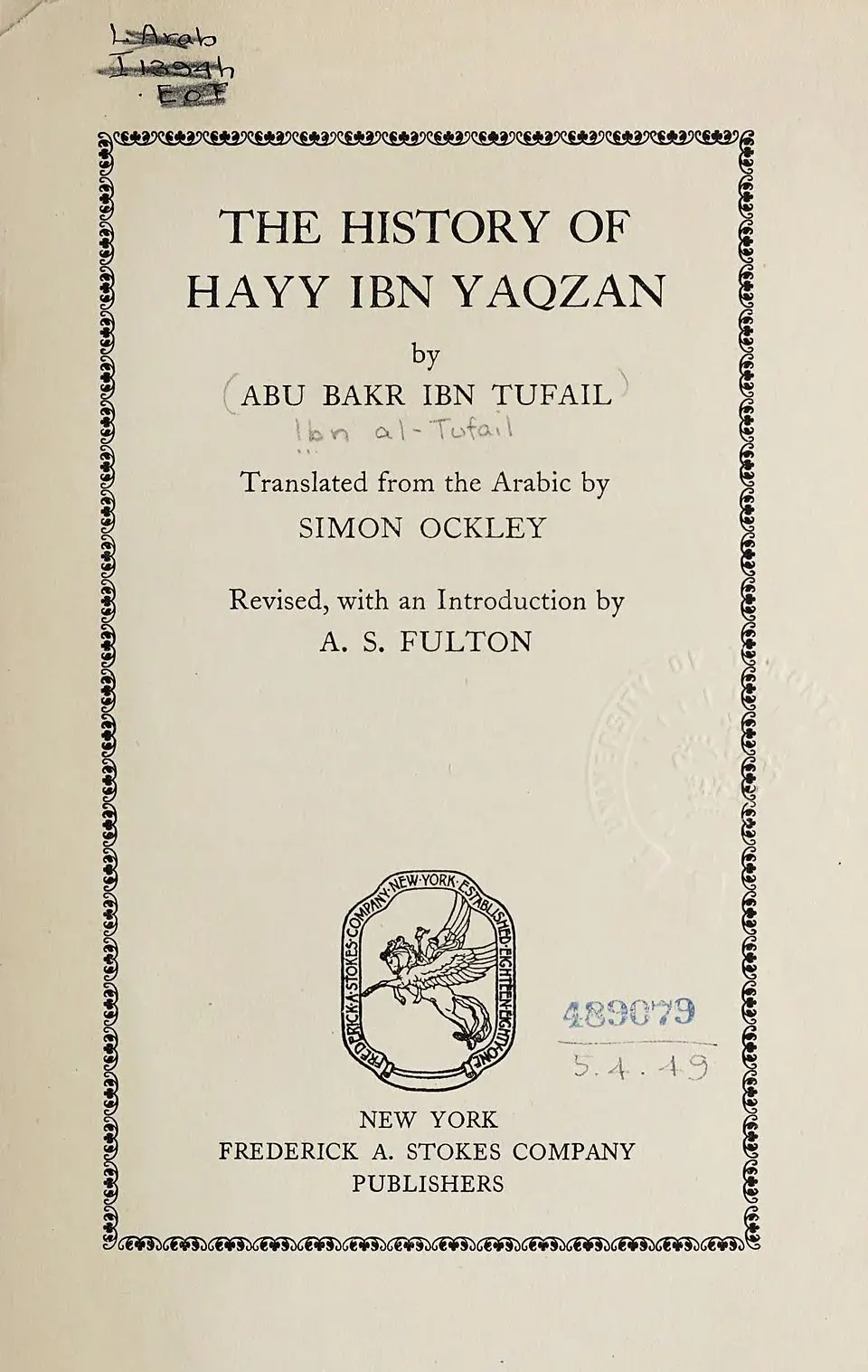
The Self-Taught Philosopher: Ibn Tufayl's "Hayy ibn Yaqzan"
Hayy ibn Yaqzan, written by the twelfth-century Andalusian philosopher Ibn Tufayl, may be the most remarkable book most people have never heard of.
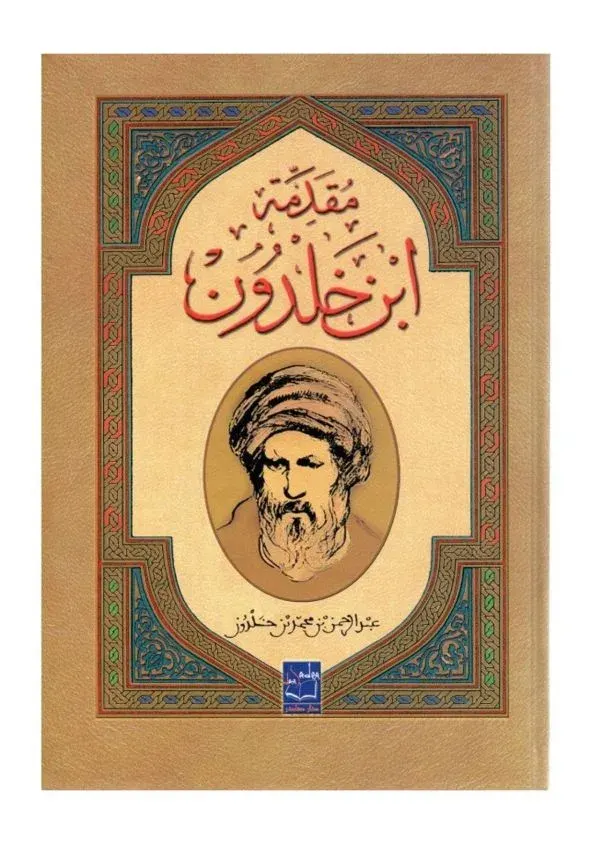
Unveiling the Wisdom of Ibn Khaldun's "The Muqaddimah"
In a world pulsating with the ceaseless rhythm of change, seeking wisdom from the annals of history often offers a beacon of enlightenment.
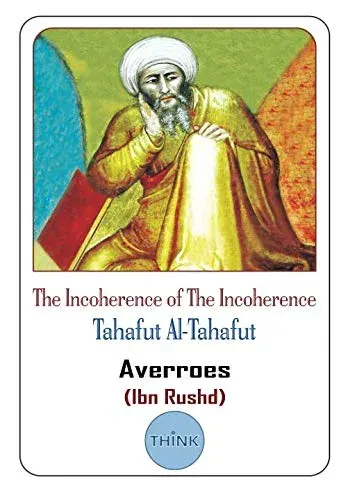
Exploring the Depths of "The Incoherence of the Incoherence"
In the vast ocean of philosophical discourse, certain works emerge as guiding stars, illuminating the path to deeper understanding and critical inquiry.
Comments
No comments yet. Start the conversation.