The Beast Within: Civilization and Savagery in "Lord of the Flies"
In one breath
In Lord of the Flies, British schoolboys marooned on an island try to govern themselves and descend from order into savagery. Writing after World War II, William Golding rejects the idea of natural innocence: the conch stands for law, and the beast the boys fear is the darkness within themselves.
On this page
William Golding’s Lord of the Flies begins with a scenario that sounds almost like an adventure story: a group of British schoolboys, marooned on a deserted tropical island with no adults, free to govern themselves. But Golding, who had seen the horrors of the Second World War, was writing a deliberate and devastating reply to the comfortable belief that children, and human beings generally, are innocent by nature, and that civilisation is what corrupts us. His island is no paradise. Left to themselves, the boys descend, with terrible swiftness, from order into savagery, from democracy into tyranny, from play into murder. The novel is a dark parable about the fragility of civilisation and the darkness that may lie within human nature itself.
Here is what Lord of the Flies taught me about the thinness of civilisation, about the beast within, and about what happens when the rules fall away.
Key takeaways
- Civilisation is a thin veneer over darker human impulses.
- The conch shell symbolizes order, democracy, and the rule of law.
- “The beast” the boys fear is really the darkness within themselves.
- Fear and power drive the slide from order into savagery and tyranny.
- Golding rejects the idea that human beings are naturally innocent.
The thin veneer of civilisation
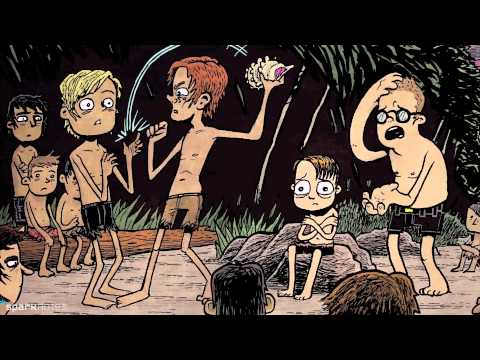
At first, the boys try to recreate the civilised world they have lost. They elect a leader, the sensible Ralph; they establish rules; they use a conch shell to call meetings and grant the right to speak; they plan to keep a signal fire burning for rescue. For a while, order holds. But Golding shows, with merciless clarity, how quickly it unravels. As fear grows and discipline weakens, the boys split, drawn increasingly toward Jack, who offers not rules and responsibility but hunting, excitement, and the release of their wilder instincts. The painted faces, the chants, the violence escalate until civilisation collapses entirely. Golding’s chilling suggestion is that the order we take for granted is a thin, fragile veneer, that civilisation is not our natural state but a precarious achievement, and that beneath it lie impulses that can break through alarmingly fast once the structures that contain them are removed.
The beast within
The boys become increasingly terrified of a “beast” they imagine stalking the island, a monster in the dark. They hunt for it, fear it, and finally begin to worship and appease it. But the novel’s deepest insight, delivered in its most haunting scene, is that there is no external beast. The sensitive, clear-sighted boy Simon realises the truth: the beast is not a creature on the island but the darkness inside the boys themselves, their own capacity for cruelty, fear, and violence. The severed pig’s head on a stake, the “Lord of the Flies” of the title, seems to speak to Simon, confirming that the beast is “part of you.” This is the heart of Golding’s vision. The evil the boys fear and flee is their own; the monster is within. And when Simon comes down from the mountain to tell them this truth, they kill him, mistaking him, in their frenzy, for the very beast he came to dispel.
When the rules fall away
What drives the descent, Golding shows, is the interplay of fear and power. Fear, of the beast, of the dark, of being alone, makes the boys susceptible to Jack, who promises protection and the catharsis of violence. Power, once tasted, corrupts: Jack’s hunters become a brutal tribe, enforcing loyalty through terror, until dissent means death. The gentle, the thoughtful, and the weak, Simon, the intellectual Piggy, are destroyed. By the end, the boys are hunting Ralph himself across a burning island, and only the sudden arrival of a naval officer, an adult, an emblem of the civilisation they had abandoned, halts the final murder. The bitter irony is that the officer comes from a world of adults engaged in their own vast, organised savagery, a world war. Golding refuses any comfortable conclusion: the darkness on the island is not childish or exceptional; it is human.
What I’m taking with me
Lord of the Flies is a bleak and unforgettable book, and its bleakness is its honesty. What I am taking from Golding is his sobering insight that civilisation is a thin and fragile veneer, an achievement to be maintained rather than a state we can take for granted; his profound idea of the beast within, that the evil we fear and project onto others is often our own; and his refusal of the flattering myth of natural human innocence. It is not a comfortable lesson, but I think it is a necessary one. The order and decency we depend on are not guaranteed by nature; they must be chosen, defended, and re-chosen, against the darkness that, Golding insists, is also part of who we are.
Frequently asked questions
What is Lord of the Flies about?
It is William Golding’s novel about a group of boys stranded on a deserted island who descend from order into savagery, serving as a dark parable about the fragility of civilization and the darkness within human nature.
What does “the beast” symbolize?
The beast the boys fear is not a real creature but a symbol of the darkness and capacity for evil within themselves, as the boy Simon realizes before he is killed.
What does the conch shell represent?
Order, democracy, and the rule of law. As the boys descend into savagery, the conch loses its authority and is finally destroyed, marking the collapse of civilization on the island.
References & further reading
- Golding, William. Lord of the Flies. Faber & Faber, 1954.
- Kinkead-Weekes, Mark, and Ian Gregor. William Golding: A Critical Study. Faber & Faber, 1967.
- Baker, James R. William Golding: A Critical Study. St. Martin’s Press, 1965.
Watch: others on this book

Read along with me
Book notes, philosophy and the ideas that shape how we build. New essays every month, no spam.
Related reading notes
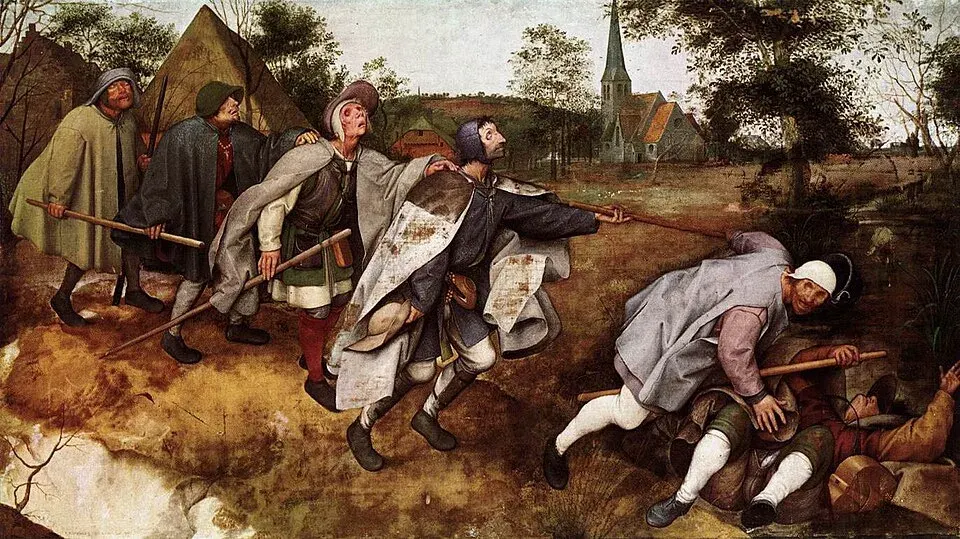
When Everyone Goes Blind: Saramago's Parable of Society's Fragility
José Saramago's Blindness begins with a single, terrifying premise and follows it without flinching to its conclusion.
The Wolf and the Man Within: Reflections on Hesse's "Steppenwolf"
If Siddhartha is Hesse at his most serene, Steppenwolf is Hesse at his most tormented.

The Myth of the Blank Slate: Steven Pinker on Human Nature
Steven Pinker's The Blank Slate: the case for an evolved human nature, the fears behind denying it and why it need not threaten our values.
Comments
No comments yet. Start the conversation.