Technical SEO: Making Your Site Crawlable & Indexable
Great content can be invisible to search engines if the plumbing is broken. Technical SEO is that plumbing -- here is how crawling, indexing, speed, and structured data decide whether your pages exist at all.
TL;DR
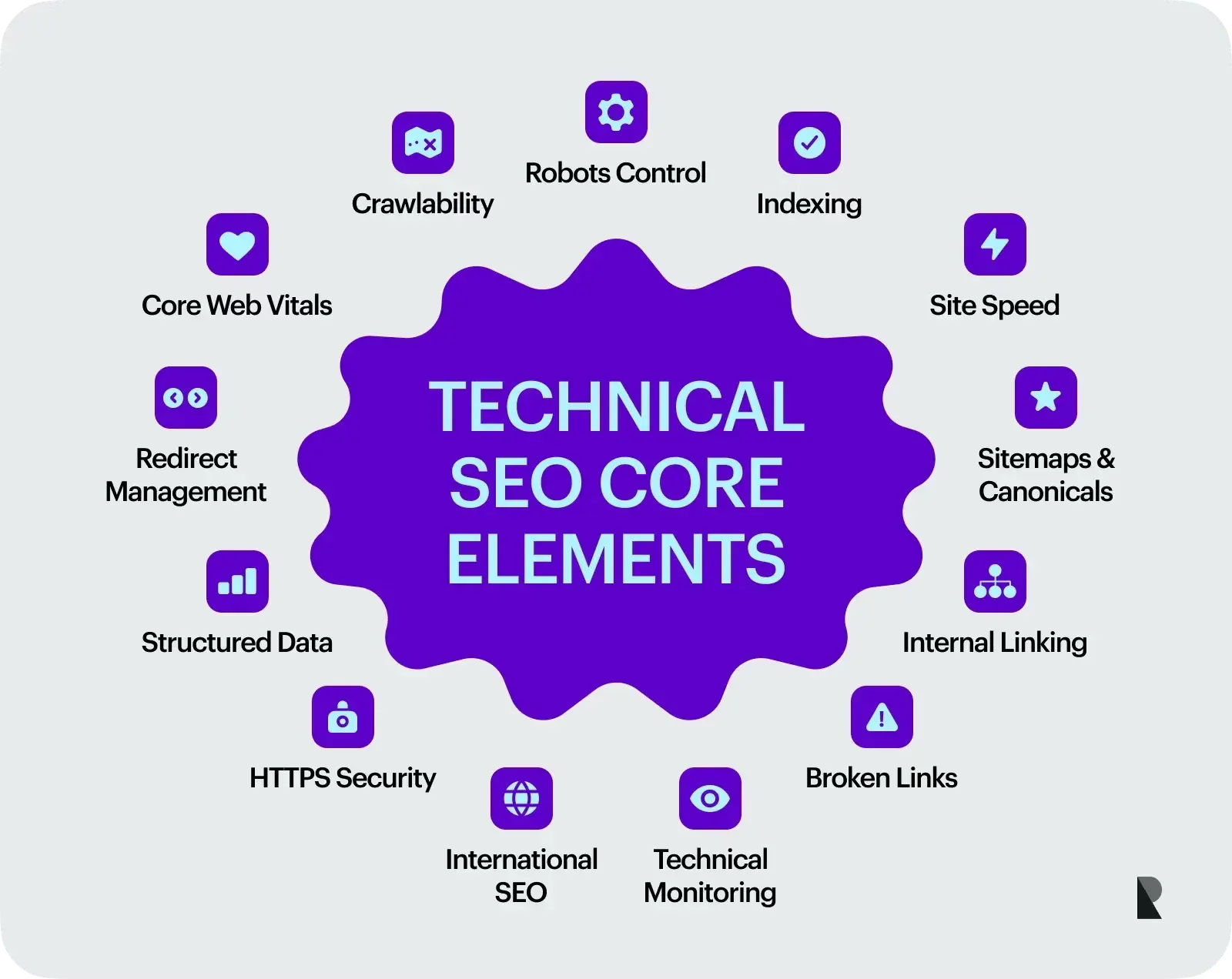
Great content stays invisible if search engines can't crawl and index it. Technical SEO is the plumbing: let the right pages in through robots.txt and sitemaps, give each page one canonical address, keep pages fast and stable for Core Web Vitals and help engines understand content with structured data.
On this page
There is a quiet tragedy that plays out on websites every day. Someone writes a genuinely useful page – clear, accurate, exactly what a searcher needs – publishes it, and waits. Nothing happens. It never ranks, because it was never indexed, because a single misplaced rule told the search engine not to bother. No keyword research or backlink campaign can rescue a page the engine cannot reach. This is the domain of technical SEO, and unlike most of search marketing, its main audience is not a human at all. It is a machine with limited patience.
Three steps, in order
To do technical SEO well, you only need to hold one model in your head: every page passes through three stages before it can appear in results. First the engine crawls it – discovers the URL and fetches the raw HTML. Then it renders it – runs the page much like a browser would, executing JavaScript and assembling the final layout. Finally it indexes it – analyzes the result, decides whether to store it, and files it under the topics it found. Only indexed pages can rank.
The most useful habit you can build is keeping the first and last of those steps separate in your mind. Crawling is not indexing. A page can be fetched perfectly and still be left out of the index – because it is a duplicate, because it carries a noindex tag, because it is thin, or simply because the engine judged it not worth keeping. Almost every mysterious “why isn’t this page showing up” turns out to be a confusion between these two ideas.
Letting the right pages in
The first job is access. A small text file called robots.txt sits at the root of your domain and tells crawlers where they may go. It is powerful and routinely misunderstood. Blocking a URL there stops it being crawled – but, counterintuitively, does not reliably keep it out of the index, and worse, if you block the page you also block the engine from ever seeing the noindex tag that would have kept it out. The correct move to suppress a page is the opposite of most people’s instinct: let it be crawled, and put noindex in the page itself.
Alongside access comes guidance. An XML sitemap is a map you hand the engine, listing the pages you actually want found. And for large sites there is crawl budget – the finite attention an engine will spend on you. Waste it on endless filter URLs and parameter variations and your important pages get visited less. The whole discipline here is direction: send the crawler toward what matters and away from what does not.
One page, one address
The subtlest failures are about duplication. The same content is often reachable at five or six URLs – with and without www, over HTTP and HTTPS, with tracking parameters tacked on. To you they are one page; to an engine they are rivals that split your ranking signals, and it may pick a version you never intended. Canonicalization is how you settle the argument: a rel="canonical" tag that names the one true URL, reinforced by redirects and consistent internal links that all point the same way. Get this wrong across a whole site and your authority scatters; get it right and it concentrates.
Fast, stable, and understood
The last two layers are about quality of experience and clarity of meaning. Speed is no longer optional: slow sites frustrate users and get crawled less generously, and Google measures the experience with Core Web Vitals – how quickly the main content appears (LCP), how fast the page responds to a tap (INP), and how much the layout lurches as it loads (CLS). The fixes are unglamorous and effective: size your images, lean on a CDN, defer heavy scripts, and reserve space so nothing jumps.
Meaning is the final piece. Left to itself, an engine reads your page and guesses what it represents. Structured data – a small block of JSON-LD using the shared schema.org vocabulary – removes the guessing, labelling a page as an article, a product, a recipe, an event. It will not lift your rankings by itself, but it makes you eligible for the richer, more eye-catching listings, and it tells the machine plainly what you are.
None of this is glamorous, and that is rather the point. Technical SEO is the foundation the visible work stands on. Run the audit once, fix what hides your pages first, keep the site fast and its meaning explicit – and then verify in Search Console rather than assuming. Do that, and the useful page you wrote will finally get the one thing it needs: to exist, as far as the search engine is concerned.
Key takeaways 5
- Pages must be crawled, then indexed, before they can rank.
- robots.txt and noindex control what engines can access and index.
- Each page needs one canonical URL to avoid duplicates.
- Speed and stability (Core Web Vitals) matter.
- Structured data helps engines understand your content.
Watch & learn

Frequently asked questions
What is technical SEO?
Technical SEO is optimizing a website's infrastructure, such as crawlability, indexing, site speed, mobile-friendliness, canonicalization and structured data, so search engines can access and understand it.
What is the difference between robots.txt and noindex?
robots.txt tells crawlers which URLs they may crawl. noindex tells search engines not to include a crawled page in results. A page blocked by robots.txt can't be seen to have a noindex tag.
What is a canonical URL?
A canonical URL is the preferred address for a page with duplicate or similar versions, declared with a rel="canonical" tag so search engines consolidate signals to one URL.
Go deeper with the free masterclass
Workshop, PDF handbook and curated resources for “Technical SEO: Making Your Site Crawlable & Indexable”.
Related articles
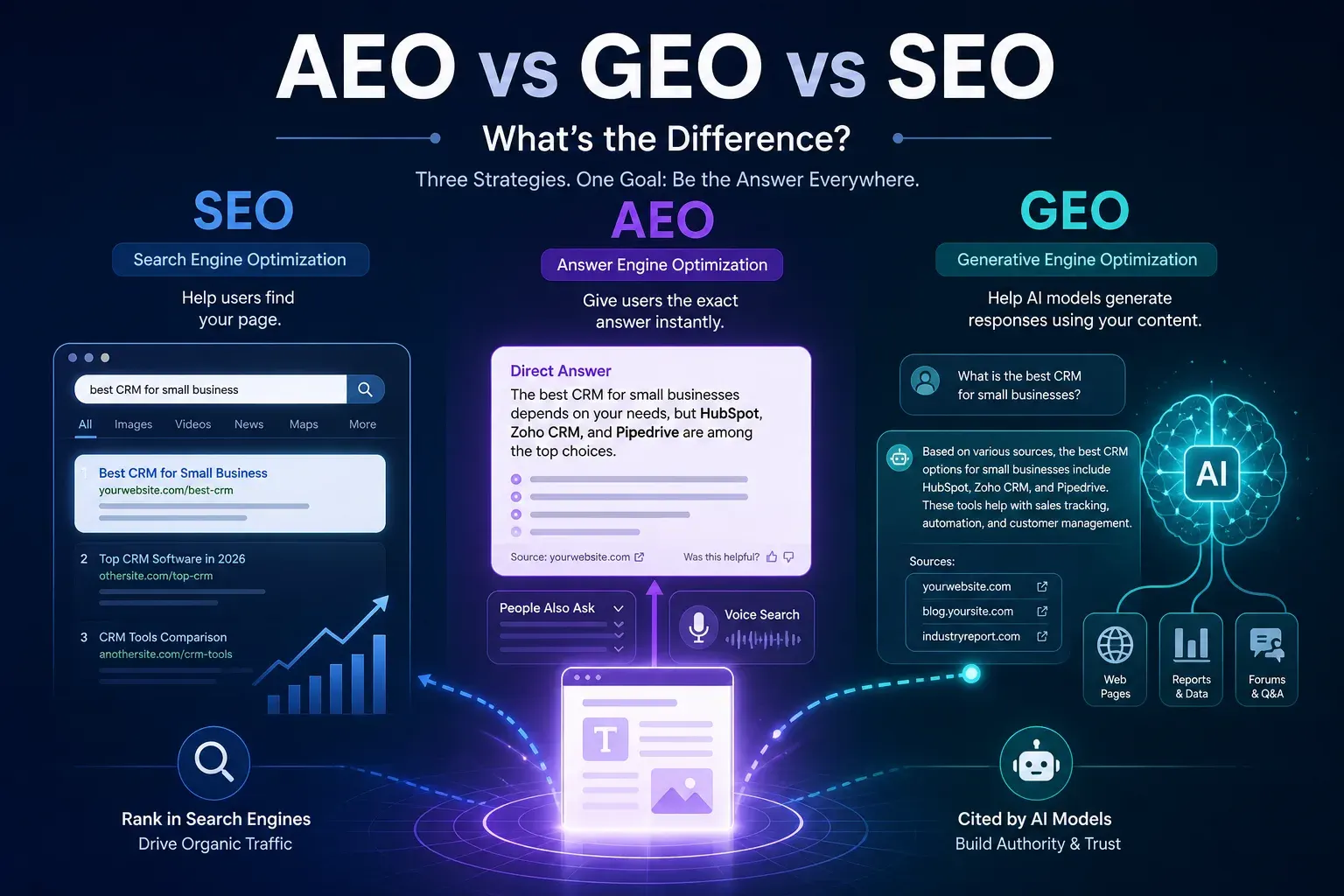
AI SEO: Getting Cited by ChatGPT, Gemini & Perplexity (AEO/GEO/LLMO)
Search is quietly becoming answers, and a fistful of new acronyms -- AEO, GEO, LLMO -- has arrived to explain it. Strip away the jargon and the job is simple: be the source the AI quotes. Here is how that actually works.

Video & Visual SEO: Ranking on YouTube & Google Images
A huge share of search is visual -- videos, photos, diagrams, products -- yet most people optimize only their text. Here is how to make your videos and images findable on YouTube and Google Images, without any jargon you cannot use.
Ecommerce SEO: Ranking Products in Shopping Search
Ranking products is not about gaming Google -- it is about giving search engines correct, consistent data and matching each page to what a shopper actually wants. Here is the chain that decides whether your products show up.
Comments
No comments yet. Start the conversation.