Strange Loops and the Mystery of Mind: Hofstadter's "Gödel, Escher, Bach"
In one breath
Douglas Hofstadter's Pulitzer-winning Gödel, Escher, Bach weaves logic, art and music around one question: how can a self arise from neurons that understand nothing? His answer is the strange loop, self-reference crossing levels, seen in Gödel's theorem, Escher's drawings and Bach's canons, and perhaps in consciousness itself.
On this page
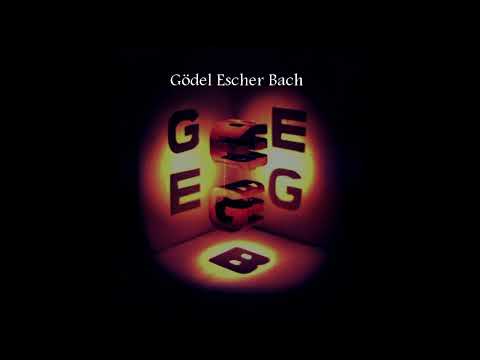
Douglas Hofstadter’s Gödel, Escher, Bach: An Eternal Golden Braid is one of the most original, playful, and ambitious books I have ever encountered, a sprawling, joyful meditation that won the Pulitzer Prize and defies easy summary. On its surface it weaves together three figures: the logician Kurt Gödel, the artist M. C. Escher, and the composer Johann Sebastian Bach. But its real subject is one of the deepest questions there is: how can consciousness, meaning, and the sense of “I” arise from mere matter, from the firing of neurons that, individually, understand nothing? Hofstadter’s answer centres on a strange and beautiful idea, the “strange loop,” and the book is his attempt to show how mind might emerge from mechanism. It is difficult, but exhilarating.
Here is what Gödel, Escher, Bach taught me about strange loops, about the common pattern uniting logic, art, and music, and about the mystery of how mind arises from matter.
Key takeaways
- The “strange loop”: a system that loops back on itself, crossing levels to refer to itself.
- Godel, Escher, and Bach each embody self-reference in logic, art, and music.
- Godel’s theorem shows the limits of formal systems through self-reference.
- Consciousness may be a strange loop, the mind modeling itself.
- Meaning can emerge from meaningless parts arranged in the right pattern.
The strange loop
The central concept of the book is the “strange loop,” and once you grasp it you start seeing it everywhere. A strange loop is what happens when, moving through a hierarchical system, up or down its levels, you unexpectedly find yourself back where you started, when the system loops back to refer to itself across its levels. Hofstadter finds this same pattern in his three title figures. In Bach’s music, there are canons and fugues that seem to rise endlessly in pitch yet return to where they began. In Escher’s art, there are the famous impossible structures, staircases that climb forever yet loop back, hands that draw each other into existence. And in Gödel’s logic, there is the most profound strange loop of all: a mathematical statement that, through ingenious self-reference, talks about itself, asserting its own unprovability. The strange loop, this tangled self-reference, is the thread, the “eternal golden braid,” that Hofstadter weaves through logic, art, and music.
Gödel and the limits of systems
At the intellectual core of the book is Gödel’s incompleteness theorem, one of the most profound results in the history of mathematics, which Hofstadter explains with patience and ingenuity. Gödel proved that any formal logical system powerful enough to describe arithmetic must contain true statements that it cannot prove within itself, that no such system can be both complete and consistent. He did this by constructing, within the system, a statement that refers to itself, in effect saying “this statement cannot be proved”, a strange loop of pure logic. The result shattered the dream of a complete, self-contained foundation for mathematics, and revealed deep, inherent limits to what formal systems can capture about themselves. Hofstadter sees in this self-reference a clue to something far larger, the way a system, by folding back on itself, can transcend or escape its own apparent limits.
Mind from matter
All of this serves Hofstadter’s deepest question: how does consciousness, the felt sense of being an “I,” arise from matter that, in itself, means and feels nothing? His answer, developed through the whole braided structure of the book, is that the self, the “I,” may itself be a strange loop. The brain, made of billions of neurons that individually understand nothing, becomes able, at a higher level, to model the world, and then to model itself modeling the world, folding back on itself in a tangled hierarchy until a self emerges, a pattern that perceives and refers to itself. Consciousness, on this view, is not a ghostly extra substance added to the brain but a strange loop arising from the right kind of self-referential pattern, meaning and selfhood emerging from meaningless parts arranged in a particular way. Whether or not this fully solves the mystery of mind, and Hofstadter would admit it does not, it is a genuinely illuminating and beautiful approach to the hardest question there is.
What I’m taking with me
Gödel, Escher, Bach is a difficult, joyful, one-of-a-kind book, and even a partial grasp of it is a genuine reward. What I am taking from Hofstadter is the concept of the strange loop, the tangled self-reference that I now see in logic, art, music, and thought; his lucid exposition of Gödel’s theorem and the deep limits of formal systems; and his profound suggestion that the self and consciousness may be strange loops, meaning and “I” emerging from meaningless matter arranged in the right self-referential pattern. The book is a celebration of pattern, paradox, and play, and it left me with a deepened wonder at the strangest fact of all: that arrangements of mindless matter can somehow wake up and say “I.”
Frequently asked questions
What is Gödel, Escher, Bach about?
It is Douglas Hofstadter’s exploration of how consciousness and meaning can arise from matter, weaving together the logician Gödel, the artist Escher, and the composer Bach around the idea of the self-referential “strange loop.”
What is a “strange loop”?
A pattern in which moving through the levels of a system brings you back to where you started, a tangled self-reference. Hofstadter finds it in Bach’s music, Escher’s art, Gödel’s logic, and, he suggests, in consciousness itself.
How does the book explain consciousness?
Hofstadter suggests the self is a strange loop: the brain, made of neurons that understand nothing, models the world and then itself, folding back on itself until a self-aware “I” emerges from meaningless parts.
References & further reading
- Hofstadter, Douglas R. Gödel, Escher, Bach: An Eternal Golden Braid. Basic Books, 1979.
- Nagel, Ernest, and James R. Newman. Gödel’s Proof. New York University Press, 1958.
- Hofstadter, Douglas R. I Am a Strange Loop. Basic Books, 2007.
Watch: others on this book

Read along with me
Book notes, philosophy and the ideas that shape how we build. New essays every month, no spam.
Related reading notes
What Is It Like to Be a Bat? Thomas Nagel's "Mortal Questions"
Thomas Nagel's Mortal Questions: what it is like to be a bat, the mystery of consciousness, moral luck and the absurd, faced without false comfort.
The Floating Man: Avicenna and the Mystery of the Self
Avicenna's Floating Man thought experiment: why self-awareness needs no senses, and how it anticipated Descartes' cogito by six centuries.
Cleansing the Doors of Perception: Huxley on Consciousness
Huxley's The Doors of Perception: the reducing-valve theory of the mind, seeing the ordinary as miraculous, and a critical look at its limits.
Comments
No comments yet. Start the conversation.