Sharpening the Saw: A Philosophical Look at Covey's "7 Habits"
In one breath
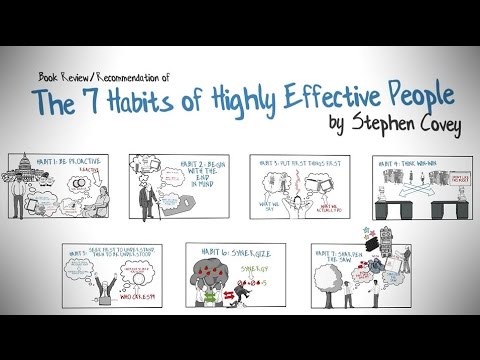
Stephen Covey's The 7 Habits of Highly Effective People argues that lasting effectiveness comes from character and timeless principles, not tricks. The habits move from dependence to independence (be proactive, begin with the end in mind, put first things first) to interdependence and continual renewal.
On this page
Stephen Covey’s The 7 Habits of Highly Effective People is one of the best-selling self-improvement books ever written, and I approached it, as I do most of the genre, with a mix of interest and skepticism. What I found is genuinely better than most. Covey is not peddling tricks or shortcuts; his central argument is that lasting effectiveness comes not from techniques but from character, from aligning ourselves with timeless principles rather than chasing quick fixes. He calls this a “principle-centered” approach, and contrasts it with the shallow “personality ethic” of so much self-help. Read with a critical eye, the book offers a coherent and surprisingly deep framework for personal and interpersonal growth.
Here is what The 7 Habits taught me, read critically, about character over technique, about the move from dependence to interdependence, and about renewing ourselves.
Key takeaways
- Character over personality: effectiveness grows from principles, not tricks.
- “Be proactive”: focus on what you can influence, not what you cannot.
- “Begin with the end in mind”: live from a clear sense of your values and purpose.
- “Win-win” and “seek first to understand”: the foundations of real interdependence.
- “Sharpen the saw”: renew yourself continually in body, mind, heart, and spirit.
Character over technique
Covey’s foundational claim, and what raises the book above most self-help, is his insistence that genuine effectiveness is rooted in character, not technique. He distinguishes between the “personality ethic,” the modern focus on surface skills, image, and quick-fix techniques for getting ahead, and the older “character ethic,” the focus on deep principles like integrity, courage, justice, and patience. Real, lasting change, Covey argues, comes only from the inside out, from building genuine character and aligning ourselves with timeless principles, not from manipulating appearances. This resonates with me precisely because it cuts against the grain of the genre it belongs to. Covey is, in effect, telling readers that there are no shortcuts, that the work of becoming effective is the slow work of becoming a better person. That honesty earns my respect.
From dependence to interdependence
Covey organises the habits as a progression of maturity, from dependence (relying on others) through independence (relying on oneself) to interdependence (working effectively with others). The first three habits build independence, the “private victory.” “Be proactive” means taking responsibility for our responses and focusing our energy on our “circle of influence,” what we can actually affect, rather than our “circle of concern,” what we merely worry about, an idea straight out of Stoicism. “Begin with the end in mind” means clarifying our deepest values and living from them. “Put first things first” means prioritising what is important over what is merely urgent. The next three habits build interdependence, the “public victory”: “think win-win,” seeking mutual benefit; “seek first to understand, then to be understood,” the discipline of genuine listening; and “synergize,” creative cooperation. This progression is genuinely thoughtful, a map from self-mastery to effective relationship with others.
Sharpening the saw
The seventh habit, which encloses all the others, is “sharpen the saw,” and it is my favourite. Covey tells the parable of a man sawing furiously at a tree, exhausted and getting nowhere, who has no time to stop and sharpen his blunt saw because he is “too busy sawing.” The habit is about continual self-renewal, regularly investing in the four dimensions of our nature, the physical, the mental, the social/emotional, and the spiritual, so that we do not burn out or grow dull. This is wise and easily neglected. We are so busy doing that we fail to maintain and renew the one instrument that does everything, ourselves. Covey’s point is that taking time to renew is not a distraction from effectiveness but its foundation. A sharp saw cuts far more than a busy, blunt one.
What I’m taking with me
The 7 Habits of Highly Effective People is, read critically, one of the more substantial books in its genre, precisely because it grounds effectiveness in character and principle rather than technique. What I am taking from Covey is the insight that lasting change comes from the inside out; the Stoic-flavoured discipline of being proactive and focusing on my circle of influence; the importance of beginning with the end in mind and putting first things first; and the wisdom of “sharpening the saw,” renewing myself continually rather than running myself into the ground. It is more philosophy of living than productivity hack, and that is exactly why it has lasted.
Frequently asked questions
What are the 7 habits in Stephen Covey’s book?
Be proactive; begin with the end in mind; put first things first; think win-win; seek first to understand, then to be understood; synergize; and sharpen the saw. They progress from independence to interdependence to self-renewal.
What is the main idea of The 7 Habits?
That lasting effectiveness comes from character and timeless principles, the “character ethic,” developed from the inside out, rather than from surface techniques or quick fixes, the “personality ethic.”
What does “sharpen the saw” mean?
The habit of continual self-renewal, regularly investing in your physical, mental, social/emotional, and spiritual dimensions so you stay effective rather than burning out, like a woodcutter pausing to sharpen a blunt blade.
References & further reading
- Covey, Stephen R. The 7 Habits of Highly Effective People. Free Press, 1989.
- Drucker, Peter F. The Effective Executive. Harper & Row, 1967.
- Frankl, Viktor E. Man’s Search for Meaning. Beacon Press, 1959.
Watch: others on this book
Read along with me
Book notes, philosophy and the ideas that shape how we build. New essays every month, no spam.
Related reading notes

Rise and Grind... or Not? Exploring the 5 AM Club
The 5 AM Club. A movement promising increased productivity, improved focus, and a head start on the day.
Living with Purpose: Lessons from The Highest Goal by Michael Ray
In a world focused on goals, titles, and achievements, it’s easy to chase one thing after another without ever stopping to ask the bigger question: Why?
The Loop That Runs Your Life: Charles Duhigg's "The Power of Habit"
Charles Duhigg's The Power of Habit: the cue-routine-reward loop, how to change a habit by swapping the routine and the power of keystone habits.
Comments
No comments yet. Start the conversation.