The Loop That Runs Your Life: Charles Duhigg's "The Power of Habit"
In one breath
Charles Duhigg's The Power of Habit shows that much of daily life runs on automatic habits driven by a loop of cue, routine and reward, powered by craving. You can't erase a habit, but you can change it by keeping the cue and reward and swapping the routine, and keystone habits trigger cascades of change.
On this page
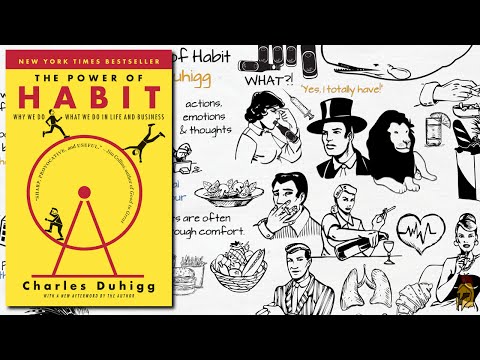
Charles Duhigg’s The Power of Habit takes a subject we rarely examine, the habits that quietly govern much of our lives, and reveals the hidden machinery behind them. Drawing on neuroscience and a wealth of stories from individuals, companies, and societies, Duhigg shows that a huge proportion of what we do each day is not the result of conscious decision but of automatic habit, patterns of behaviour so ingrained that the thinking brain barely registers them. This sounds disempowering, but Duhigg’s argument is ultimately hopeful: once we understand how habits actually work, the precise mechanism by which they form and operate, we gain the power to change them. It is a practical, science-grounded book about one of the most important and least understood forces shaping our behaviour.
Here is what The Power of Habit taught me about the habit loop, about how habits can be changed, and about the keystone habits that transform everything.
Key takeaways
- Much of daily life is habit, automatic behavior running below conscious thought.
- The habit loop: cue, routine, reward, with craving as the engine.
- You cannot erase a habit, but you can change it by keeping the cue and reward, changing the routine.
- “Keystone habits” trigger cascades of other positive changes.
- Understanding the mechanism gives us power over our automatic selves.
The habit loop
The core concept of the book is the “habit loop,” the simple neurological pattern at the heart of every habit. It has three parts. First, a cue, a trigger that tells the brain to go into automatic mode and which habit to use, a time of day, a location, an emotional state, the presence of certain people. Second, a routine, the behaviour itself, physical, mental, or emotional. And third, a reward, which helps the brain decide whether this loop is worth remembering for the future. Over time, as this loop repeats, the cue and reward become linked, and a powerful craving develops that drives the whole cycle automatically. Understanding this structure is genuinely empowering, because it breaks the mysterious, monolithic feeling of a habit into its component parts, each of which can be examined and, crucially, altered. The habit is no longer a fog; it is a mechanism with identifiable pieces.
How habits change
Duhigg’s most practical insight is what he calls the “Golden Rule of Habit Change.” You cannot simply erase a bad habit by willpower, the neural loop is still there. But you can change it. The trick is to keep the same cue and the same reward, but to insert a new routine in the middle. If you understand what cue triggers your habit and what reward you are actually craving (often not the obvious one), you can deliberately substitute a healthier behaviour that delivers the same reward in response to the same cue. The old craving is satisfied by a new routine. This reframes habit change from a brute battle of willpower, which usually fails, into a matter of diagnosis and redesign: identify the loop, understand the craving, and engineer a better routine. It does not make change easy, but it makes it intelligible and possible, which is far more than mere exhortation to “try harder” ever does.
Keystone habits
One of the book’s most striking ideas is the “keystone habit.” Some habits, Duhigg argues, matter far more than others, because changing them sets off a chain reaction that transforms many other behaviours. His central example is exercise: people who start exercising regularly often, without intending to, begin eating better, sleeping better, being more productive, and feeling more in control of their lives generally. The single keystone habit reorganises everything around it. The same applies at the level of organisations and societies. This is a hopeful and strategically useful idea: rather than trying to overhaul our whole lives at once, which is overwhelming and usually fails, we can focus on identifying and changing one keystone habit, and let its effects ripple outward. Small, well-chosen changes, Duhigg shows, can have disproportionately large consequences.
What I’m taking with me
The Power of Habit gave me both an understanding of how much of my life runs on autopilot and a practical toolkit for changing it. What I am taking from Duhigg is the habit loop, cue, routine, reward, driven by craving, which lets me see the structure behind my automatic behaviours; the Golden Rule of habit change, keeping the cue and reward while swapping the routine, which turns change from a willpower battle into a solvable problem; and the idea of keystone habits, the single changes that ripple outward to transform much more. The deepest lesson is hopeful: our habits feel like fate, but once we understand how they work, they become ours to reshape.
Frequently asked questions
What is The Power of Habit about?
It is Charles Duhigg’s exploration of how habits work, drawing on neuroscience and real-world stories to explain how habits form, why they are so powerful, and how, by understanding their mechanism, we can change them.
What is the “habit loop”?
The three-part neurological pattern behind every habit: a cue (trigger), a routine (the behavior), and a reward, with a craving developing over time that drives the loop automatically.
How do you change a habit?
By the “Golden Rule of Habit Change”: keep the same cue and reward, but substitute a new routine. You cannot erase a habit, but you can redirect the loop by satisfying the same craving with a better behavior.
References & further reading
- Duhigg, Charles. The Power of Habit: Why We Do What We Do in Life and Business. Random House, 2012.
- James, William. The Principles of Psychology (chapter on “Habit”). Henry Holt, 1890.
- Kahneman, Daniel. Thinking, Fast and Slow. Farrar, Straus and Giroux, 2011.
Watch: others on this book

Read along with me
Book notes, philosophy and the ideas that shape how we build. New essays every month, no spam.
Related reading notes
Forget the Grand Theory: How a "Theory of Nothing" Can Help You Be Healthier
Health psychology is obsessed with finding the one theory to rule them all: a master key to unlocking every health behavior. But what if that's a dead end?

Rise and Grind... or Not? Exploring the 5 AM Club
The 5 AM Club. A movement promising increased productivity, improved focus, and a head start on the day.

The Power of the Introvert: Susan Cain's "Quiet"
Susan Cain's Quiet: the Extrovert Ideal, introversion as temperament rather than flaw and the real strengths quiet people bring.
Comments
No comments yet. Start the conversation.