IIoT: Sensor-to-Cloud Data Pipelines
Everyone wants the dashboard and the digital twin. Almost nobody wants to talk about the pipes that feed them - which is exactly why so many Industry 4.0 projects stall.
TL;DR
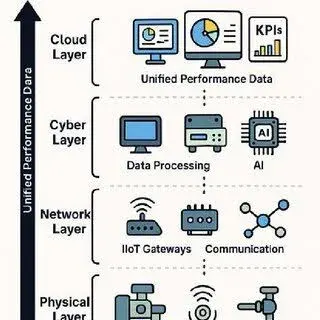
Every smart-factory pitch has an arrow labeled "data" between the machines and the dashboard, and that arrow is the whole job. Reliable sensor-to-cloud pipelines need disciplined plumbing, consistent naming agreed across teams, time-series storage instead of a normal database and attention to the boring details that become a competitive moat.
On this page
There is a particular kind of slide that shows up in every smart-factory pitch. It has a glowing factory on the left, a sleek dashboard on the right, and a fat arrow labeled “data” in between. The arrow does a lot of heavy lifting.
That arrow is the entire job. And it is much harder than the slide admits.
The demo that works and the deployment that doesn’t
Connecting one sensor to one chart is a pleasant afternoon. You wire up a broker, publish a value, watch a line wiggle on a screen, and feel like the future has arrived. This is the demo, and demos are seductive because they hide every problem that actually matters.
Then you try to do it for real. Now there are four hundred signals, not one. The network between the remote pump station and your server drops for twenty minutes every afternoon for reasons nobody can explain. Two teams named the same machine three different ways. The database that happily swallowed a reading per second falls over at ten thousand. And somewhere, quietly, a buffer with no size limit is filling a disk that will bring the whole thing down at 3 a.m.
None of that is on the slide. All of it is the project.
Plumbing is a discipline, not a detail
Call it plumbing because that is what it is, and because plumbing has a bad reputation it does not deserve. Good plumbing is invisible precisely because someone thought hard about pressure, flow, and what happens when a valve fails. Bad plumbing announces itself by flooding your kitchen.
Industrial data plumbing is the same. The interesting decisions are not glamorous, but they are the ones that determine whether your analytics team gets trustworthy data or a swamp of gaps and duplicates.
Consider a few of these unglamorous decisions:
- When the link dies, what happens to the data? If the answer is “it is lost,” you do not have a pipeline, you have a fair-weather toy. The grown-up answer is store-and-forward: the edge writes data to disk and replays it, in order, when the connection returns.
- What does the buffer do when it is full? “Grow forever” is not an answer; it is an incident waiting for a date. You need a hard cap and a deliberate choice - drop the oldest, drop the newest, or summarize.
- When did that reading actually happen? If you timestamp on arrival instead of at the source, every network hiccup quietly corrupts your history. Stamp it where it is measured.
- Will the same reading show up twice? Reliable delivery often means at-least-once delivery, which means duplicates. Your storage has to shrug them off.
Each of these sounds like a footnote. Each one, gotten wrong, silently poisons everything downstream - and the dashboard will look perfectly fine while it does.
The naming problem is a people problem
Here is the one that surprises engineers most: the hardest part of a large pipeline is often agreeing on what to call things.
When every team integrates point-to-point and names assets however they like, you get a combinatorial mess. Ten producers and ten consumers can become a hundred bespoke, brittle connections, each with its own idea of what “Line 2” means. Add an eleventh system and you are wiring it to ten others by hand.
The fix is boring and organizational: pick one structured naming convention, base it on the actual plant hierarchy, write it down, and make everyone publish into it. The popular name for doing this well is a Unified Namespace - a single real-time hub that holds the current state of every asset, that everyone reads from and writes to, instead of stitching systems directly to each other. The technology is the easy part. Getting three departments to agree on a topic structure is the real work, and it pays off every single day afterward.
Why a “normal” database is the wrong tool
One more place teams stumble: they reach for the database they already know. A relational database can technically store a stream of timestamped values, and for the demo it will. At plant scale it groans. Telemetry is a firehose of append-only writes that you mostly query by time range and rarely update - the exact opposite of what a row-oriented, index-heavy engine is tuned for.
This is why time-series databases exist. They partition by time, ingest fast, compress aggressively, and let old data age out automatically. Pair that with a retention policy and downsampling - keep this week at full resolution, this quarter as minute averages, this year as hourly - and your storage stops growing like a teenager. Skip it, and you will be having an uncomfortable conversation about disk costs within months.
The boring stuff is the moat
It is tempting to treat all of this as a prerequisite to get through on the way to the exciting machine-learning work. Resist that framing. The pipeline is not the boring part before the value; the pipeline is the value, because nothing downstream is more trustworthy than the data feeding it.
The companies that win at Industry 4.0 are rarely the ones with the flashiest dashboard. They are the ones whose data arrives complete, correctly timestamped, consistently named, and durably stored - whether or not the network felt cooperative that day. That is unglamorous. It is also the whole game.
So the next time you see that slide with the fat arrow, smile politely - and then go ask the questions nobody on the stage wants to answer. What happens when the link drops? What is the buffer limit? Who decided what to call this machine? Those answers, not the arrow, are what make the future actually show up.
Key takeaways 5
- Connecting one sensor is a demo; connecting a plant is engineering.
- Buffering, retries and backpressure make pipelines reliable.
- Naming and context are people problems that need agreement.
- Use time-series databases for high-frequency sensor data.
- The boring plumbing is what makes Industry 4.0 work.
Watch & learn

Frequently asked questions
What is an IIoT data pipeline?
It is the chain that moves data from industrial sensors and machines through gateways, brokers and processing steps into storage and applications, such as dashboards, analytics and digital twins.
Why use a time-series database for sensor data?
Time-series databases are optimized for large volumes of timestamped values: fast writes, compression and queries over time ranges, which ordinary relational databases handle poorly at scale.
Why do IIoT projects stall after the pilot?
Because scaling exposes problems a demo hides: inconsistent tag names, missing context, network outages, data volume, security and ownership across IT and OT teams.
Go deeper with the free masterclass
Workshop, PDF handbook and curated resources for “IIoT: Sensor-to-Cloud Data Pipelines”.
Related articles
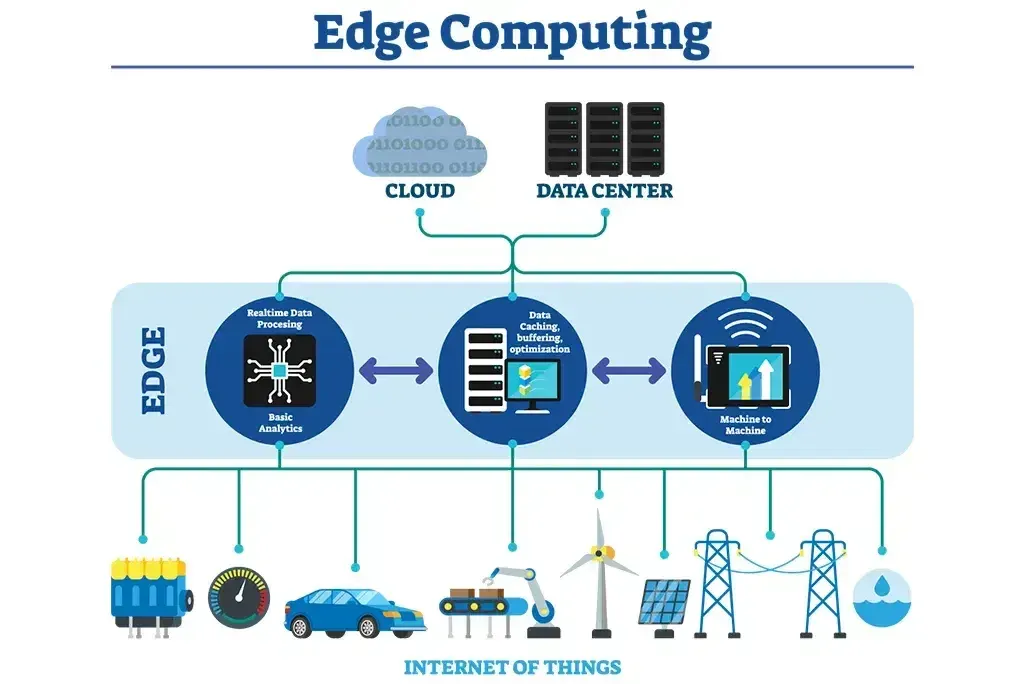
Edge Computing for Smart Manufacturing
The factory cloud dream hit a wall of latency, bandwidth and broken WAN links. The answer was to move the compute back to the machines.
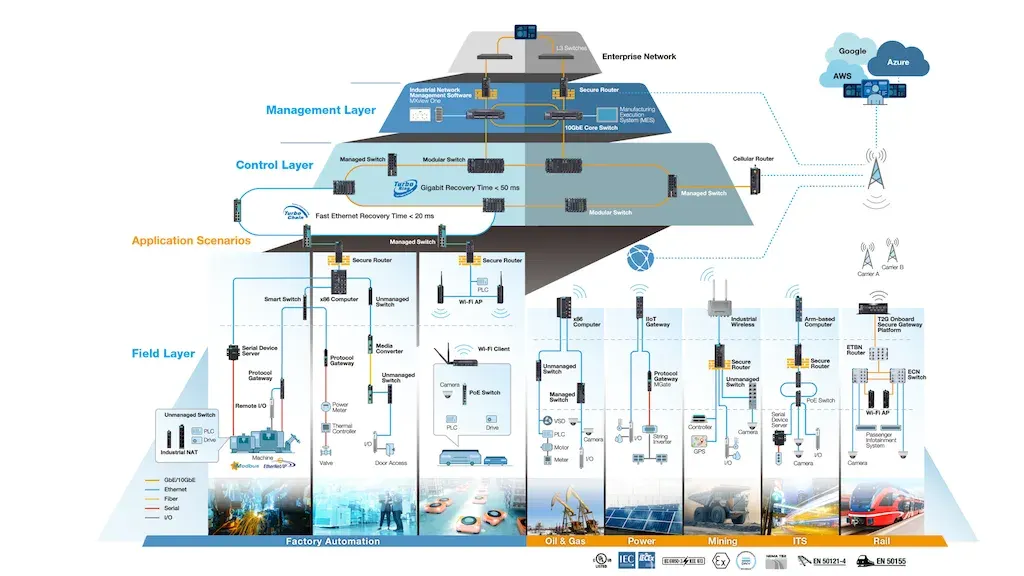
Industrial IoT Architecture
Most failed Industrial IoT projects were not killed by bad code. They were killed at the whiteboard, by an architecture that ignored where the work actually happens.
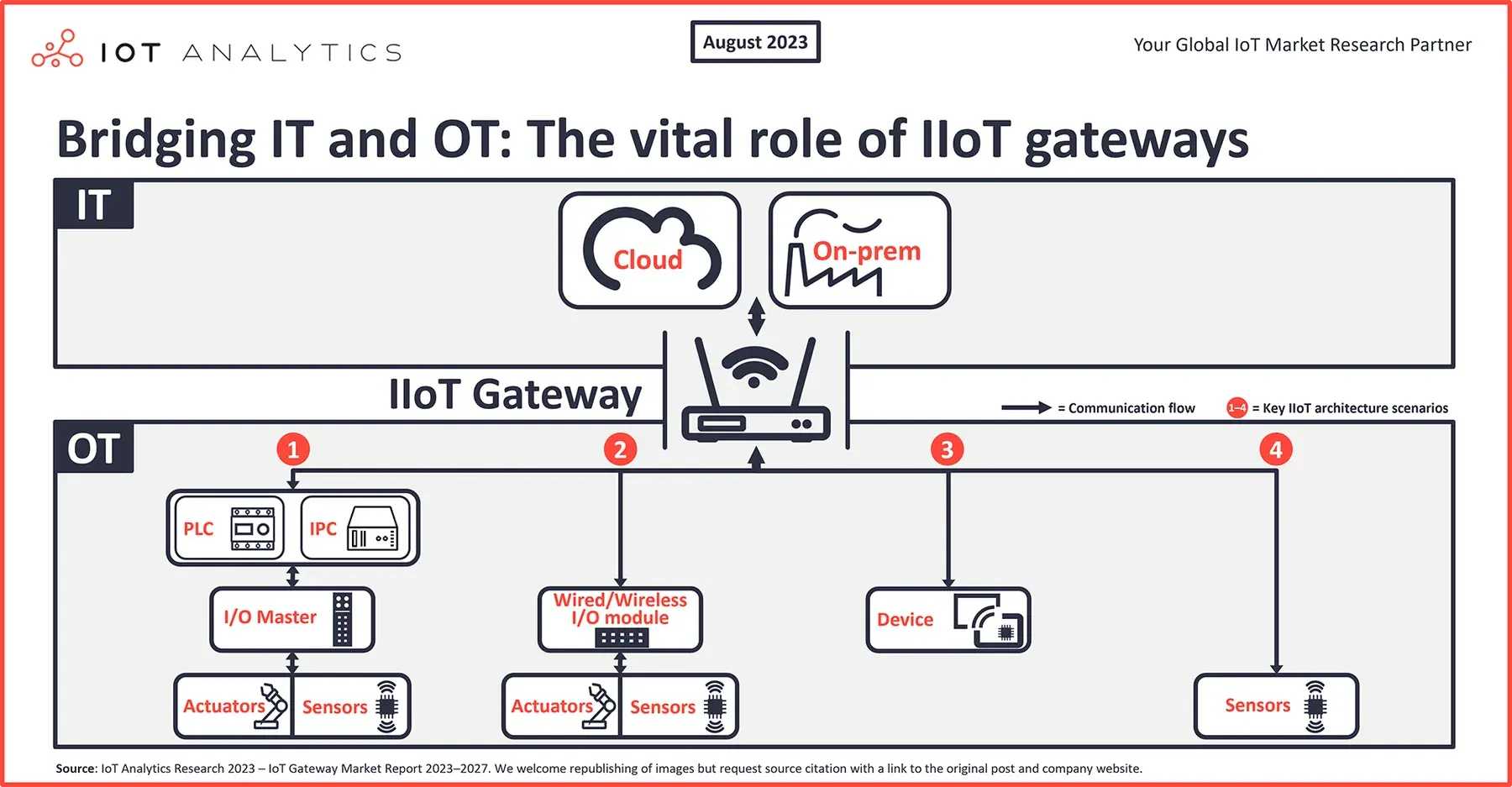
From PLC to IIoT: Bridging OT Data
The most valuable data in a factory is generated every second and almost none of it ever leaves the room. Bridging OT to IIoT is the unglamorous engineering that finally lets it out - safely.
Comments
No comments yet. Start the conversation.