Finding Meaning in Suffering: Reflections on Viktor Frankl's "Man's Search for Meaning"
In one breath
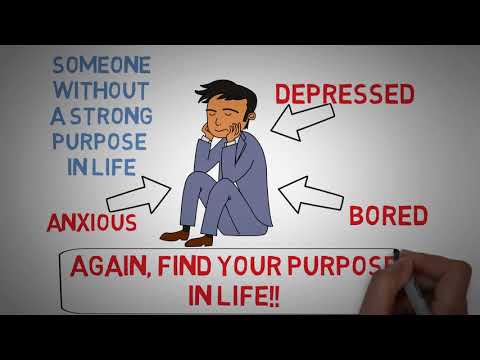
Viktor Frankl, a psychiatrist who survived Auschwitz, argues in Man's Search for Meaning that people can endure almost any how if they have a why. Meaning comes from work, love and the attitude we take to unavoidable suffering, and happiness follows from living for something beyond ourselves.
On this page
There are books that argue, and there are books that testify. Viktor Frankl’s Man’s Search for Meaning does both, and that is its terrible power. Frankl was a psychiatrist in Vienna who was deported to the Nazi concentration camps, including Auschwitz. He lost almost everyone he loved. And out of that experience he did not write a memoir of despair but a quiet, unshakeable argument: that human beings can endure almost any “how” if they have a “why,” and that meaning is available even in the worst place on earth.
These are my reflections on what Frankl taught me about suffering, freedom, and the last human liberty that no one can take away.
Key takeaways
- Those who have a “why” to live can bear almost any “how.” Meaning is what makes survival possible.
- The last of the human freedoms is to choose your attitude in any given set of circumstances.
- Meaning is found, not invented, through work, through love, and through how we face unavoidable suffering.
- Happiness cannot be pursued directly; it ensues as a side effect of a life devoted to something beyond itself.
- Suffering without meaning is despair; suffering with meaning can become a kind of achievement.
The freedom they could not take
The heart of the book is an observation Frankl made among men stripped of everything: their homes, their families, their names, their hair, their dignity. Even there, he saw, some gave their last piece of bread away and walked through the huts comforting others. Everything could be taken from a person, he writes, but one thing: the freedom to choose one’s own response to one’s conditions. This is the line I keep returning to. It refuses the excuse that circumstances decide who we are. They shape us, brutally, but the final say belongs to us. Coming from someone who earned that conclusion in Auschwitz, it is impossible to dismiss as easy optimism.
Three doors to meaning
Frankl founded a school of therapy he called logotherapy, from the Greek logos, meaning. Where Freud put pleasure at the centre of human motivation and Adler put power, Frankl put meaning. And he is concrete about where we find it: in creating a work or doing a deed, in loving someone or experiencing beauty, and in the attitude we take toward unavoidable suffering. That third door is the hardest and the most important. We cannot always change our situation, but when we cannot, we are challenged to change ourselves. Suffering we cannot escape can still be borne with dignity, and in that bearing it acquires a meaning.
Why happiness runs away when chased
One of Frankl’s most useful insights is also the most counterintuitive. Happiness, he says, cannot be pursued; it must ensue. The more we make our own contentment the direct goal, the more it slips away, because we have aimed at the wrong target. Meaning works differently. Devote yourself to a cause, a person, a task larger than your own comfort, and happiness arrives, almost by accident, as a by-product. I have found this true in a small way every time I have stopped asking whether I am happy and started asking what is being asked of me.
What I’m taking with me
This is not a comfortable book, and it should not be. Its comfort is of a sterner, more durable kind. Frankl does not promise that life will be fair or that suffering will be spared. He promises something better: that even suffering need not be meaningless, and that the search for meaning is itself the deepest motive of a human life. The lesson I am keeping is to stop interrogating life about what I am owed, and to treat my own life as the thing being questioned, asking what it is, today, that I am responsible for.
Frequently asked questions
What is the main message of Man’s Search for Meaning?
That the primary human drive is the search for meaning, and that we can find meaning even in unavoidable suffering, which is what allows people to endure extreme hardship.
What is logotherapy?
The form of therapy Frankl founded, based on the idea that finding meaning, rather than seeking pleasure or power, is the central motivation of human life.
What does Frankl say about happiness?
That it cannot be pursued directly. Happiness ensues as a side effect of dedicating oneself to a meaning or a cause beyond oneself.
References & further reading
- Frankl, Viktor E. Man’s Search for Meaning. (First published 1946; English translation, Beacon Press, 1959.)
- Frankl, Viktor E. The Doctor and the Soul. Knopf, 1955.
- Yalom, Irvin D. Existential Psychotherapy. Basic Books, 1980.
Watch: others on this book

Read along with me
Book notes, philosophy and the ideas that shape how we build. New essays every month, no spam.
Related reading notes
A Man Can Be Destroyed But Not Defeated: Hemingway's "The Old Man and the Sea"
Ernest Hemingway's The Old Man and the Sea is short enough to read in a single sitting, and large enough to carry for a lifetime.

Embracing Absurdity: Reflections on Albert Camus' "The Stranger"
Camus' The Stranger and the absurd: Meursault's indifference, authenticity, alienation and what the novel teaches about finding meaning.

The Meaning Found in the Desert: Saint-Exupéry's "Wind, Sand and Stars"
Saint-Exupéry's Wind, Sand and Stars: meaning forged through danger and responsibility, human bonds and lessons from a near-death desert crash.
Comments
No comments yet. Start the conversation.