Facilitation Skills for Workshops
Most meetings fail for lack of a process, not a lack of ideas. Facilitation is the learnable skill that fixes that - and you do not need to be the most senior or the loudest person in the room to do it well.
TL;DR
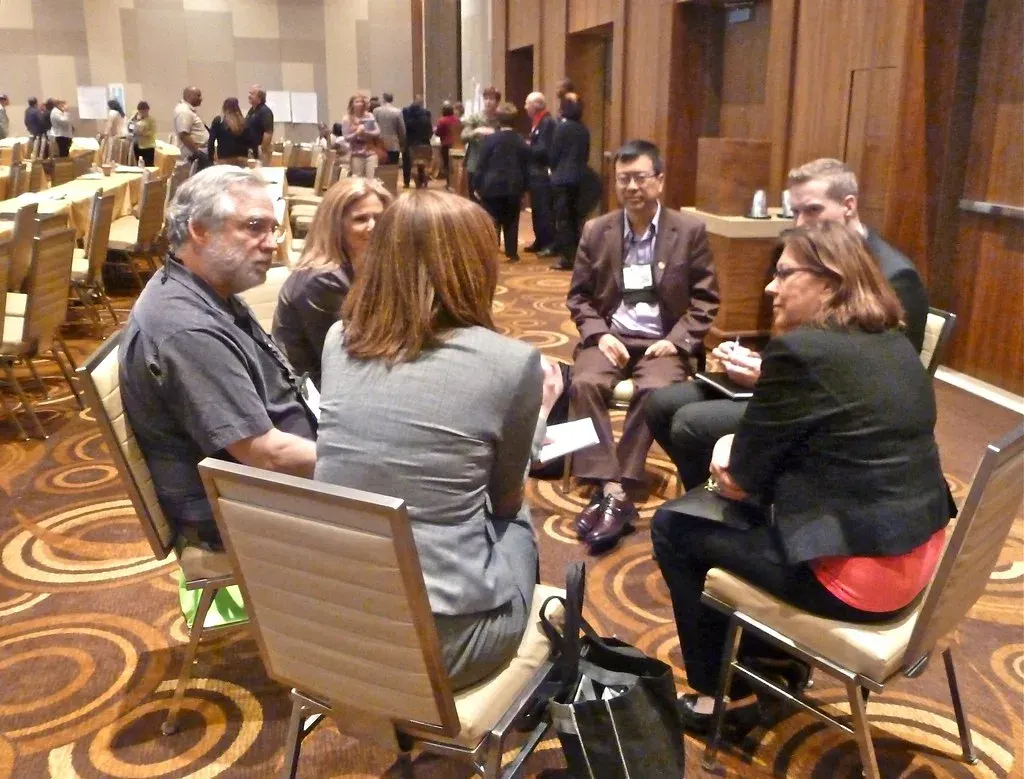
Unproductive meetings usually lack a process, not ideas. Facilitation is a learnable skill: separate content from process, design the session around a clear outcome, use a small toolkit like silent brainstorming and dot voting, handle dominant voices and close with decisions and owners.
On this page
Think about the last unproductive meeting you sat through. The odds are it was not unproductive because the people were dim or the topic was thin. It was unproductive because there was no process. The loudest voice set the direction, a few quiet people who knew the most said nothing, the conversation wandered, and the hour ended with no decision and a vague promise to “circle back.”
Facilitation is the discipline that prevents exactly this. And the most freeing thing about it is that it is a skill, not a personality trait. You do not have to be charismatic, senior, or quick on your feet. You have to be willing to own the process and let the group own the answers.
The one shift that changes everything
If you take only one idea away, make it this: a facilitator owns the process, not the content. The word itself comes from the Latin for “to make easy.” Your job is to make the group’s work easier, not to do the group’s thinking for it.
This is the opposite of how most of us run meetings. We talk, we decide, we tell people what to do. A facilitator asks, listens, structures, and stays neutral. The participants supply the ideas and make the decisions; you supply a fair, focused process that lets them do it well.
Neutral does not mean silent or passive. A neutral facilitator is intensely active - just active about how the group works rather than what it concludes. You capture every idea as it was offered, without editing it. You ask the same kinds of questions of the loud and the quiet. You name what you see in the room without judging it. And if you happen to have a stake in the outcome, you say so out loud, or you hand the facilitation to someone else. Hidden agendas destroy trust faster than any clumsy technique ever could.
Design beats improvisation
Here is the second secret: a workshop is usually won or lost before anyone walks in. The quality of your design matters more than your quick thinking in the moment.
Good design starts with an outcome, not a topic. A topic is a subject to discuss - “the roadmap.” An outcome is a result you can recognize when you have it - “a prioritized list of the top five roadmap items, each with an owner.” Topics produce conversations; outcomes produce progress. A simple test keeps you honest: at the end, what will the group be able to point to? If the only honest answer is “a good chat,” you have a topic, and you are at risk of a session that feels busy but changes nothing.
Once the outcome is clear, build the agenda backward from it, and let it follow a natural rhythm: open up, then narrow down. First the group generates ideas and surfaces views. Then comes the uncomfortable middle - Sam Kaner calls it the “groan zone” - where lots of ideas compete and nobody has aligned yet. New facilitators panic here and assume the session is failing. It is not. The groan zone is the sound of a group actually thinking. Name it, sit with it, and then help the group converge and decide.
A small toolkit goes a long way
You can run most sessions with four humble techniques.
Timeboxing means giving each activity a fixed, visible, announced amount of time. It sounds trivial; it is transformative. People given eight minutes use eight minutes, while people given “as long as it takes” often produce no more in forty. A timer also quietly protects quiet people, because the loudest voice can no longer run out the clock.
Round-robin means going around the group in turn, each person speaking without interruption. It is the simplest possible tool for balancing participation - and a “pass” is always allowed, because the goal is the chance to speak, not forced speech.
Dot voting means listing the options where everyone can see them and giving each person a few votes to place. It surfaces the group’s priorities in two minutes and ends debates that would otherwise circle for twenty. Treat the dots as input that focuses the conversation, not as the final verdict.
The parking lot is a visible spot where you “park” relevant but off-topic ideas so they are neither lost nor allowed to derail the moment. The one rule that makes it work: review it before you close. A parking lot that is never revisited teaches people their contributions get ignored.
People, pressure, and the close
Most “difficult participants” are responding to an unmet need, and most are best handled with structure rather than confrontation. A dominant voice is rebalanced by a round-robin, not a rebuke. A quiet expert is drawn out by writing ideas down before discussion, not by being put on the spot. A relentless skeptic is usually voicing the doubt everyone else is privately holding - capture it, check whether others share it, and you turn an obstacle into useful data. Underneath all of it sits psychological safety: when people feel safe to speak, ask, and disagree, the dynamics that create “difficult” behavior rarely show up at all. And when tension does spike, the move is always the same - do not take sides, return to process. A timebox, a vote, a short break. Your calm is what the group borrows.
Finally, end well. A session that closes without next steps wastes everything that came before it. Capture every action as three things - what, who, and by when - because an action with no owner and no date is just a wish. Read the list back, confirm people accept it, clear the parking lot, and send a short written summary. That written record, more than anything you said in the room, is what makes the work stick.
None of this requires special tools or a special personality. It requires a willingness to step back, hold the process, and trust the group. Do that, and the next meeting you run will be the one nobody dreads.
Key takeaways 5
- Meetings fail for lack of process, not lack of ideas.
- A facilitator owns the process, not the content.
- Design the session backward from a clear outcome.
- Simple tools work: silent writing, round-robins, dot voting.
- End with explicit decisions, owners and next steps.
Watch & learn

Frequently asked questions
What does a workshop facilitator do?
A facilitator designs and guides the group process, setting goals, structuring activities, managing time and participation and helping the group reach decisions, without steering the content.
How do I stop one person dominating a meeting?
Use structures that equalize input, such as silent individual writing before discussion, round-robin turns, small groups and anonymous voting.
What are good facilitation techniques?
Common techniques include silent brainstorming, affinity mapping, dot voting, timeboxing, a parking lot for off-topic items and a clear decision rule agreed in advance.
Go deeper with the free masterclass
Workshop, PDF handbook and curated resources for “Facilitation Skills for Workshops”.
Related articles
Running Client Workshops
Why the consultants clients ask for by name are the ones who can run a room — and how facilitation, not expertise, is the skill that compounds.
Scrum Master Essentials
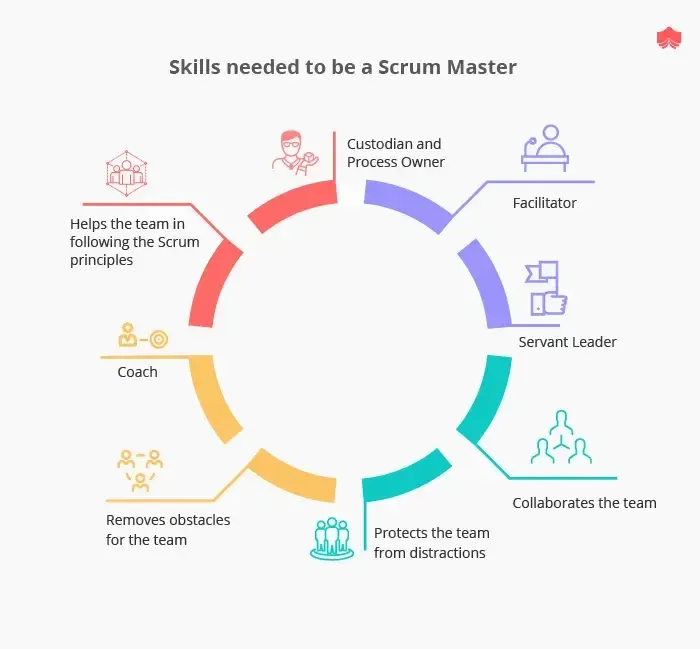
Everyone wants the Scrum Master title and nobody wants the actual job. Here is the uncomfortable truth: if your team still needs you in the room, you have not finished the work.

Navigating the Research Methodology Maze: A Comprehensive Guide
A practical research methodology guide: define objectives, choose outputs, scope sources, gather information, evaluate credibility and synthesize findings.
Comments
No comments yet. Start the conversation.