Everything Flows: The Riddling Wisdom of Heraclitus
In one breath
Heraclitus left only fragments, riddling sentences quoted by later writers. Their central ideas still land: everything flows, so you cannot step into the same river twice; opposites are held together in tension; a hidden order, the logos, runs through the world; and character is destiny.
On this page
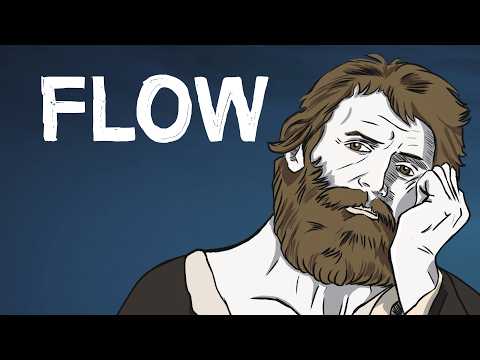
Heraclitus of Ephesus left us no book, only fragments, scattered sentences quoted by later writers, gnomic and strange, like fortune cookies written by a thunderstorm. He was called “the obscure” even in antiquity, and reading the fragments I understood why. But the obscurity is not laziness; it is a method. Heraclitus writes in riddles because he believes reality itself is a riddle, a tension of opposites held together, and that plain speech would flatten the very thing he is trying to show. Twenty-five centuries later, his sparks still land.
Here is what Heraclitus taught me about a world in constant flux, about the hidden harmony of opposites, and about the logos that runs through everything if we could only listen.
Key takeaways
- “You cannot step into the same river twice.” Everything flows; permanence is an illusion.
- Opposites are united, and strife or tension is the source of all things.
- There is a logos, a hidden rational order, that most people live without noticing.
- Change itself is the only constant, and wisdom means making peace with it.
- “Character is destiny.” What we repeatedly are shapes what becomes of us.
The river
The fragment everyone knows is the river. You cannot step into the same river twice, because fresh waters are always flowing in, and, in another version, because you too are changed by the time you step again. Both the river and the one who steps are in motion. This is Heraclitus’ central vision: reality is not a collection of stable things but a ceaseless process of becoming. What looks solid, a mountain, a body, a self, is really a pattern holding its shape for a while within a flow. I find this strangely consoling. If nothing stays, then neither do my worst days, and the self that suffered them is already, quietly, becoming someone else.
The harmony of opposites
Heraclitus delights in contradiction. The road up and the road down are one and the same. Sea water is pure for fish and poison for humans. Disease makes health sweet, hunger makes fullness pleasant. His point is that opposites are not enemies but partners; each defines and needs the other, and reality is the tension between them, like the steady note produced by the opposing pull on a bow or a lyre. We tend to want one side without the other, pleasure without pain, gain without loss, but Heraclitus suggests they come as a pair or not at all. The harmony is in the tension, not in its resolution.
The logos few people hear
Beneath the flux, Heraclitus insists, there is a logos, a word that means speech, reason, account, the underlying order of things. Though this logos governs everything, he complains, most people live as if asleep, each in their own private world, deaf to the common law that holds all things together. The task of wisdom is to wake up, to listen past our private noise to the shared rational pattern of the world. There is something bracing in this. He is not flattering us. He is telling us that the order is there and that the failure to perceive it is our own drowsiness.
What I’m taking with me
Reading Heraclitus is less like learning a doctrine and more like being struck by lightning a dozen times in a row. What I am taking from the fragments is a temperament more than a theory: to expect change rather than resent it, to look for the hidden connection between things that seem opposed, and to suspect that the order I am looking for is already present, waiting only for me to wake up enough to notice. Everything flows. The wise response is not to grasp but to swim.
Frequently asked questions
Who was Heraclitus?
A Greek philosopher of around 500 BCE from Ephesus, known as one of the Presocratics. He taught that reality is in constant change and is governed by a hidden order he called the logos.
What does “you cannot step into the same river twice” mean?
That everything is in constant flux. The river’s waters are always changing, and so are we, so no moment or thing ever stays exactly the same.
What is the logos in Heraclitus?
The underlying rational order or principle that governs the universe. Heraclitus believed it is always present but that most people fail to perceive it.
References & further reading
- Kahn, Charles H. The Art and Thought of Heraclitus. Cambridge University Press, 1979.
- Kirk, G. S., J. E. Raven, and M. Schofield. The Presocratic Philosophers. Cambridge University Press, 1983.
- Wheelwright, Philip. Heraclitus. Princeton University Press, 1959.
Watch: others on this book
Read along with me
Book notes, philosophy and the ideas that shape how we build. New essays every month, no spam.
Related reading notes
Philosophy as Spiritual Exercise: Pierre Hadot's "Philosophy as a Way of Life"
Pierre Hadot's Philosophy as a Way of Life: ancient philosophy as spiritual exercises for transforming the self, and how to recover that practice.
On the Immortality of the Soul: Socrates' Last Hours in Plato's "Phaedo"
Plato's Phaedo recounts the last hours of Socrates, the day he drank the hemlock and died.
Atoms and the Fear of Death: Lucretius' "On the Nature of Things"
Lucretius' On the Nature of Things explains the universe through atoms and void and argues that death is nothing to fear. Why this ancient poem still matters.
Comments
No comments yet. Start the conversation.