Beyond Good and Evil: Unpacking Nietzsche's "Thus Spoke Zarathustra"
In one breath
Thus Spoke Zarathustra follows the prophet Zarathustra as he teaches three of Nietzsche's boldest ideas: the Übermensch who creates his own values, the death of God and the crisis of meaning it leaves, and eternal recurrence, the test of whether you could live your life again forever.
On this page
Exploring Friedrich Nietzsche’s “Thus Spoke Zarathustra”
In the vast landscape of philosophical literature, few works possess the profound depth and complexity of Friedrich Nietzsche’s “Thus Spoke Zarathustra.” This seminal text, often considered Nietzsche’s magnum opus, explores themes of morality, spirituality, and the nature of existence through the allegorical journey of the prophet Zarathustra. As I delved into its pages, I found myself captivated by Nietzsche’s bold vision and provocative insights, grappling with the existential questions that lie at the heart of human existence.
Journey of the Übermensch:
Central to “Thus Spoke Zarathustra” is Nietzsche’s concept of the Übermensch, or “overman” – a transcendent being who rises above the limitations of conventional morality and embraces the fullness of human potential. Through Zarathustra’s journey, Nietzsche challenges readers to confront the inherent contradictions and limitations of traditional values and beliefs, urging us to strive for self-mastery and authenticity in a world devoid of inherent meaning.
The Death of God:
At the heart of Nietzsche’s philosophy lies the famous proclamation of the “death of God” – the collapse of traditional religious beliefs and moral frameworks that once provided meaning and purpose to human life. In “Thus Spoke Zarathustra,” Nietzsche confronts the existential implications of this radical idea, inviting readers to embrace the uncertainty and ambiguity of existence and forge their own path towards self-discovery and self-creation.
Eternal Recurrence:
Another key theme in “Thus Spoke Zarathustra” is the concept of the eternal recurrence – the idea that all events in the universe are destined to repeat themselves infinitely. Nietzsche presents this notion as a thought experiment, challenging readers to confront the inevitability of their own mortality and the transient nature of human existence. Through the eternal recurrence, Nietzsche encourages us to affirm life in all its complexity and embrace each moment with a sense of gratitude and appreciation.
Lessons Learned:
As I journeyed through the allegorical landscapes of “Thus Spoke Zarathustra,” I gleaned several key insights that continue to resonate with me:
- Embrace Self-Overcoming: Nietzsche urges us to embrace the process of self-overcoming – to transcend the limitations of our current selves and strive for continual growth and self-mastery.
- Question Authority: “Thus Spoke Zarathustra” challenges us to question authority and conventional wisdom, urging us to think critically and forge our own path in life.
- Affirm Life: Despite the inherent suffering and turmoil of the human condition, Nietzsche encourages us to affirm life in all its complexity and embrace the fullness of our existence.
Conclusion:
In conclusion, “Thus Spoke Zarathustra” is a profound exploration of the human condition and the existential challenges that confront us all. Through the allegorical journey of Zarathustra, Nietzsche invites us to confront the contradictions and complexities of human existence and strive for self-mastery and authenticity in a world devoid of inherent meaning. As I reflect on the lessons learned from this timeless work, I am reminded of the importance of courage, resilience, and self-affirmation in the face of life’s inherent uncertainties.
Until next time, fellow seekers of truth – may we find the strength to embrace the fullness of our existence and forge our own path towards self-discovery and self-creation.
Key takeaways 5
- The Übermensch is a person who creates their own values beyond conventional morality.
- "God is dead" names the collapse of traditional sources of meaning.
- Eternal recurrence asks whether you would live your life again, endlessly.
- Nietzsche calls for self-overcoming rather than comfort or conformity.
- The book is poetic and allegorical, so it rewards slow, reflective reading.
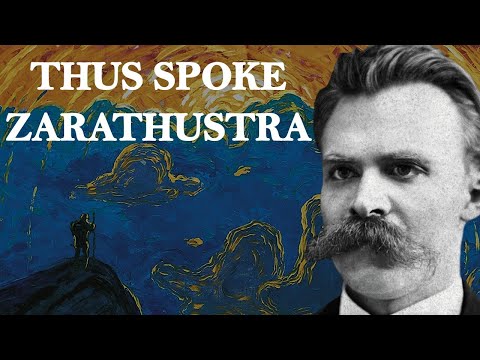
Watch: others on this book

Frequently asked questions
What is Thus Spoke Zarathustra about?
It is a philosophical novel in which the prophet Zarathustra comes down from the mountains to teach humanity about the Übermensch, the death of God and eternal recurrence.
What is the Übermensch?
The Übermensch, or overman, is Nietzsche's ideal of a human being who overcomes conventional morality and creates their own values, affirming life fully.
What does eternal recurrence mean?
It is the thought experiment of living your exact life again, infinitely. Nietzsche uses it as a test: could you embrace your life so fully that you would will it to repeat forever?
Read along with me
Book notes, philosophy and the ideas that shape how we build. New essays every month, no spam.
Related reading notes
The Steps of Zarathustra: Lessons from Friedrich Nietzsche
Friedrich Nietzsche's "Thus Spoke Zarathustra" is a philosophical novel that has captivated readers for over a century.
Unveiling the Philosophy of Power: Exploring Friedrich Nietzsche's "The Will to Power"
Exploring Nietzsche's The Will to Power: power as life's driving force, the Übermensch, confronting nihilism and affirming life through eternal recurrence.
Where Do "Good" and "Evil" Come From? Nietzsche's "Genealogy of Morals"
Nietzsche's On the Genealogy of Morals: master and slave morality, ressentiment, the bad conscience and questioning the value of our values.
Comments
No comments yet. Start the conversation.