Becoming Who You Are: Carl Rogers and the Therapeutic Self
In one breath
On Becoming a Person distills Carl Rogers' life as a therapist into a humane vision: people have an innate drive toward growth, and it unfolds when they meet empathy, genuineness and unconditional positive regard. Its curious paradox is that we change once we accept ourselves as we are.
On this page
Carl Rogers was one of the founders of humanistic psychology, and On Becoming a Person distills a lifetime of work as a therapist into a deeply humane vision of what helps people grow. Rogers had a radical faith, earned over thousands of hours of listening, that human beings have within them a natural drive toward health and wholeness, and that the therapist’s job is not to fix or instruct but to create the conditions in which that drive can unfold. The book is gentle, undramatic, and quietly revolutionary, and its insights reach far beyond the therapy room into how any of us might help another person, or ourselves, become more fully who we are.
Here is what Rogers taught me about unconditional acceptance, about the paradox of change, and about what it means to become a person.
Key takeaways
- People have an innate drive toward growth, given the right conditions.
- Unconditional positive regard, empathy, and genuineness are what foster it.
- “The curious paradox”: we change once we accept ourselves as we are.
- Becoming a person means dropping the masks and living from our true self.
- Deep listening is one of the most powerful gifts we can give.
The conditions for growth
Rogers’s central discovery is about what actually helps people change. After years of practice, he concluded that it was not technique, diagnosis, or clever advice, but a particular quality of relationship. Three conditions, he found, were decisive. The first is unconditional positive regard, accepting and valuing the other person without conditions or judgment. The second is empathy, the effort to understand their experience from the inside, as they feel it. The third is genuineness or congruence, being real and honest rather than hiding behind a professional mask. When a person is met with these, Rogers found, they begin, on their own, to heal and grow. This is a profound reframing of how we help one another. We do not need to fix people; we need to offer them the relationship in which they can fix themselves.
The curious paradox of change
The line from Rogers I think about most is what he called the curious paradox: when I accept myself just as I am, then I can change. We usually believe the opposite, that we must condemn our faults in order to overcome them, that self-criticism is the engine of improvement. Rogers found, again and again, that the reverse is true. As long as we are at war with ourselves, rejecting and hiding the parts we dislike, we stay stuck. It is only when we can accept ourselves honestly, faults and all, that we become free to move and grow. This is deeply counterintuitive and, in my experience, deeply true. Acceptance is not the opposite of change; it is the soil in which change becomes possible.
Dropping the masks
What, then, does it mean to “become a person”? For Rogers, it means a movement away from the masks and roles we adopt to win approval, and toward our own genuine experience and values. The people he watched flourish became less concerned with meeting others’ expectations and more willing to be themselves; more open to their own feelings; more trusting of their own judgment; more comfortable with the ongoing process of becoming rather than the need to have arrived. Becoming a person is not reaching a fixed destination but entering a way of living, fluid, honest, self-directed, and open. I find this a moving goal. It suggests that the task of a life is not to perform a self for others but to gradually become the self that is actually ours.
What I’m taking with me
On Becoming a Person is one of the warmest and wisest books on human growth I have read. What I am taking from Rogers is his faith that people, given acceptance, empathy, and honesty, can grow themselves; the liberating paradox that self-acceptance, not self-condemnation, is what frees us to change; and the simple, demanding practice of really listening to another human being. Rogers reminds me that the most powerful thing I can offer someone is not advice but presence, and the most powerful thing I can offer myself is acceptance.
Frequently asked questions
What is On Becoming a Person about?
It presents Carl Rogers’ humanistic psychology, arguing that people have an innate drive toward growth that flourishes when they are met with acceptance, empathy, and genuineness, and describing what it means to become one’s true self.
What is “unconditional positive regard”?
Accepting and valuing a person fully, without conditions or judgment. Rogers found it one of the key conditions that allows people to heal and grow.
What is Rogers’ paradox of change?
His observation that “when I accept myself just as I am, then I can change.” Self-acceptance, rather than harsh self-criticism, is what frees a person to grow.
References & further reading
- Rogers, Carl R. On Becoming a Person. Houghton Mifflin, 1961.
- Rogers, Carl R. Client-Centered Therapy. Houghton Mifflin, 1951.
- Kirschenbaum, Howard. On Becoming Carl Rogers. Delacorte Press, 1979.
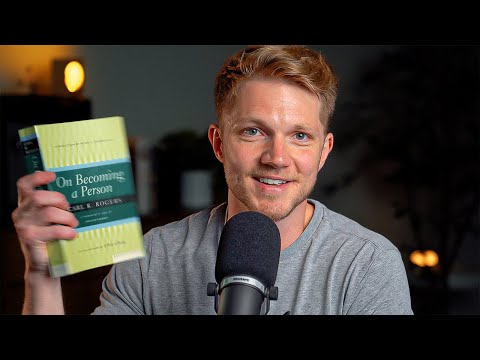
Watch: others on this book

Read along with me
Book notes, philosophy and the ideas that shape how we build. New essays every month, no spam.
Related reading notes

Beyond Survival: Maslow and the Heights of Human Need
Abraham Maslow helped found a movement he called humanistic psychology, and his Toward a Psychology of Being is one of its founding texts.
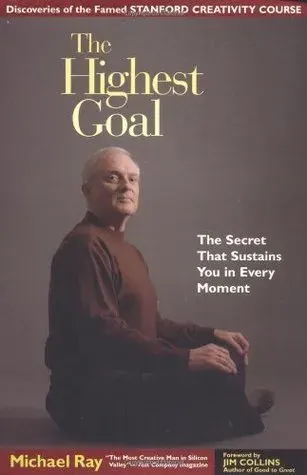
Living with Purpose: Lessons from The Highest Goal by Michael Ray
In a world focused on goals, titles, and achievements, it’s easy to chase one thing after another without ever stopping to ask the bigger question: Why?

Life-Changing Lessons: How Great Philosophers Transformed My Perspective
A personal journey of how reading philosophers like Camus, Kafka, Dostoevsky, Nietzsche, Schopenhauer, and Socrates transformed my perspective on life
Comments
No comments yet. Start the conversation.